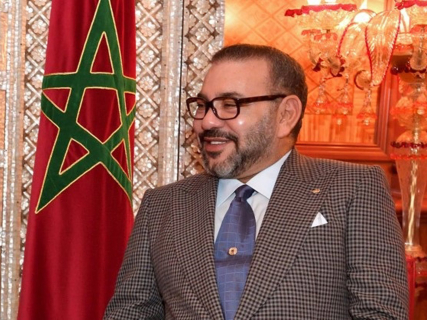
The king before Parliament: who will really command after the elections in Morocco

The Constitution of 2011 assigns to Parliament the legislative function, but reserves to the monarch broad powers over the formation of the Government, state policy, defense, and other strategic areas.

2 minutes

fotonoticia 20260825101102 1920

fotonoticia 20260825101102 1920

Add DEMÓCRATA to Google

Ask FREN

Published

Last updated

2 minutes

Most read

The legislative elections in Morocco renew the House of Representatives, but do not solely determine who controls all areas of the State. The Constitution of 2011 establishes a distribution of powers in which the Parliament exercises legislative power, the Government the executive, and the king retains specific powers as head of State and president of the Council of Ministers.

The issue is especially relevant because the power of the king of Morocco is not limited to a ceremonial function. The Constitution assigns to Mohamed VI specific powers in the formation of the Government, the strategic direction of state policy, defense, and certain appointments, among other matters.

Article 47 of the Constitution establishes that the king appoints the head of Government from the most voted party in the elections to the House of Representatives. At the proposal of the head of Government, the monarch then appoints the other members of the Executive and can, after consulting, terminate the functions of one or several ministers.

Mohamed VI also presides over the Council of Ministers, made up of the head of Government and the ministers. According to Article 49, this body addresses the strategic orientations of state policy, constitutional reform projects, organic laws, general orientations of the budget project, texts related to the military sphere, the declaration of a state of emergency or war, and certain appointments of high officials.

What corresponds to the Parliament

The Moroccan Parliament is made up of two chambers: the House of Representatives and the House of Councillors. The former is the one that is renewed through the legislative elections of September 23. The Constitution establishes that both comprise the legislative power.

Article 70 assigns the Parliament three main functions: to approve laws, to control the actions of the Government, and to evaluate public policies. The House of Representatives also has a decisive role in the investiture of the Executive, as the Government must obtain its confidence through an absolute majority vote on its program.

The Government exercises executive power

The Constitution also establishes a proper sphere for the Executive. Article 89 states that the Government exercises the executive power and that, under the authority of the head of the Government, it applies its program, guarantees the execution of the laws, manages the Administration, and supervises public establishments and enterprises.

The head of the Government also exercises regulatory power, although certain areas of special relevance remain linked to the competencies of the monarch and the Council of Ministers. Therefore, parliamentary election has direct consequences on the composition of the Executive, but it takes place within a system in which the Crown retains its own constitutional powers.

Defense, state policy, and other areas reserved for the monarch

Article 42 defines the king as head of State, highest representative, and supreme arbiter among the institutions. The Constitution also assigns him the guarantee of the country's independence and its territorial integrity.

In parallel, Article 49 places under the Council of Ministers, presided over by the king, issues such as the strategic orientations of the State, military affairs, and the declaration of war. The Constitution thus contemplates a separation of functions between the elected institutions and the Crown, but not a model in which all executive decisions depend exclusively on the Government arising from the elections.

More key points, information and questions with FREN

AI-GENERATED CONTENT

What are the procedures and timelines foreseen after the legislative elections in Morocco for the formation of the new Government?

After legislative elections in Morocco, the government formation process combines parliamentary arithmetic with a very broad margin of intervention by the monarchy. The news and analyses consulted clearly describe who does what (voters, parties, and king), but do not provide a fixed legal timetable of days between each step; the effective deadlines largely depend on how quickly political negotiations are concluded.

1. From the elections to the new House of Representatives

In the legislative elections, Moroccans elect the 395 members of the House of Representatives, the lower house:

  • 305 seats are assigned in local constituencies.
  • 90 seats are elected in regional constituencies.
  • The election is carried out through a proportional list system, as explained by Demócrata's analysis of the September 2026 elections (article about Fouzi Lekjaa).

Once the votes are counted and the 395 seats distributed, it is determined which party has come in first place, a key fact for the next step: the appointment of the head of government. The sources consulted do not detail in days the time between the vote, the definitive proclamation, and the constitutive session of the House, but assume that the new House is formed after the official proclamation of results, as occurs in comparative practice.

2. Appointment of the head of government by the king

The decisive phase revolves around Article 47 of the Moroccan Constitution. As summarized by Demócrata:

  • King Mohammed VI appoints the head of governmentfrom within the party that came first in the elections to the House of Representatives and taking into account its results.”
  • That is, the head of government is not directly elected at the polls, but the composition of the House is voted on, and the king appoints the head of the executive from the winning party.

Available information does not mention a maximum deadline in days between the proclamation of results and this appointment. In recent practice, the appointment occurs once the alliance landscape is sufficiently clear or it is considered that the winning party can form a viable majority, but there is no, in the sources consulted, a constitutional “clock” as strict as in other parliamentary systems.

3. Coalition negotiations and majority formation

After the elections, the distribution of seats usually requires forming coalitions. Analyses of the 2026 elections indicate that:

  • It is “more likely that the same parties form a similar coalition” to the existing one, unless the balance of power changes significantly (article on Moroccan legislative elections).
  • The possible arrival of new figures to the head of government “depends first on the electoral result and the subsequent formation of majorities” in the House of Representatives (Demócrata).

At this point, the Royal Palace also intervenes, which according to Fundación Alternativas maintains a “centrality of the Crown” in the balance of the Moroccan political system. This gives the king significant leeway to arbitrate the configuration of the majority, although formally the requirement is that the head of government comes from the party that came first.

Again, the sources used do not set the typical duration of these negotiations (weeks, months), but present it as an open political process depending on the balance of power and the parties' ability to renew or recompose coalitions.

4. Government appointment and the role of the Crown

Once the head of government is appointed:

  • The head of government proposes the list of ministers.
  • The ministers are appointed by the king, as Demócrata recalls in its profile of Fouzi Lekjaa.

The monarchy retains “broad powers” in the Moroccan institutional system:

  • The king presides over the Council of Ministers.
  • He maintains a central role in strategic areas such as foreign policy, defense, and security (Demócrata).

The news consulted do not describe a parliamentary investiture vote equivalent to the Spanish model, but a scheme in which the legitimacy of the executive is built on the combination of the victory of the designated party and the royal appointment, and in which parliamentary control is exercised later through ordinary oversight mechanisms.

5. Summary of procedures and timelines

With the available information, the procedures and their timings can be summarized as follows:

  • Clear procedures: election of the 395 deputies; proclamation of results; appointment by the king of a head of government from the winning party; negotiation and formation of a majority; proposal of ministers by the head of government; appointment of these by the king and effective constitution of the executive.
  • Formal deadlines: the cited sources do not provide a detailed timetable (number of days between election, appointment, and nomination). Unlike other systems, the press and analyses consulted do not speak of a “deadline of X days” after which elections are repeated, but of a process guided by political practice and the monarch's intervention.

In practice, therefore, the speed of formation of the new Moroccan government depends less on a rigid legal timetable and more on the stability of the outgoing majority, the clarity of the electoral result, and how the Royal Palace manages the transition within the framework set by the 2011 Constitution.

What constitutional powers does the king of Morocco have and how have they been exercised historically in practice?

The king of Morocco is formally a constitutional monarch, but the Constitution and political practice grant him a central role as the apex of the system, with executive, military, religious, and institutional arbitration powers that in practice place him above the Government and Parliament.

Constitutional framework: main powers

From the first Constitution of 1962 to the current one of 2011, all the charters have maintained a constant: the monarchy is the core of political power. The 2011 reform introduced some checks and balances, but without altering that centrality. Based on the available texts and analyses, his powers can be grouped as follows:

  • Head of State and appointment of the head of government. According to Demócrata's analysis of the Moroccan political system, Article 47 of the Constitution establishes that the king appoints the head of government from within the party that came first in the elections to the House of Representatives, “taking into account its results.” That head of government proposes the ministers, but they are also appointed by the monarch, which allows him to influence the composition and internal balance of the executive.
  • Control of the executive and key portfolios. The same source points out that, to guarantee “coherence” between the monarchy and government, it is the king who decides the appointment of the Minister of Foreign Affairs. This power strengthens his control over foreign policy, an area that in practice is largely removed from partisan play.
  • Military power. Demócrata emphasizes that Mohammed VI maintains the supreme command of the Royal Armed Forces and directly receives military intelligence and counterintelligence reports. The king also decides the integration of the heir into strategic positions in the military leadership, showing that military command is a strictly palace prerogative.
  • Role in the Sahara issue and territorial design. Various articles on the autonomy plan for Western Sahara explain that the Moroccan proposal foresees a self-government regime “headed by a figure appointed by King Mohammed VI,” and that any arrangement would be submitted to a referendum of the entire Moroccan electorate. That is, the Crown reserves the appointment of the political leadership of the autonomous territory and ultimate control of the process.
  • Religious authority (“commander of the faithful”). A report from El País recalls that the king holds the title of amir al-muminin, “commander of the faithful,” and that the Council of Ulemas is the highest religious authority consulted by the monarch. This grants him indirect normative power over family and moral legislation, relying on religious rulings to define reforms such as those of the Family Code (Mudawana).
  • Capacity for symbolic and normative initiative. The royal figure can decree new national holidays or commemorations, such as the establishment of “National Unity Day” on October 31 linked to the UN's support for the Sahara plan, decided directly by Mohammed VI as reported by Demócrata. These decisions reinforce his role as a definer of the great state narratives.

How they are exercised in practice: from Hassan II to Mohammed VI

Academic and journalistic analyses agree that there is a gap between the constitutional formulation — which presents Morocco as a “constitutional, democratic, parliamentary, and social” monarchy — and the real exercise of power.

A document from Fundación Alternativas on the Moroccan political system describes how the regime has shifted, after the 2011 protests, to an “authoritarian turn” with consolidation of the Crown's centrality. Although the Justice and Development Party (PJD, Islamist) won several electoral contests, the royal palace used its powers to:

  • Form governments in which the PJD was displaced from the most sensitive portfolios, despite leading the executive.
  • Promote the creation and rise of the Authenticity and Modernity Party (PAM), described as the “king's friends party”, to balance the Islamists and strengthen the pro-palace bloc.
  • Manage the repression of social protest through a “surgical repression,” focused on neutralizing key leaders and activists rather than massive violence campaigns.

In this scheme, Parliament and parties operate, but within limits set by the Crown and the makhzen apparatus (palace, economic, and security power network). Foreign policy — particularly the strategy on Western Sahara and relations with Spain or the EU — is conceived and executed under royal direction. A recent analysis cited by Demócrata emphasizes that government changes do not alter the line towards Spain because “it is marked by Mohammed VI”, largely because the monarch controls the Ministry of Foreign Affairs and the main diplomatic levers.

On the religious and rights front, the position of “commander of the faithful” allows him to arbitrate between modernizing demands and conservative readings of sharia. The 2004 Mudawana reform was presented as a modernization driven from the throne, but subsequent reforms show how the rulings of the ulemas consulted by the king can limit advances in women's and minors' rights, as explained in the report from El País.

In sum, the Moroccan Constitution recognizes the king extensive powers in government appointment, military command, foreign policy, territorial organization, and religious authority. The historical experience since 1962 shows that these prerogatives have been exercised expansively: the monarchy not only arbitrates but directs the main axes of Moroccan politics, shaping a system where democratization is permanently conditioned by the sovereign's will.

How do the powers of the king of Morocco compare with those of a European parliamentary monarch like the king of Spain? What exact changes did the 2011 Moroccan Constitution introduce in the king's powers compared to previous constitutions? What role has the king of Morocco played in managing recent social protests, such as those in the Rif or youth mobilizations?

What were the results of the last legislative elections in Morocco and how are the seats distributed among the main parties?

I do not have reliable information within the tools I work with about the detailed results of the last legislative elections in Morocco nor about the exact distribution of seats by party in its House of Representatives. And, very importantly, I cannot complete those data by relying on memory or conjectures external to the sources I handle, because my design prioritizes avoiding factual errors when it comes to concrete electoral figures.

My specialization is the Spanish political and institutional system and, by extension, parliamentary and governmental activity linked to Spain (Congress, Senate, autonomous communities, Official State Gazette and official bulletins, central government, relations with the EU, etc.), as well as how these areas relate to public actors, companies, and organizations. The foreign information I handle is only consulted insofar as it appears in those sources and, in this case, the precise data you need about Morocco are not available there in a structured way.

To obtain the level of detail you ask for — the result of the last legislative elections and the distribution of the 395 seats among the main Moroccan parties — I recommend going directly to:

  • The official website of the Ministry of the Interior of Morocco, which usually publishes the definitive results of legislative elections with breakdown by party.
  • The website of the Parliament of Morocco (House of Representatives), where the current composition of the chamber and the distribution of seats by group are often offered.
  • International reference sources such as the Inter-Parliamentary Union (IPU) or electoral observer reports, which usually collect tables with the distribution of seats by party after each election.

Regarding what I can do for you related to this topic, I can:

  • Explain comparatively how the Moroccan electoral system works versus the Spanish one (type of constituencies, number of seats, allocation formulas, role of the head of state, etc.), always in general terms.
  • Help you interpret what a certain result in Morocco would imply from the perspective of Spanish politics (for example, how it could influence bilateral relations, migration policy, or the management of the Ceuta and Melilla borders).
  • Contextualize, based on what has already been published in Spanish sources, how the last Moroccan elections have been read in Spain and which Spanish political actors have reacted or taken positions.

If you reformulate your question towards one of these angles more directly linked to Spain — for example: “how could a change of majority in the Moroccan Parliament affect Spain?” or “what does the Spanish press and analysts highlight about the legislative elections in Morocco?” — I will be able to work with the databases and archives I do have integrated and offer you a much more detailed and useful analysis.

I can also help you prepare notes, outlines, or guides to follow the Moroccan election night from a Spanish perspective (which parties to watch, what majorities would add up, what implications they would have for bilateral relations, etc.), as long as the main focus is the impact or political reading in Spain and not so much the pure numerical data of the results in Morocco.

Play

Test your knowledge with FREN!

How much do you know about this topic? Answer the following 3 questions.

Which body is presided over by the King of Morocco according to the 2011 Constitution?

Question 1 of 3

To which party must the head of government appointed by the king after legislative elections belong?

Question 2 of 3

Which function does NOT correspond to the Moroccan Parliament according to the Constitution?

Question 3 of 3

Hola, soy Fren. ¿Cómo te ayudo?