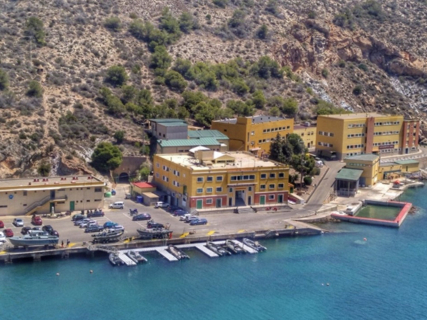
Accident at the Navy Diving Center of Cartagena: what has happened and what is known about the eight affected

Eight divers have been affected by an incident in a hyperbaric chamber in La Algameca. Two remain with a reserved prognosis while the Navy investigates causes that have not yet been determined.

3 minutes

fotonoticia 20260916180809 1920

fotonoticia 20260916180809 1920

Add DEMÓCRATA to Google

Ask FREN

Published

Last updated

3 minutes

Most read

The Navy is investigating the accident that occurred this Wednesday at its Diving Center in Cartagena, where eight divers have been affected during an incident recorded in a hyperbaric chamber. Two of them remain with reserved prognosis, while five others continue to be monitored with minor injuries and one has already been discharged.

The event took place early in the morning at the Navy Diving Center (CBA), located at the Naval Station of La Algameca. The military institution has opened an internal investigation to determine what happened and, for the moment, has not officially communicated the cause of the accident.

These are the main keys to what happened and what still needs to be clarified.

Where did the accident occur?

The incident took place at the Navy Diving Center of Cartagena, a specialized unit in underwater operations located at the Naval Station of La Algameca.

It is a reference center for the Armed Forces in terms of diving, training, and health related to underwater activities. It also has specialized facilities to work under hyperbaric conditions.

What happened to the eight divers?

The Navy has communicated that the accident occurred in a hyperbaric chamber early this Wednesday.

The available official information does not specify what activity the eight affected were performing at the time of the incident nor what the specific mechanism was that caused their injuries.

Therefore, it cannot yet be established whether the accident was related to pressure, the gases used, the operation of the facility, or any other circumstance.

What is the condition of the affected individuals?

The balance communicated by the Navy distinguishes three situations among the eight involved divers.

Five remain under observation with minor injuries, while two others have a reserved prognosis. The eighth affected has already been discharged.

The Navy has stated that its "main concern" is the health status and evolution of the affected members.

What is a hyperbaric chamber?

A hyperbaric chamber is a facility designed to increase and control the environmental pressure inside it. These facilities have medical applications and are particularly important in professional and military activities related to diving.

They allow working under controlled pressure conditions and developing related procedures, among other areas, to the compression and decompression of divers, the training and treatment of certain diving accidents.

The La Algameca complex has an important infrastructure specialized in this area.

What could have caused the accident?

This is precisely the main unknown that remains to be resolved.

The Navy has opened an internal investigation, but so far it has not publicly identified the origin of the incident. Any specific attribution to a technical failure, a problem with gases, or a disorder resulting from pressure would therefore be premature.

Some information has pointed to symptoms related to immersion, but there is currently no official conclusion that allows establishing what exactly happened to the eight divers.

What is the Navy Diving Center?

The CBA concentrates a good part of the specialized capabilities of the Navy related to the underwater environment. Its origins date back to the training of divers developed in Cartagena since 1922, while the current center has been in La Algameca since 1970.

Among its functions are the training and instruction of divers, research and advice, in addition to technical work underwater.

Its specialists also carry out maintenance and repair operations on the submerged part of ships, with interventions that may include plugging, placing anodes, or cleaning intakes.

What remains to be known?

The investigation must now reconstruct what procedure was being carried out, what happened inside the chamber, and what caused eight people to be affected.

It must also be determined whether there was any technical incident or if other factors were involved. Until that investigation concludes or the Navy provides new data, the specific cause of the accident remains unknown.

The medical evolution of the two divers with reserved prognosis constitutes, meanwhile, the main point of attention after the incident.

More key points, information and questions with FREN

AI-GENERATED CONTENT

What internal investigation procedures does the Navy follow in cases of accidents at military facilities?

In Spain, there is no single, detailed public regulation that describes, step by step, how the Navy internally investigates all accidents at its facilities. What can be reconstructed, based on official documentation and recent examples, is a fairly clear scheme: the activation of emergency and safety protocols is combined with an internal administrative investigation or “reserved information,” and, where appropriate, specialized technical investigations (for example, in aircraft accidents) and the intervention of the competent jurisdiction.

General framework and involved bodies

The Ministry of Defense is ultimately the one who orders and supervises internal investigations for serious incidents at bases and barracks. Recent news reports indicate that, following a shooting incident at the El Goloso base, Defense “has launched an internal investigation” to clarify what happened during a training day at a military shooting range; sources from the Ministry confirm the opening of these internal inquiries to clarify “all aspects” of the episode. This pattern — opening an internal investigation by order of the department — is usual in the Armed Forces.

When the accident involves military aircraft, the Commission for the Technical Investigation of Military Aircraft Accidents (CITAAM) also comes into play, whose competencies are mentioned in an agreement published in the BOE between Defense and the Polytechnic University of Madrid. This agreement aims to train Ministry personnel in the technical investigation of aircraft accidents and incidents and to use CITAAM’s resources for practical exercises on real wreckage from previously investigated accidents, confirming the existence of a specialized structure for the technical part.

Types of investigations that may be opened

Based on known cases, at least three levels can be distinguished that, in practice, may coincide when there is an accident at a naval or joint facility where the Navy operates:

  • Internal administrative or disciplinary investigation: the department or command involved opens an investigation to reconstruct the facts, determine if there were breaches of orders, negligence, or organizational failures, and, if applicable, assign disciplinary responsibilities. In the Interior and Civil Guard sectors, figures such as “reserved information” are used for this purpose, and Defense has sometimes chosen to suspend or not initiate disciplinary procedures while the judicial investigation progresses, to avoid contradictory resolutions; this scheme is transferable to the military environment.
  • Technical safety investigation: when the accident affects a complex system (aircraft, certain equipment, spills, etc.), a purely technical investigation is opened. In the case of Spanish military aircraft, CITAAM is the reference body, focusing on material, operational, and procedural causes, with the aim of formulating safety recommendations and preventing new accidents.
  • Judicial investigation: if there are deaths, serious injuries, or possible crimes (for example, violation of occupational safety rules or duty of care), the ordinary or military jurisdiction may open criminal proceedings. In other sectors, such as railways, it has been seen how the judicial investigation runs in parallel with an independent technical commission; this same logic of parallelism is usually applied when judges and prosecutors intervene in accidents related to the Administration.
Usual phases of the internal procedure

Although the specific details of the Navy and Defense protocols are not systematically published, from the information available in other military cases and the safety culture described by the Ministry itself, several recurring phases can be inferred:

  • Activation of emergencies and securing the area: in the event of an accident (for example, a shooting incident or an armored vehicle rollover), the base’s emergency protocols are activated, the injured are attended to, and the facilities are secured. In simulation exercises of hydrocarbon spills at the Naval Base of Rota, the coordinated deployment of the Navy, Maritime Rescue, Maritime Captaincy, and other agencies according to the National Response System is expressly mentioned, anticipating how it would proceed in a real case.
  • Notification and decision to open an investigation: the unit command submits a report to the organic chain and the Ministry. From there, Defense publicly confirms — as it did in El Goloso — the opening of an internal investigation to clarify contradictions and establish the official version.
  • Constitution of the investigative team: a team is appointed, which may include Navy commanders, technical specialists, and legal personnel. In the field of civil transport accident investigation, it is foreseen that each accident has a responsible investigator and a team that cannot receive external instructions; the training agreements with CITAAM point to a similar model of technical professionalization in the military environment.
  • Collection of evidence and analysis: statements are taken from those involved, documents and records are gathered, and, where appropriate, material remains of the accident. In other accident commissions (railway, for example), detailed metallurgical and technical analyses are emphasized; the existence of laboratories and training resources at CITAAM indicates that the Navy applies comparable methodologies in the accidents that affect it.
  • Report and recommendations: the investigation concludes with an internal report, which may be strictly confidential or have a public part. In the transport sector, the objective is to formulate safety recommendations without a sanctioning character; in the military environment, these recommendations may be accompanied, in a separate channel, by disciplinary proposals or changes in training, maintenance, and facility use protocols.
Relation to the safety culture

Beyond the reactive response, the Ministry of Defense highlights the existence of a “safety culture” in the Navy, which is reinforced through specific training centers in maritime emergencies and air accidents, drills at naval bases, and cooperation with other civil agencies. These preventive and training devices are directly linked to lessons learned from previous internal and technical investigations, which feed the updating of protocols applied when a real accident occurs.

What are the competencies and functions of the head of the Navy Diving Center?

The Navy Diving Center (CBA), based in Cartagena, is the Spanish Navy’s reference unit for military diving and underwater interventions. Although a detailed profile with the functions of the “head of the Diving Center” as such does not appear in the search of accessible official norms and documents, it is possible to reasonably describe its competencies based on the center’s mission and the Navy’s usual organization.

Command and leadership of the unit

The head of the Navy Diving Center is the highest authority of the unit and exercises military command over all personnel, resources, and activities of the center. Their core competencies include:

  • Exercising organic and operational command over the military divers assigned to the center, as well as support personnel (technicians, maintenance specialists, hyperbaric medical staff, administration, etc.).
  • Planning, directing, and supervising underwater operations assigned to the CBA: seabed exploration and reconnaissance, support for mine detection and neutralization, hull and structure repair or inspection work, search and rescue, and other specialized missions.
  • Ensuring discipline, morale, and safety of personnel, applying the Armed Forces’ internal regulations and the chain of command’s directives.
Responsibility for training and diving doctrine

The CBA is, de facto, the Navy’s center of excellence in diving. Therefore, the head of the Center assumes a key role in training and instruction:

  • Defining and approving training and instruction plans for military divers, including basic courses and advanced training (deep diving, mixed gas operations, use of underwater vehicles and drones, counter-mine work, etc.).
  • Ensuring doctrinal updates in military diving, incorporating lessons learned from real operations, allied exercises, and international professional diving safety standards.
  • Coordinating with other centers and units (Military Diving School, Mine Countermeasures Force, maritime action units, etc.) to ensure training meets the Navy’s real operational needs.
Management of resources, facilities, and hyperbaric safety

The CBA operates highly specialized equipment: hyperbaric chambers, breathable gas mixtures, remotely operated vehicles (ROVs), sonar systems, and other underwater means. Consequently, the head of the Center has very significant responsibilities regarding resources and safety:

  • Managing material resources, ensuring their maintenance, availability, and updating according to Navy plans (for example, incorporating new support ships for underwater intervention or new underwater drone systems).
  • Supervising safety protocols in diving and hyperbaric operations, including the correct application of decompression tables, emergency procedures, medical qualification of personnel, and the use of hyperbaric chambers for incident treatment.
  • Proposing technical and equipment improvements to the superior command, participating in defining requirements for future acquisitions related to diving and underwater intervention.
External relations and support to other administrations

In practice, the Navy Diving Center cooperates with other State agencies (Civil Guard, maritime rescue services, autonomous communities) and international allies. The head of the Center usually:

  • Acts as the main technical interlocutor on military diving matters before the Navy Command, the Ministry of Defense, and other ministerial departments when underwater support is required.
  • Coordinates the CBA’s participation in joint devices for search, rescue, protection of underwater infrastructures, or actions related to underwater cultural heritage when the Navy is requested.
  • Represents the Center in technical forums and international exercises, especially those related to mine warfare, protection of cables and underwater conduits, and seabed security.
Advisory role to the Navy command

Finally, as head of the reference unit in diving, they have a clear advisory function:

  • Advising the Admiral Chief of the Navy Staff and operational commanders on all matters related to diving capabilities, risks, and possibilities of underwater intervention in specific operations.
  • Contributing to the planning of “Navy 2030” and other strategic plans in the specific field of the underwater domain, proposing lines of evolution for the diver force and technical means.

In sum, the head of the Navy Diving Center exercises comprehensive command: leads the unit, guarantees the safety and training of divers, manages resources and doctrine, coordinates cooperation with other administrations, and advises the chain of command on everything affecting military diving and seabed operations.

What legal requirements and safety protocols must be met to operate a hyperbaric chamber in military facilities in Spain?

To operate a hyperbaric chamber in military facilities in Spain, one must simultaneously comply with general Spanish regulations (industrial, medical device, labor, and health) and the internal Defense regulations for military premises. Below is a summary of the main requirements and protocols derived from the consulted sources.

1. Basic applicable legal framework
  • Pressure equipment: Royal Decree 809/2021, which approves the Regulation on pressure equipment, establishes the requirements for design, installation, commissioning, periodic inspections, repairs, and modifications of any fixed pressure equipment, including hyperbaric chambers, which are pressure vessels occupied by people.
  • Safety in hyperbaric environments and chamber definition: Royal Decree 550/2020, on safety conditions for diving activities, defines the hyperbaric environment and the hyperbaric chamber as “a pressure enclosure intended to be occupied by people, equipped with means to regulate the pressure difference […] used both for the treatment of pathologies related to hyperbaric exposure and to perform or complete surface decompression periods.”
  • Sectoral standards for professional diving and hyperbaric means: the II Collective Agreement for professional diving and hyperbaric means and its amendment (Resolution of April 10, 2017, BOE-A-2017-4468) set technical safety criteria, including:
    • Definitions of hyperbaric chamber, decompression chamber, and hyperbaric center.
    • Obligation to have a decompression chamber “on-site, available and useful” for certain dives, with a maximum arrival time < 15 minutes demonstrated by drill.
  • Medical devices: hyperbaric chambers with a medical purpose are medical devices subject to Regulation (EU) 2017/745 and Royal Decree 192/2023, on medical devices. The AEMPS has announced specific control campaigns for hyperbaric chambers to verify:
    • Compliance with essential requirements and CE marking.
    • Registration in the AEMPS Medical Devices Marketing Registry.
  • Occupational risk prevention: the Occupational Risk Prevention Law and its implementing regulations (including Royal Decree 843/2011 on the organization of health resources of prevention services) apply to personnel working in and around the chamber.
  • Sanitary authorization of centers: each autonomous community regulates the authorization of hyperbaric medicine units in healthcare centers. For example, Andalusia has approved a operating guide for the hyperbaric medicine care unit, with requirements for:
    • Specific sanitary authorization.
    • Formal linkage to a hospital equipped with Emergency and ICU services.
    • Technical direction by a physician with accredited training in hyperbaric and underwater medicine.
    This scheme is transferable to similar units in military healthcare.
2. Hyperbaric chamber safety protocols

Based on this regulatory framework, the usual protocols that should be implemented in a military environment are:

  • Safe design and installation
    • Compliance with the Pressure Equipment Regulation (calculation, materials, safety valves, relief devices, instrumentation).
    • Technical project endorsed and authorizations from the competent industrial and health authorities.
    • Compliance with specific UNE/EN standards for hyperbaric chambers (electromedical compatibility, electrical safety, etc.).
  • Inspections and maintenance
    • Initial, periodic, and extraordinary inspections by accredited control bodies as pressure equipment.
    • Documented preventive maintenance program (valves, oxygen systems, communications, emergency systems, doors, and closures).
  • Clinical and operational protocols
    • Protocols for medical indications (decompression sickness, CO poisoning, radiotherapy injuries, etc.) and contraindications.
    • Written procedures for:
      • Entry and exit of patients (including stretchers).
      • Pressurization and depressurization cycles, gas mixtures, exposure times.
      • Continuous patient monitoring and communications with the outside.
    • Evacuation plans to ICU or operating room when the chamber is integrated or linked to a military hospital (such as the hyperbaric complex of the Central Defense Hospital “Gómez Ulla,” described by the Ministry of Defense).
  • Emergency management
    • Internal emergency plan with scenarios of fire, power failure, oxygen leak, acute patient illness, structural failure.
    • Documented periodic drills, including evacuation from training areas (diving, parachuting, high altitude) to the chamber and from the chamber to the critical area.
    • Coordination with occupational risk prevention services and, where appropriate, with the public emergency system.
  • Training and qualification of personnel
    • Physicians with specific training in underwater and hyperbaric medicine (recognized master’s or diploma).
    • Technical and nursing staff trained in chamber operation, safety in hyperbaric atmospheres, and advanced life support.
    • For professional or military diving, compliance with supervisor and safety chief requirements defined in the “hyperbaric means” regulations (minimum experience, specific occupational risk prevention training, and direction of evacuation plans).
3. Specifics of military facilities
  • Physical and information security: civilian personnel access to areas with hyperbaric chambers inside a base is governed by the military installation security plan. The installation chief authorizes access zones, and civilian personnel must follow established safety instructions.
  • Internal Defense regulations: military diving and hyperbaric operations are governed by their own rules, as recognized by Royal Decree 550/2020. These rules (often internal circulation rules) usually:
    • Adapt civil requirements to the operational environment (diving exercises, rescues, special forces training).
    • Incorporate additional requirements for confidentiality, information classification, and operational continuity.
  • Integration with Defense and emergency plans: chamber protocols must align with military health plans (such as those of the High-Level Isolation Unit and the Underwater and Hyperbaric Medicine Service of Gómez Ulla) and with support plans for Armed Forces exercises and operations.

In summary, a military hyperbaric chamber in Spain must fully comply with civil regulations on pressure equipment, medical devices, occupational risk prevention, and sanitary authorization, complemented by the safety, access, and operational protocols specific to the Ministry of Defense and each military facility.

Play

Test your knowledge with FREN!

How much do you know about this topic? Answer the following 3 questions.

Where did the accident involving eight affected divers take place?

Question 1 of 3

What type of facility was involved in the accident affecting the divers?

Question 2 of 3

What is the medical condition of the affected divers according to the Navy statement?

Question 3 of 3

Hola, soy Fren. ¿Cómo te ayudo?