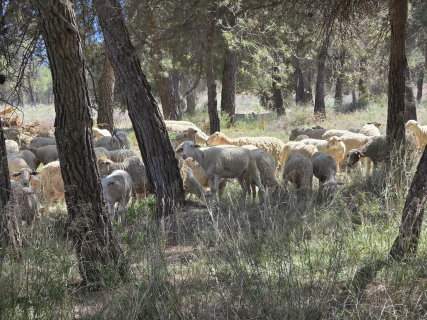

The Ministry of Agriculture, Fisheries and Food (MAPA) has reported that it maintains close control over the evolution of the Shamonda virus, which affects cattle, sheep, and goats. This supervision has intensified following the death of a person in France associated with this pathogen, which until now was considered non-transmissible to humans, and after its presence was confirmed in recent weeks in livestock farms in at least six Spanish provinces.
The Central Veterinary Laboratory (LCV) in Algete, as the National Reference Laboratory, has confirmed the detection of Shamonda virus type 1 in farms in Córdoba, Toledo, Ávila, Madrid, and Girona, where on October 20 it was found in three dairy cattle farms. Additionally, in Cantabria, the circulation of Shamonda type 2 has been observed.
In the affected animals, episodes of fever, diarrhea, and a drop in milk production have mainly been observed, a clinical picture that coincides with the symptoms described in other European countries. The confirmations have been made within the passive surveillance system that Spain applies against this disease.
"The situation in Spain continues to be monitored, with special attention to the evolution of cases, the characterization of the identified viruses, and their possible relation to the genotypes described in other European countries," states the latest update from MAPA.
Concern has surged after a patient admitted to a hospital in Lyon with severe immunodeficiency died as a result of the shamonda virus. The ministries of Health and Agriculture of France have explained that clinical, biological, and epidemiological investigations are being carried out and have emphasized that "there is no health risk to the population."
SITUATION IN EUROPE
Austria, Germany, Belgium, Slovenia, Spain, France, Ireland, Italy, Liechtenstein, the Netherlands, Portugal, the United Kingdom (Jersey), and Switzerland have recently reported the detection of the shamonda virus in their livestock. In the last 15 days, Portugal, Slovenia, and France have reported an increase in cases.
Portugal reported on October 9 that five cattle farms had tested positive, the same date on which Slovenia reported its first outbreak of the virus in three cattle from a farm located in the Savinja region, in the east of the country.
France, for its part, has confirmed the presence of the virus in 54 departments, noting a progressive expansion of the infection in various species of livestock. In the cattle population, animals with compatible symptoms have been identified in 52 departments.
Regarding sheep livestock, the confirmation occurred in September in the departments of Oise and Aveyron, where outbreaks manifested with severe congenital malformations in lambs, such as arthrogryposis and brachygnathia, with the genome of the virus also found in the brain tissue of the affected animals.
The first case detected in humans in France was recorded on September 23. The patient initially presented neurological signs and died two weeks after the onset of symptoms. The coincidence of virological, clinical, radiological, and epidemiological data points to a possible relationship between the infection by the virus and the clinical picture of the patient, although a definitive link cannot yet be established.