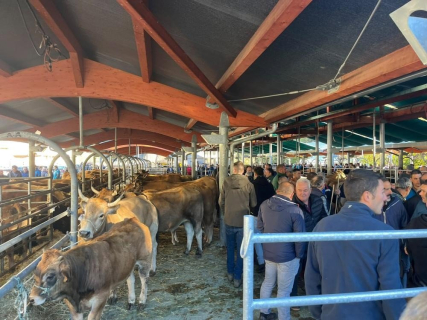

The Principality will allow, starting this Sunday, November 1, and until December 31, the holding of fairs, contests, competitions, auctions, markets and other gatherings that involve concentrations of cattle in Asturias. These activities had been suspended due to the epidemiological situation of contagious nodular dermatosis (DNC). The new resolution makes it possible to gradually resume these events thanks to the favorable evolution of the disease, although under strict sanitary conditions.
The authorization is limited to cattle from Asturian farms that have remained uninterruptedly in the community since before June 1, 2026. Also allowed will be the presence of cattle born in Asturias after that date, provided they have not left the autonomous territory. The Ministry of Rural Environment and Agricultural Policy bases the measure on the improvement in the sanitary situation, the progress of vaccination in the affected areas and the reduction in the activity of vector insects during the cold months.
The Director General of Livestock and Agricultural Health, Rocío Huerta, visited this Sunday the annual fair of Somiedo, where she insisted on the need to remain cautious. "The recovery of fairs and gatherings is important for livestock activity, but we must act prudently and rigorously comply with sanitary measures," she said. Huerta emphasized that prevention remains "fundamental" to protect farms and move toward normality with guarantees.
In parallel, the National Livestock Market of La Pola Siero will continue without authorization as a market of state scope until December 31. However, its facilities may be used for the grouping, management, concentration and dispatch of cattle, provided the animals comply with the same requirements of origin and permanence set for the rest of the events. Concentrations of other livestock species will continue to be subject to their own specific regulations.
The resolution also includes various biosecurity measures. Among them, a 21-day quarantine is established for animals of susceptible species that are brought into farms from areas classified as risk areas, as well as the mandatory disinsection of livestock and transport vehicles. Trucks coming from other communities must likewise certify that they have complied with the cleaning, disinfection, and disinsection protocols. The official veterinary services, with the support of the security forces and corps, will carry out checks to ensure compliance with these obligations. The conditions may be modified depending on the epidemiological evolution.