
The counselor of Agriculture, Livestock, Rural Environment, and Environmental Policy, Joaquín Antonio Pino, has proposed to the beekeeping sector the implementation of a specific project to control invasive species such as the Asian wasp through trapping systems with pheromones, in order to mitigate the damage they cause to hives. At the same time, he has expressed his willingness to update the compensation standards for the damages caused by the bear.
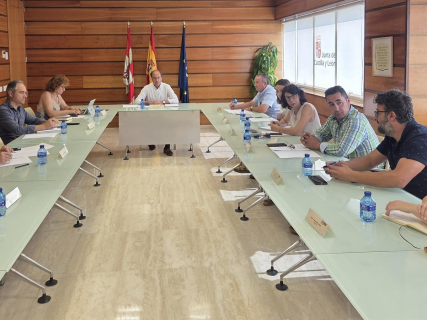
The working meeting, held this morning with agricultural professional organizations, served to review the current situation of beekeeping and assess its main difficulties and demands, with the aim of "advancing in solutions that allow improving profitability and guaranteeing the future of a fundamental activity for the rural environment and population settlement in the towns."
From the Department, it is acknowledged that beekeeping is going through a "particularly difficult" stage and is among the "most affected" sectors of agricultural production. According to the department's statement, the loss of profitability is compounded by a campaign conditioned by drought and high temperatures, prices that do not cover production costs, and the emergence and spread of diseases that in some cases have a very complex solution.
Among the central issues, the impact of wildlife on beekeeping operations has been addressed. In particular, the damage caused by the presence of the bear and the growing impact of species such as Vespa velutina, commonly known as the Asian wasp, have been analyzed.
Attention has also been focused on the effect of the bee-eater, whose presence is causing bees to limit their outings from the hives, which leads to a notable drop in production and an increase in mortality. Professionals estimate these losses at around 40 percent in the most affected areas.
In light of this scenario, the head of Agriculture, Livestock, Rural Environment, and Environmental Policy has proposed to agricultural professional organizations to analyze, together with the Technological Agricultural Institute of Castilla y León (ITACyL) and with the direct collaboration of the sector itself, a project to control species such as the Asian wasp based on trapping systems with pheromones.
"The objective is to evaluate effective solutions that allow reducing their incidence and minimizing the damage to the hives," states the information disseminated by the Department.
Regarding the damages attributable to the bear, Pino has acknowledged the sector's concern about the pending compensations and has indicated that the Ministry of Agriculture, Livestock, Rural Environment, and Environmental Policy is analyzing "the best way to make these payments effective." In this line, he has reiterated his commitment to reviewing the compensation scales for the damages caused by the bear, with the intention of adjusting them "to the reality of the losses suffered by the professionals."
The counselor has also advanced that the Junta will study the inclusion of the beekeeping sector in the extraordinary aid plan designed in light of the seriousness of the situation, following a similar scheme to the measures being considered for other particularly affected areas, such as cereals. At the same time, the option of articulating aid linked to diesel consumption has been debated to alleviate the pressure that high production costs exert on the farms.
During the meeting, both the Ministry and the agricultural organizations have agreed on the importance of having updated economic data that accurately reflects the real situation of the farms. Therefore, it has been proposed to develop a specific cost study for beekeeping that offers a faithful image of the expenses and the evolution of the profitability of the activity, and that serves as a technical basis for designing and guiding future support measures for the sector.