Crowdfunding, new investment lever for olive, pistachio, and almond plantations

The landscape of the Spanish countryside is changing, especially in irrigation, where woody crops are replacing cereals.

2 minutes

Spain opens the export of pistachio and dried fig to China and seals key advances for pork

Spain opens the export of pistachio and dried fig to China and seals key advances for pork

Add DEMÓCRATA to Google

Ask FREN

Published

2 minutes

Most read

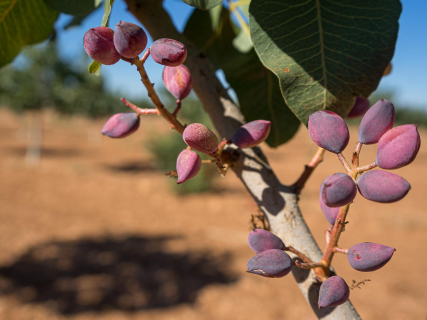
The surface of woody crops increased by 9% between 2012 and 2022 according to the "Analysis of surface changes in woody crops" prepared by the Ministry of Agriculture, Fisheries and Food. The almond tree, the olive grove, and the pistachio are the most prominent crops, for which not only individual farmers or business societies are betting, but also investment funds.

However, according to a report from the crowdfunding platform Fellow Funders, (active since 2016 and authorized by the CNMV), since they are long-cycle crops, access to traditional credit is sometimes more complicated and it is there that new participatory financing formulas appear.

"Regulated crowdfunding via equity fits with real asset agriculture in a way that no other instrument achieves: it fractions the ticket so that hundreds of investors enter where only a bank or fund used to enter, accepts land, harvest, or machinery as collateral, and tolerates the long terms required by a crop like the almond or olive. At Fellow Funders we have channeled 7 M€ in eight rounds of agro, and we are clear: this is not a temporary alternative, it is the financing infrastructure that the Spanish countryside lacked", explains Gonzalo Albero, CEO of Fellow Funders.

According to data from the Cajamar Observatory, the Spanish countryside is gaining weight in the Spanish economy in such a way that its Gross Added Value (GAV) grew by 3.9% in 2024 while in the whole of the EU it fell by 2.9%. Despite this increase, projects of woody crops like almond, olive, and pistachio face difficulties in financing their investments, as they involve long maturation periods, until the plantations enter production and find their place in the market.

The Fellow Funders report states that although Spain has a specific ICO plan to improve financing in the agricultural sector, the public bonus does not cover the part of the loans that exceed 100,000 euros, which limits access to credit for those medium-sized farms.

This entity has shown that crowdfunding can become a good alternative to finance agricultural projects through "Alboris Mancha" which in the last eight years has raised nearly three million euros from 199 individual investors to develop more than 40 hectares of olive grove, almond, and pistachio without resorting to traditional bank financing.

“Today we structure operations from the beginning with mechanisms that guarantee the repurchase of shares with returns above the market and on optional terms for the investor. In the coming years, we will see more structured operations in this way. This has come to stay,” concludes Albero from Fellow Funders.

More key points, information and questions with FREN

AI-GENERATED CONTENT

What procedures and requirements does the CNMV demand to authorize crowdfunding platforms in Spain?

The authorization of participatory financing platforms (investment and loan crowdfunding) in Spain falls under the CNMV's jurisdiction and is based on securities market regulations, specific rules promoting business financing, and general rules on online services. In practice, the promoter must request formal authorization, pass a review of solvency, organization, and corporate governance, and be registered in the CNMV's official registers. Additionally, it must comply with ongoing investor information requirements, client protection, and payment of supervisory fees. Below is a structured summary of the main elements required by this regime.

1. Basic regulatory framework

The legal regime for entities supervised by the CNMV is mainly articulated today through:

  • Law 6/2023, of March 17, on Securities Markets and Investment Services, which sets the general framework for authorization, official registers, supervision, and CNMV cooperation with other authorities (Law 6/2023).
  • Its regulatory development, among others, through Royal Decree 815/2023, on official registers, cooperation, and supervision (Royal Decree 815/2023).
  • The business financing promotion regulations, which include the regime for participatory financing platforms (Law 5/2015 and its amendments, cited in several subsequent provisions, although the details of its articles are not reproduced in the available references).
  • Law 34/2002, on information society services and electronic commerce, since these platforms operate through websites and online services (Law 34/2002).
  • The CNMV fee regime, established in Law 16/2014, on CNMV fees and its settlement models (Law 16/2014 and Order ECC/51/2015).

This is complemented by the CNMV's internal regulations (Internal Regime Regulation and delegation of powers agreements, such as the Resolution of December 19, 2019 and the Agreement of April 26, 2017), and horizontal rules on investment product advertising, included in CNMV Circular 2/2020.

2. Basic authorization procedures before the CNMV

The authorization procedure to operate as a participatory financing platform generally follows the common logic of supervised entities:

  • Formal application: submission of an application to the CNMV, accompanied by bylaws, identification of significant partners and administrators, business plan, and detailed description of the platform model and types of projects to be financed.
  • Organizational and technical documentation: report on human and material resources, IT systems, risk management models, and internal control mechanisms.
  • Suitability assessment: the CNMV analyzes the honorability and experience of administrators and executives, the sufficiency of own funds, and the solidity of the business model, according to the general criteria of Law 6/2023 and its regulatory development.
  • Resolution and registration: if favorable, the CNMV grants authorization and proceeds to register the platform in its official registers, regulated by Royal Decree 815/2023. The platform can only operate after this registration.
  • Fees: the promoter must pay supervision and registration fees provided in Law 16/2014 and Order ECC/51/2015, using official forms.

3. Main blocks of material requirements

3.1. Legal and corporate form requirements

The platform must be constituted with an appropriate commercial corporate form, have bylaws that include its purpose as a provider of participatory financing services, and comply with general obligations of corporate law and information society services legislation. The regulations also require that the registered office and effective administration be in the EU to facilitate supervision.

3.2. Capital and solvency

The specific regime for minimum capital and, if applicable, additional guarantees (e.g., professional liability insurance) is established in business financing promotion legislation, not detailed in the available references. In any case, the CNMV verifies that own funds are proportional to the expected volume of operations and risks assumed.

3.3. Internal organization, corporate governance, and control

Governance structures ensuring prudent and sound management are required: a collegiate governing body, clear risk management and compliance functions, and policies to avoid conflicts of interest. These requirements fit within the general logic of Law 6/2023, which strengthens supervision of entities subject to the CNMV.

3.4. Investor information and advertising

The platform must provide investors with clear, impartial, and non-misleading information about:

  • Characteristics of each project (risks, expected returns, terms, guarantees, etc.).
  • Associated fees and costs.
  • Contractual rights and obligations.

Advertising of projects and the platform itself is subject to the truthfulness and proportionality criteria of CNMV Circular 2/2020 on advertising of investment products and services.

3.5. Client protection and complaint management

Sectoral and consumer regulations require client protection mechanisms: procedures for handling and resolving complaints, policies against conflicts of interest (e.g., when the platform or its partners participate in financed projects), and safeguarding client funds and data, in connection with the rules of Law 34/2002.

3.6. Periodic information obligations and supervision

Once authorized, the platform is subject to ongoing obligations to submit statistical and financial information to the CNMV, framed within the logic of accounting and reporting circulars (such as Circular 4/2022 for market infrastructures). Failure to comply may lead to sanctions and ultimately revocation of authorization.

No further information is available in the consulted sources about specific capital amounts, investment thresholds, or article-by-article details of the specific regime for participatory financing platforms, so these aspects should be verified directly in the consolidated text of Law 5/2015 and CNMV-specific documentation.

What specific minimum capital and financial guarantee requirements does the regulation impose on participatory financing platforms? What is the CNMV's ongoing supervision procedure for a crowdfunding platform once authorized? What limits and risk warnings are imposed on small investors investing through these platforms?

What are the competencies of the Ministry of Agriculture, Fisheries and Food regarding agricultural financing?

The Ministry of Agriculture, Fisheries and Food (MAPA) holds key competencies in agricultural financing both in managing CAP funds (FEAGA and Feader) and in designing national financial support lines (SAECA guarantees, de minimis aid, agricultural insurance, etc.). These functions are exercised through its management bodies (especially the General Secretariat of Agriculture and Food) and attached agencies such as the Spanish Agricultural Guarantee Fund (FEGA) and the State Agricultural Insurance Entity (ENESA). Additionally, the Ministry promotes and manages specific aid in crisis situations (droughts, Filomena, COVID‑19, Ukraine war) and investment programs like machinery renewal. Below are the main competencies detailed, supported by current regulations.

1. Governance and management of the CAP, FEAGA, and Feader

The agricultural financing architecture in Spain relies on the CAP 2023‑2027 and its Strategic Plan. Royal Decree 1046/2022, of December 27, regulates the governance of the CAP Strategic Plan and FEAGA and Feader funds, designating the General Secretariat of Agriculture and Food, a MAPA management body, as the Managing Authority of the Plan responsible for CAP implementation in Spain. See Royal Decree 1046/2022.

This implies competencies over:

  • Design and coordination of interventions financed by FEAGA and Feader in the CAP Strategic Plan (direct payments, sectoral measures, and rural development).
  • Relations with regional management authorities and the Plan's monitoring committee system, as described in the decree's preamble.
  • Participation in defining the integrated management and control system for aid, developed by Royal Decree 1047/2022, which regulates management and control of Strategic Plan interventions and other CAP aids.

Moreover, Order PCM/399/2023 creates the Management and Control System Table for Strategic Plan interventions and other CAP aids, strengthening technical-administrative coordination in financial management.

Regarding paying agencies, previous regulations (Royal Decree 92/2018, now partially repealed) are complemented by Order APA/3147/2006, which authorizes the Spanish Agricultural Guarantee Fund (FEGA) as paying and coordinating agency for European agricultural funds. The new FEGA Statute, approved by Royal Decree 202/2024 (not fully reproduced in sources but corrected by erratum), updates this structure. FEGA, attached to MAPA, is the operational arm for CAP financial execution and delegates and organizes its competencies through internal resolutions such as the delegation of powers of May 23, 2025 (FEGA Resolution 23‑5‑2025).

2. Financing lines through SAECA guarantees

MAPA designs and manages several financial support lines based on subsidizing the cost of guarantees from the State Agricultural Guarantee Company, S.M.E. (SAECA). Royal Decree 388/2021 establishes the regulatory bases for subsidies to cover SAECA guarantees for holders of agricultural holdings, fisheries sector operators, and agri-food industries, aiming to facilitate access to liquidity loans in drought, extreme events, or market crisis contexts. The preamble highlights the need to ensure credit availability to the agri-food and fisheries sector and designates SAECA as a collaborating entity in subsidy management. See Royal Decree 388/2021.

Complementarily, Royal Decree 244/2021 establishes bases to subsidize SAECA guarantees specifically linked to agricultural machinery financing, expanding financing avenues to modernize an aging machinery fleet and aligning these investments with climate and environmental goals. The text explains these are subsidies to finance the cost of guarantees needed to obtain loans for acquiring new machinery, helping reduce costs, emissions, and occupational risks, according to Royal Decree 244/2021.

This line adds to other punctual measures, such as Royal Decree 507/2020 (SAECA guarantees for drought and other exceptional situations) or Royal Decree 411/2019 (guarantees for citrus crops), and previous bases of Order AAA/778/2016. This framework clearly establishes MAPA's competence in designing financial instruments with public guarantees for agricultural holdings, fisheries, and agro-industrial sectors.

In parallel, in generalized crisis situations, the Government, at MAPA's proposal among other departments, has approved royal decree-laws with agricultural packages often including specific financial lines, frequently supported by SAECA or credit expansions: for example, Royal Decree-law 4/2022 (support for the agricultural sector due to drought), Royal Decree-law 6/2022 (response to the Ukraine war), Royal Decree-law 4/2023 (drought and worsening primary sector conditions), or Royal Decree-law 8/2020 and Royal Decree-law 10/2021 (Filomena storm), which include various agricultural financial measures.

3. Agricultural insurance and ENESA

Another central piece of agricultural financing and risk management is combined agricultural insurance, under MAPA's competence through ENESA. The regulatory bases for subsidies to agricultural organizations to promote insurance are in Order APA/657/2005. ENESA, an autonomous agency attached to MAPA, manages subsidies for agricultural insurance premium costs and contracting, supported by an economic-financial structure organized through internal delegation resolutions, such as those from 2019 (Resolution 11‑2‑2019 and its amendment of 7-22-2019: [link]), and contracting bodies regulated by Order APA/416/2023.

4. Other financial support competencies

MAPA also exercises financing competencies through:

  • Regulation of basic income aid and other CAP direct payments, key for agricultural liquidity, through rules like Royal Decree 1045/2022 (basic income aid rights for sustainability).
  • Regulation of sectoral and associated aids (e.g., Order APM/350/2018 on associated aids to the global exploitation contract).
  • Internal economic-budgetary management (spending limit orders and delegation of powers such as Order APA/1511/2024 and Order APA/1018/2025), which condition the processing of subsidies and contracts linked to agricultural financing.

In sum, MAPA is not a public bank but is the main designer and manager of financial flows supporting agricultural income and sector investments: CAP, agricultural insurance, SAECA guarantees, and extraordinary crisis lines. These competencies are normatively articulated through royal decrees and ministerial orders, and operationally through FEGA, ENESA, and SAECA.

What specific role does FEGA play as a paying agency in the daily management of FEAGA and Feader funds? How do SAECA guarantee lines work in practice and what requirements must agricultural holdings meet to access them? How does MAPA coordinate with autonomous communities in the financial implementation of the CAP Strategic Plan 2023‑2027?

What results did the agricultural sector obtain in the last general elections in Spain?

In the last general elections in Spain, held on July 23, 2023 (23J), there are no official data that allow knowing "how much" the agricultural sector (farmers and ranchers) as a distinct group voted for the PP, PSOE, Vox, or Sumar. Electoral statistics are published by polling station, municipality, and province, but not by profession. Political analyses and media coverage such as the newspaper Demócrata show that the rural vote — where the agricultural sector weighs heavily — remains traditionally favorable to the PP, increasingly contested by Vox and, to a lesser extent, by "España vaciada" forces; while the PSOE tries to retain this electorate through promises like the Family Farming Law, still in the pre-legislative phase.

Date and framework of the last general elections

The last general election in Spain took place on July 23, 2023, which resulted in the current state legislature. Subsequently, the newspaper Demócrata has continued to use these 23J results as a reference when analyzing block situations and polls, both in voting intention surveys and in rural or agricultural electorate behavior. An example is the analysis of national polls from January 2024 in this Demócrata report, which compares current vote estimates with 23J percentages, although without specifically breaking down the agricultural vote.

Key limitation: no "official result" for the agricultural sector

From a strictly statistical point of view:

  • No data is published in official sources on a "vote of the agricultural sector" differentiated from other voters.
  • Available information is territorial: polling stations, municipalities, provinces, but not by occupation or economic sector.

Therefore, it is not possible to state with exact figures how many farmers or ranchers voted for PP, PSOE, Vox, Sumar, or others in the 2023 general elections. Any reading is made indirectly, through analysis of votes in rural or agricultural municipalities.

Rural vote behavior: clues about the countryside's weight

Demócrata's articles on regional elections and the rural world help understand the underlying pattern that also influences general elections:

  • In Castilla y León, one of Spain's most rural and agricultural territories, Demócrata recalls that the rural vote has been "one of the pillars of the electoral dominance of the People's Party" in agricultural and livestock towns and regions, although this map is fragmenting with the emergence of Vox and "España vaciada" platforms like UPL or Soria ¡Ya!, as detailed in this analysis on rural vote in Castilla y León.
  • In a broader view on "España vaciada," another Demócrata report explains that part of the countryside and depopulated territories' discontent has begun to channel electorally through Vox, which uses messages about rural abandonment and livestock defense, as exposed in this seven-year review of the España vaciada uprising.

These patterns indicate that, in rural terms (and by extension, many agricultural voters), the right-wing space — especially PP and Vox — has gained weight compared to the previous cycle, although with territorial nuances and the emergence of provincial actors.

Promises and parties' relationship with the agricultural sector

In the absence of direct numerical data on the agricultural vote, programmatic positions help understand how these supports have been sought:

  • PSOE: in an interview collected by Demócrata, the party's Secretary of Rural Environment, Agriculture, Livestock, and Fisheries emphasizes that the Family Farming Law was "the great electoral promise of PSOE for the primary sector in the last general elections" and is still in the pre-legislative phase, showing that the Government remains pending to materialize one of the key commitments with the countryside. The content is covered in this piece on the Family Farming Law.
  • PP and Vox: both parties have tried to capitalize on agricultural discontent. Demócrata reports, for example, Vox statements in a regional key where the party says it trusts more "what people from the countryside say" than polls and denounces Brussels' demands on farmers and ranchers, as narrated in this report on Vox and the countryside. At the same time, pieces are published where PP claims its track record defending the rural environment and confronts Vox over who better represents the primary sector.
  • Sumar and the space to the left of PSOE: fewer direct references appear in consulted sources to a specific "agricultural vote" toward Sumar in the general elections; their positioning focuses more on ecological transition policies, green employment, and territorial balance, with a more complex fit in many sector demands.

Conclusion

In summary: in the 23J general elections, there is no isolated statistical data allowing to say what exact "result" the agricultural sector obtained, because the electoral administration does not disaggregate the vote by professions. Context analyses indicate that the rural world — where much of the agricultural sector concentrates — has remained a key terrain for the PP, with growing Vox penetration and PSOE trying to retain support through legislative promises like the Family Farming Law, still not completed. No further specific quantitative information is available in the consulted sources.

How did the most rural provinces (Soria, Teruel, Cuenca, Zamora…) vote in the 23J general elections? What impact has the PSOE's failure to implement the Family Farming Law had on the agricultural sector's political support? What role have the España vaciada platforms played in recent general and regional elections?

Play

Test your knowledge with FREN!

How much do you know about this topic? Answer the following 3 questions.

What percentage did the area of woody crops in Spain grow between 2012 and 2022?

Question 1 of 3

Why is access to traditional credit complicated for woody crop projects?

Question 2 of 3

How much money has Fellow Funders channeled in eight agro financing rounds?

Question 3 of 3

Hola, soy Fren. ¿Cómo te ayudo?