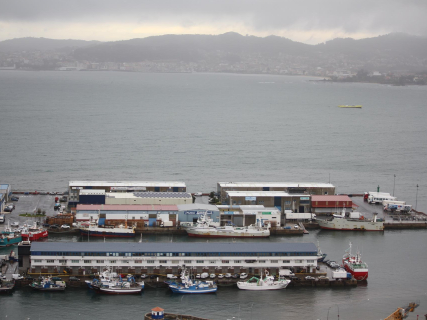

The immediate closure of the fishery for Patagonian squid (Loligo) in the Falkland Islands until 2027 leaves the 16 freezing trawlers with Galician capital operating in the fishing ground without their main objective. The decision now forces the shipowners to reorganize the activity of the vessels and seek alternatives for those that have other licenses.
This second campaign of the year started with scarce expectations for the fleet from practically its beginning, as a notable lack of resources in the fishing ground was observed in the first days of activity. This situation led the Government of the Falkland Islands to impose a temporary ban of 15 days.
While that interruption lasted, some of the vessels were able to take advantage of other fishing licenses for different species and move to other fishing grounds to continue fishing. Other boats, however, had to stop their activity.
After that break, the biologists from the Falklands who embark on these vessels during the campaign verified a significant drop in biomass, a circumstance that has led the authorities to order the immediate closure of the fishing ground until 2027.
The work campaigns are structured in two periods: a summer one, which usually starts at the end of July and lasts until September 30, and a winter one, which generally begins at the end of February.
What the closure means for the 16 Galician boats
The decision forces the shipowners to reconsider the weeks of activity that were still ahead. The vessels that have compatible licenses will be able to study their relocation to other fisheries, as already happened during the provisional interruption, while those that lack an alternative will have to remain inactive or end their campaign early.
The impact also reaches the crews and the activity linked to these freezers. However, there is currently no official balance of affected jobs, as the repercussions will depend on the alternative that each vessel can adopt. For that reason, it is not possible to translate the closure directly into a specific number of jobs.
The possibility of continuing to fish is also not the same for the entire fleet. It depends on the licenses that each vessel has and the fisheries it can access, so the closure of the loligo does not necessarily mean the paralysis of the 16 trawlers during the same period.
Less squid than expected for the Galician chain
The anticipated end of the campaign also implies that the volume of loligo captured will be lower than what could have been obtained if the activity had continued until the end of September. The effect is transferred to a chain linked to Galicia that includes storage, processing, and marketing of the product.
However, this does not allow us to assert that there will automatically be a shortage of squid or an increase in prices. The evolution of the market will also depend on the available stocks, other sources of supply, and the behavior of demand.
The horizon is now set for 2027, when the fleet will be able to face a new campaign again if the biological conditions and management decisions of the fishing ground allow for the recovery of activity on the resource.