
Ceuta forces Marlaska to activate the tools of the Migration Pact that Spain had decided not to incorporate. As a consequence of the migration crisis in Ceuta, the Government decided yesterday to accelerate the deployment in Spain of the European Pact on Migration and Asylum.
Thus, ethe Council of Ministers approved this Tuesday in the first round two draft bills to reform the Immigration and Asylum legislation, with which it aims to expedite the identification of those who enter irregularly, resolve certain requests for international protection earlier, and facilitate return when there is no right to remain in Spain.
It should be noted that Spain voted in favor of the Pact, but initially decided not to exploit all its tools because the Government opted for a more protective model; after Ceuta, the Executive has reconsidered that decision and has adapted Immigration and Asylum to use accelerated border procedures, triage, and faster returns.
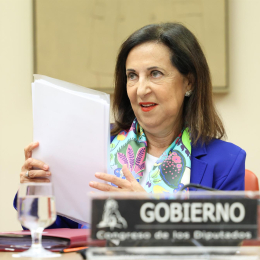
"The objective is to adapt Spanish legislation to the European Pact on Migration and Asylum", explained the Minister of the Interior this Tuesday after the Council of Ministers.
The new European framework has been mandatory since June 12. The Ministry of the Interior itself noted at that time that the regulations that make up the Pact began to be mandatory and directly applicable in Spain.

A triage for those who arrive irregularly
One of the main novelties that the Government wants to convey to the Spanish legal system is the so-called triage or border screening.
The procedure will allow identifying individuals who have crossed an external border irregularly, conducting identity and security checks, assessing their health status and possible vulnerability situations, and recording their biometric data.
The objective is to determine from the outset which pathway corresponds to each person: international protection, ordinary migration procedure, or return.
The draft bill presented by the Executive provides that this process will generally take place within a maximum of 72 hours, with the legally established guarantees and controls.
The difference is particularly relevant after what happened in Ceuta. An extraordinary arrival of tens of thousands of people currently forces the authorities to individually identify their situation before determining who can remain in Spain and who can be returned.
Faster asylum at the border
The second leg affects international protection. The future regulation will distinguish between the ordinary procedure and an accelerated examination procedure that must be resolved in three months, as explained by Marlaska.
This does not mean that asylum can be collectively denied to those who have entered irregularly.
Each application must continue to be examined and the corresponding guarantees maintained, especially when there are minors, vulnerable persons, or possible beneficiaries of international protection.
But the Pact allows certain cases to be processed more quickly at the border. If the application is ultimately rejected and there is no other title that allows one to remain in Spain, the procedure to leave the country may be initiated.
Marlaska has defended that the new model will allow for "more effective" management, but has insisted that it will maintain a "guarantee-based" approach that respects fundamental rights.
The Government now focuses on returns
The political shift is especially visible in the discourse used after the Ceuta crisis.
The Executive is now highlighting that the new European rules contain instruments aimed at preventing the effective entry into the territory of those who do not have the right to do so and accelerating the return when there is also no right to international protection.
Ángel Víctor Torres, appointed to coordinate the single command established for Ceuta, expressed it directly this Tuesday: "The priority of the Government of Spain is the return", although he specified that it must be done in accordance with the legislation.
This does not mean that Spain can carry out collective expulsions. Neither the European Pact nor the announced reform eliminate the individual examination of the circumstances of each person, the right to apply for asylum, or the specific protections that affect minors.

Featured story
Vivas reveals that Sánchez proposed to stage together the closure of the Ceuta crisis on July 31.
6 minutes
What Spain gains from the European Pact
The new system does not only provide control instruments.
For Spain, as a state located at one of the main external borders of the EU, one of its greatest advantages is that the migratory pressure is no longer conceived exclusively as the responsibility of the country of entry.
The Pact establishes a permanent mechanism of solidarity among member states. Countries under pressure can receive help through the relocation of applicants, financial contributions, or operational support.
Spain can also count on a reinforced European structure for the registration and monitoring of people who enter irregularly and to determine which State is responsible for processing each application.
The system aims, at the same time, to limit the so-called secondary movements: that a person registered in Spain subsequently moves to another member State and tries to initiate a new procedure there.
The PP demands the application of the Pact, but accuses the Government of being late
The position of the Popular Party regarding this movement of the Executive has a particularity: the main opposition party does not reject the European Pact on Migration and Asylum and, in fact, had been demanding the Government to implement it correctly.
The Popular Group registered last July 1 in Congress a non-legislative proposal "to guarantee the correct implementation of the European Pact on Migration and Asylum in Spain."
The PP had also previously used the European framework to criticize the Executive's migration policy. In March, it demanded the Government to effectively execute return orders and review migration agreements with third countries, while arguing that the extraordinary regularization promoted by the Executive clashed with the objectives of the Pact.
Therefore, the discrepancy between the Government and the PP is not so much about whether Spain should apply the new European system, but how to do it and with what intensity.
The crisis in Ceuta has also hardened the discourse of the popular party. Alberto Núñez Feijóo and other party leaders have called for increasing returns and have criticized the Executive for not having reacted earlier to the magnitude of the irregular entry.
The PP now finds an additional argument: part of the tools that the Government presents as a response to the crisis come from a European framework whose implementation the popular party had already demanded before the summer.
Vox wants to go further
The position of Vox is different. The party of Santiago Abascal has been describing what happened in Ceuta as an "invasion" for weeks and demands immediate returns or repatriations, greater pressure on Morocco, and a tightening of border control.
It also opposes the transfer of minors who arrived in Ceuta to other autonomous communities. The autonomous regions where Vox manages child welfare competencies have expressed their rejection of participating in those transfers.
For this reason, although certain tools of the new Pact —especially those aimed at streamlining procedures and returns— coincide with part of Vox's claims, the party's approach goes beyond what European regulations automatically allow.
The Pact does not authorize indiscriminate returns nor does it eliminate the right to asylum, individual assessment, or the reinforced protection of minors.
Sumar warns of the hardening
The reservations do not come only from the opposition.
Sumar has made observations within the Government itself regarding the hardening that the adaptation to the new European framework entails, as has been known this Tuesday.
It is one of the most politically delicate points of the reform. The Government presents the new rules as a combination of border efficiency and guarantees, but the acceleration of procedures and the greater weight of return mechanisms may open differences within the coalition during the processing.
And the texts still have a way to go.
The two draft bills have been approved in the first round by the Council of Ministers. They must now continue their processing, gather the corresponding reports, and return to the Executive before becoming bills and being sent to the Cortes.
The Ceuta crisis has thus turned a legislative adaptation that Spain was obliged to carry out due to the new European framework into a central piece of the Government's political response to irregular immigration.