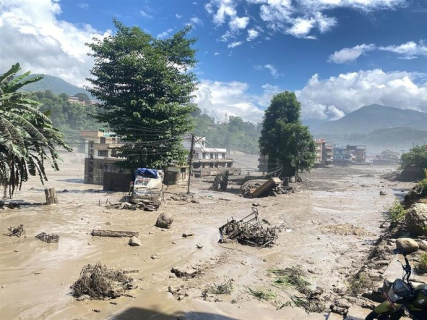

Among the hundreds of missing persons after the devastating flood in Nepal, there is an extraordinarily high number of foreigners. It is not a coincidence. The devastated area is located in one of the main corridors used by tourists and pilgrims traveling from Nepal to Tibet and, especially, to Mount Kailash.
Nepalese authorities counted 403 missing persons, including 341 foreigners from 26 countries, according to Associated Press. Among them were citizens from India, the United States, the United Kingdom, Australia, and other countries.
This figure is particularly striking because the tragedy occurred far from Kathmandu or some of the most well-known tourist enclaves in Nepal.
The explanation lies in the geography of the area.
One of the land gateways to Tibet
The Nepalese district of Rasuwa, one of the hardest-hit by the flood, connects Nepal with the Chinese region of Tibet.
The road that crosses towns like Syapru Besi and Timure leads to Gyirong, one of the main land crossings between the two territories.
This corridor is used by tourists, traders, and pilgrims. When the flood hit the area, numerous groups were precisely in transit to the border.
Mount Kailash attracts thousands of pilgrims each year
An important part of the missing foreigners was heading to Mount Kailash, located in western Tibet.
The mountain has enormous religious significance. It is considered sacred by Hindus, Buddhists, Jains, and followers of the Bön religion, which attracts pilgrims from different countries, especially from India and communities of the Indian diaspora.
Associated Press notes that 133 of the missing were Indian pilgrims traveling to Mount Kailash.
The pilgrimage is usually carried out through organized trips that cross Nepal before entering Tibetan territory.
Nepal serves as an entry point for many trips to Kailash
Kathmandu is one of the points from which organized routes to Tibet depart.
Travelers then travel by road north, crossing Rasuwa until they reach the border crossing.
This explains why there were complete groups of foreigners staying, traveling, or waiting in towns that have been directly affected by the flood.
The authorities are also searching for eight South Korean citizens who were working on a hydroelectric project, so not all the missing foreigners were tourists.
An international tragedy
The presence of citizens from so many countries has quickly turned the emergency into a diplomatic and consular problem.
India and China are participating in the assistance efforts, and numerous governments are trying to locate their nationals. Among the missing, there have been counted American, British, Malaysian, South African, Australian, and Dutch citizens, among other nationalities.
The figures continue to change as tour operators, authorities, and families manage to contact travelers who initially appeared as missing.
The tragedy has therefore affected a remote area of the Himalayas but located on an international route for tourism, trade, and pilgrimage, which explains the high presence of foreigners among the unlocated individuals.