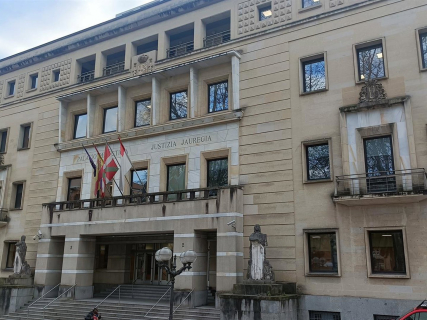

The Social Chamber of the Superior Court of Justice of the Basque Country (TSJPV) has ratified that the dismissal of a worker from a supermarket in Vitoria who consumed three drinkable espresso coffees, valued at 0.99 euros each, which had been removed from sale due to a broken cold chain and were destined for destruction, was unjustified. The court understands that there is no case of undue appropriation and that the employee had not been warned about the prohibition of consuming products removed from the commercial channel.
In its resolution, which Europa Press has accessed, the TSJPV rejects the appeal presented by the supermarket chain against the ruling issued by the Social Court number 1 of Vitoria-Gasteiz on December 23, 2025.
The employee, who had been working for the company since November 27, 2017, went to court after receiving a burofax with the communication of disciplinary dismissal. According to the ruling of the first instance, the company terminated him after the worker took several units of drinkable espresso coffee, owned by the company, one on January 23, 2025, and two others the next day, "without any sign of concealment in both cases."
Each of those drinkable containers had a price of 0.99 euros. They were no longer available to the public, as they had been removed from sale due to having "broken the cold chain." This type of product is stored, quantified through the intervention of an expert, and subsequently destroyed.
Up until the time of the events, the worker "had never been subject to disciplinary action," the resolution stated, adding that there was no record of him having received an order, prohibition, or express warning that prevented him from consuming items removed from consumption nor was he informed of the possible disciplinary consequences.
After being informed of the facts attributed to him, the employee stated: "First time I take a drinkable espresso coffee that was on a pallet that was to be thrown away, it said broken cold chain, I’m very sorry." The worker was aware of the existence of cameras in the store and in the warehouse for security and control purposes, as well as that the recordings could be used in case of potential violations.
The Social Court partially upheld the claim against the disciplinary dismissal and ordered the supermarket chain to reinstate the employee in their job under the same conditions as before the termination, or, failing that, to pay them compensation of 21,016.98 euros.
Furthermore, the ruling specified that, only if the company opted for reinstatement, the worker would be entitled to receive processing wages, set at 87.85 euros per day, from the date of dismissal until the notification of the resolution.
Company's appeal and legal arguments
The company filed an appeal arguing that the conduct attributed to the worker "generates a breach of good faith and trust on which the employment relationship is based," supported by article 54.2.d of the Workers' Statute (ET).
The company also argued that the appropriation or unauthorized use of company property, "even of minimal value, should be considered a valid cause for disciplinary dismissal, as it evidences a disloyal act that harms business trust and threatens the internal discipline of the workplace."
It also defended that the fact that there is no express prohibition regarding what the employee did "does not equate to tacit authorization, as the duty to safeguard and respect the company's property derives directly from the contract and the trust placed in the worker."
In the same vein, it emphasized that "the employee did not seek consent nor informed of their actions, but unilaterally decided to dispose of others' property, violating the basic rule of good faith that underpins the employment relationship, which must adhere to the classification of very serious offenses contained in the Collective Agreement."
The company also invoked the infringement of the provisions in articles 82 and following of the ET in connection with article 51 of the company's Collective Agreement, in a subsidiary manner, as well as article 24.1 of the Constitution, for alleged defenselessness.
Criteria of the TSJPV and reference to another ruling
The TSJPV recalls in its ruling that dismissal is "the most serious manifestation of the disciplinary power that the employer has due to the effects it has on the contractual employment relationship - termination of the contract - as well as the undeniable consequences it also has on the personal situation of the worker," as pointed out by the Supreme Court, which requires that, in order to make a decision of this magnitude, "sufficient levels of culpability and seriousness must be reached."
In the analyzed case, the Basque court emphasizes that it is not a case of "improper appropriation of company products, but of consumption of three units of coffee valued at 0.99 euros each, products that were not intended for sale, but had been withdrawn after the cold chain was broken" for their destruction, without any prior warning to the worker that they could not consume them.
The TSJPV brings up a recent ruling from its Social Chamber, dated March 3, 2026, in which the proportionality of the sanction was analyzed and the dismissal of an employee from another company was annulled, whose collective agreement classified as "very serious misconduct" the appropriation "improper or consumption of company products intended for the trash."
In that resolution, the Chamber understood that it was not "proportionate or equitable to dismiss for the mere fact of having eaten some licorice that was not intended for sale, placed in a cart of broken items," which the company was going to discard. "The fact that the plaintiff consumed some of those licorice does not carry sufficient seriousness to justify the maximum sanction of the labor regulations, dismissal," it stated, appealing to the "just and fair application of the principle of equity" in the terms set by the Constitutional Court.
In the ruling now issued, the TSJPV highlights that, unlike that case, the applicable collective agreement in this case does not even include the conduct sanctioned by the company as an infraction, consisting of the consumption of products of very low economic value intended to be destroyed for not being suitable for commercialization.
For all these reasons, the Chamber dismisses the company's appeal, fully confirms the ruling of the lower court, and orders the company to pay the legal costs.