Fires in Spain today, August 14: Fog worsens in Aznalcóllar and the fire in Huesca threatens San Juan de la Peña

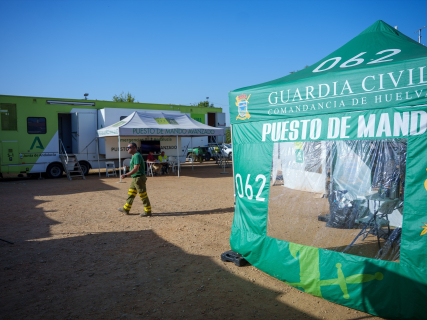
The fire in Niebla worsens in the surroundings of Aznalcóllar and advances towards new areas of Sevilla, while Las Peñas de Riglos maintains a critical situation due to its proximity to San Juan de la Peña and a new fire in León remains at level 2.

4 minutes

incendios hoy

incendios hoy

Add DEMÓCRATA to Google

Ask FREN

Published

Last updated

4 minutes

Most read

Spain faces this Friday a new day marked by the evolution of several wildfires of great magnitude. The fire in Niebla, in Huelva, has worsened in recent hours in the area of Aznalcóllar and the flames have reached new areas of the municipality, while the fire in Las Peñas de Riglos, in Huesca, continues to be especially concerning due to its proximity to the historic complex of San Juan de la Peña.

To these two major hotspots is added the fire in Caboalles de Abajo, in León, which forced the activation of level 2 and a pre-evacuation alert due to the closeness of the flames to the town. The front that directly threatened the homes was contained during the night, although the operation continues deployed.

Niebla worsens in Aznalcóllar and advances towards new areas

The wildfire declared in the Raboconejo area, in the municipality of Niebla, continues to be the main focus of concern in Spain. The fire has already affected more than 31,000 hectares and maintains several active fronts, while the emergency device continues in Operational Situation 2.

The main news of the last hours is located in the province of Seville. The situation has worsened in the municipality of Aznalcóllar, where the flames have reached new areas such as El Campillo and Madroñalejo. Emergency services have also implemented preventive measures in farms and isolated homes near the affected areas.

The advance of the fire has displaced hundreds of people. The latest available balance places the number of people remaining in a preventive distancing situation at 658. The operation continues working on the different fronts and the Junta has activated the emergency due to the risk to populations, infrastructures, and communication routes.

The evolution during the night has been especially demanding on the eastern flank. At the same time, the northern and northwestern area has been able to consolidate after the work carried out in recent days, while the southern sector maintains points of activity and forces heightened vigilance near some homes.

Las Peñas de Riglos approaches San Juan de la Peña

The fire in Las Peñas de Riglos, in Huesca, also maintains a critical situation after approaching in recent hours to the Old and New monasteries of San Juan de la Peña.

The fire has already devastated more than 9,000 hectares, according to the latest reports released, and has forced the evacuation of around 900 people from a dozen localities, in addition to causing lockdowns and road closures. The complicated topography, high temperatures, and wind have hindered the containment of the flames.

The proximity of the fire to the historic site forced the reinforcement of protection measures for the heritage. The Military Emergency Unit participated in the removal of bone remains, historical pieces, and other goods that were transferred to the Huesca Museum due to the risk posed by the proximity of the fire.

During the afternoon of Thursday, the front came dangerously close to the Nuevo Monastery. The operation carried out a technical fire to protect the building and managed to prevent the flames from reaching the monastic complex. The priority remains to maintain the defense lines and protect both the heritage and the surrounding populations.

The fire remains at Operational Situation 2, level 2, and continues to mobilize resources from the Government of Aragón, the UME, provincial and municipal services, and resources provided by the Ministry for Ecological Transition. The Civil Guard also keeps the investigation into the origin of the fire open, after arresting a 28-year-old man for his alleged connection to the fire.

Caboalles de Abajo maintains level 2 in León

The province of León has added another significant fire since this Thursday. The fire declared in the mountains of Caboalles de Abajo, in the municipality of Villablino, forced the activation of level 2 emergency due to the rapid evolution of the flames and their proximity to the locality.

The situation led to a pre-evacuation alert and the preventive evacuation of residents from the neighborhoods of San Juan and Las Trapiechas. Subsequently, residents were able to return to their homes after the front that directly threatened the inhabited area was contained.

The fire started during the afternoon of Thursday and advanced rapidly driven by gusts of wind of up to 40 kilometers per hour. The operation included several aerial resources and around twenty ground units, while efforts focused on preventing the flames from reaching a nearby pine forest.

Although the evolution allowed lifting the most restrictive measures on the population, the fire continues within the balance of open hotspots and under surveillance. The priority is to complete the perimeter and prevent new reproductions.

Other fires remain open in different points

The situation is not limited to the three major hotspots that concentrate attention. The autonomous balances maintain other open fires, although with a different evolution and, in some cases, already stabilized or controlled.

In Castellví de la Marca, Barcelona, the fire declared in the area of Castellot remains stabilized after affecting about eight hectares. The fire forced the confinement of four urbanizations for several hours, a measure that was lifted later as conditions improved.

Fires that have lost intensity or have been stabilized also continue to appear in the records. This circumstance means that the number of open fires in the balances does not equate to the number of fires that are actively advancing, as each community maintains its own criteria and timelines to declare a fire controlled or extinguished.

The evolution of Niebla, Las Peñas de Riglos and Caboalles de Abajo now concentrates a good part of the attention of the emergency devices, while the rest of the fires continues under the surveillance of the autonomous services.

Spain maintains a very high risk of fires

The situation unfolds in a particularly unfavorable meteorological scenario, with high temperatures, low humidity, and accumulated dryness in wide areas of the country. These conditions keep the risk of new propagations high and complicate the extinction work.

The latest provisional data from the Ministry for Ecological Transition places the affected area by forest fires in Spain at 226,391 hectares since the beginning of 2026. The country also accumulates 43 large forest fires, those that exceed 500 hectares.

More key points, information and questions with FREN

AI-GENERATED CONTENT

What are the next steps in emergency management for forest fires at the national level according to Spanish legislation?

At the national level, the “next steps” in managing a forest fire emergency are mainly outlined by the Law 17/2015, of July 9, on the National Civil Protection System, by the Basic Civil Protection Standard (Royal Decree 524/2023), the General State Civil Protection Emergency Plan (PLEGEM) (Resolution of 16.12.2020) and, specifically for this risk, by the State Civil Protection Plan for Forest Fire Emergencies (Council of Ministers Agreement of 24.10.2014, published by Resolution of 31.10.2014) and the Basic Guideline for Civil Protection Emergency Planning for Forest Fires (Royal Decree 893/2013).

Very briefly, the system is designed so that the affected Autonomous Community continues to lead the emergency while it has capacity, and only “escalates” to state intervention and direction when: multiple territories are affected, national interests are compromised, or the autonomous capacity is insufficient.

1. Prevention and prior planning
  • Law 17/2015 configures civil protection as a planned system: Territorial Plans (autonomous and local) and Special Plans for specific risks, including forest fires, are developed.
  • The 2013 Basic Guideline establishes that, for this risk, there must be a general planning structure composed of: State Plan, Autonomous Community plans, local action plans, and self-protection plans.
  • The State Fire Plan specifies the organization and procedures of state resources and services and how they coordinate with autonomous plans when state support is necessary.
2. Fire start and activation of the autonomous plan
  • Upon a fire, the first operational step is the activation of the autonomous special forest fire plan at the appropriate level, depending on the severity and extent of the incident.
  • Initial direction corresponds to the autonomous civil protection authority, which mobilizes its own and municipal resources, according to the planning approved and homologated in the National Civil Protection System.
  • From this moment, it integrates, through the mechanisms provided in Law 17/2015, into the National Information and Alert Network, facilitating monitoring from the General State Administration (AGE).
3. Request for state support and activation of the State Fire Plan
  • When the Autonomous Community foresees that its resources are not sufficient, it can request state support. This is the next natural step in the management scale.
  • According to the State Civil Protection Plan for Forest Fire Emergencies, the Government activates this plan to:
    • Mobilize state reinforcement resources (aerial, ground, coordination, etc.).
    • Establish a formal coordination framework between the AGE and the affected autonomous communities.
  • The State Plan foresees specific management and coordination bodies (Steering Committee, operational coordination centers, etc.), which are activated as severity and the need for state resources increase.
4. Possible declaration of a national interest emergency
  • Law 17/2015 regulates the figure of national interest emergency, interpreted by the Constitutional Court Ruling 58/2017 in relation to its article 29.
  • The Government can elevate the emergency to national interest when, due to its magnitude or impact on national security, coordination and direction must pass to the General State Administration.
  • At that moment, the procedures of the PLEGEM are articulated, which establish the organization and coordination mechanisms for civil protection emergencies of national interest and integrate the different special plans (including the forest fire plan) within a general crisis framework.
5. Mobilization of the UME and other state resources
  • The Royal Decree 399/2007 approves the Intervention Protocol of the Military Emergency Unit (UME), detailing the conditions under which it can be activated for emergencies such as forest fires.
  • The UME’s intervention is agreed upon by the AGE, usually at the request of the Interior Ministry or the Autonomous Community, fitting into the civil protection command structure and coordinating with autonomous services.
  • Simultaneously, other state resources (state aerial firefighting means, State Security Forces and Corps, health and logistics resources) are mobilized according to the State Plan and PLEGEM.
6. Normalization, aid, and recovery
  • Once the fire is controlled, Law 17/2015 and development regulations (such as Order TES/443/2022 for labor and unemployment measures in areas affected by civil protection emergencies) foresee recovery measures: damage assessment, infrastructure repairs, environmental restoration, and financial aid.
  • Depending on severity, the Council of Ministers can declare the area as severely affected by a civil protection emergency, opening the door to specific state support packages.

In summary, the legal “next steps” after the start of a forest fire are a progressive escalation: activation of the autonomous plan, request for state support and activation of the State Fire Plan, possible declaration of a national interest emergency under PLEGEM, deployment of the UME and other General State Administration resources, culminating in the recovery and aid phase regulated by Law 17/2015 and its complementary regulations.

What competencies does the Military Emergency Unit have in the intervention of natural disasters such as forest fires?

The Military Emergency Unit (UME) is a joint force of the Armed Forces specialized in intervening in situations of serious risk, catastrophe, or calamity. In the field of natural disasters and, in particular, forest fires, its role is that of a state first intervention unit and extraordinary reinforcement to the autonomous civil protection and firefighting devices.

According to the official note “UME: Military Emergency Unit”, the UME is a permanent force whose mission is to intervene anywhere in the national territory to contribute to the safety and well-being of citizens in cases of serious risk, catastrophe, or calamity, acting together with State institutions and Public Administrations. Among the expressly mentioned cases are emergency situations derived from natural risks and forest fires.

Legal basis of the UME in emergencies and fires

  • Royal Decree 416/2006: established the creation and initial organization of the UME as a joint military force, deployed throughout the national territory.
  • Royal Decree 1097/2011: approves the UME Intervention Protocol, which specifies in which situations it can be activated and how its operational action in emergencies, including forest fires, is articulated.
  • Law 17/2015, on the National Civil Protection System: strengthens its role, granting it the status of a “public emergency intervention and assistance service” and foresees that, in emergencies of national interest, the UME depends directly on the Ministry of Defense, facilitating rapid and coordinated activation.
  • Royal Decree 521/2020: integrates and details the UME within the basic organization of the Armed Forces.

This regulatory framework positions the UME as a key piece of the National Civil Protection System, while respecting that ordinary competence in prevention and extinction of forest fires corresponds to the autonomous communities.

How and who activates the UME in a forest fire

According to the protocol described in the cited official note and various communications from Interior and Defense (state campaigns against fires and Defense notes on LCIF campaigns), the UME:

  • Does not act ex officio: its deployment is ordered by the Government of Spain (usually through the Ministry of Defense and the Directorate General of Civil Protection) when the emergency exceeds the autonomous response capacity or requires state coordination.
  • It is usually activated at the request of the affected autonomous community, submitted to State Civil Protection, or directly when a national interest emergency is declared under Law 17/2015.
  • In national interest emergencies, the direction and coordination of resources correspond to Interior, and the UME is integrated as the main operational force for on-the-ground intervention.

Specific competencies and functions in forest fires

The UME has operational competencies aimed at “safeguarding, protecting, or assisting the integrity of people and their property, the environment, natural spaces, and their resources,” according to the Intervention Protocol (RD 1097/2011) and the official Moncloa fact sheet. Applied to forest fires, its typical functions include:

  • Direct fire attack through specially trained ground intervention sections equipped with heavy machinery, fire engines, water line equipment, and hand tools.
  • Population protection: support for evacuations, confinements, protection of urban centers, critical infrastructures, and at-risk heritage.
  • Logistical and command and control support: deployment of advanced command posts, communications, transmissions, and coordination with other bodies (forest brigades, firefighters, Civil Guard, health services, etc.), as reflected in the joint Defense–Ecological Transition notes on fire campaigns (MITECO–Defense).
  • Preventive and training tasks: annual preparation of the Forest Fire Fighting campaign (LCIF), with seasonal deployment plans to guarantee a response within a few hours throughout the territory.

In summary, the UME does not replace the autonomous firefighting devices but reinforces them when the magnitude of the fire requires extraordinary state resources or when a national interest emergency is declared. Its competence focuses on massive operational intervention, logistical support, and inter-administrative coordination, under a legal framework combining Defense regulations and Law 17/2015 on Civil Protection.

What regulations govern the declaration of emergency levels in forest fires in Spain?

The declaration of levels or phases of emergency in forest fires in Spain is supported by a block of basic state civil protection regulations and specific plans against the risk of forest fires. On this common framework, each autonomous community approves its own special plan and territorial plan (PLATER/PLATE, INFOCAT, INFOMA, etc.), where the operational levels activated in practice are specified.

1. Law 17/2015, of July 9, on the National Civil Protection System

It is the basic state civil protection regulation. According to the information from the BOE (text of Law 17/2015), it structures the National Civil Protection System and sets the competence and planning framework on which emergency levels are defined.

  • Article 15 (mentioned in the State General Emergency Plan –PLEGEM– itself): foresees the General State Plan as one of the state civil protection plans and assigns it two essential objectives: organizing the action of the General State Administration to provide support to other administrations and exercising direction and coordination in emergencies of national interest.
  • Article 29 (referenced in Constitutional Court Ruling 58/2017, BOE STC 58/2017): regulates the declaration of national interest emergencies. It is the key provision that determines when an emergency (including large forest fires) reaches that level and how state direction and coordination are articulated.

Additionally, other provisions of Law 17/2015 (such as those cited in unconstitutionality appeal 1880‑2016, BOE appeal 1880‑2016) delimit competences and types of plans, but the two articles above are the most directly related to emergency classification and the state authority to declare them.

2. Royal Decree 524/2023, of June 20, Basic Civil Protection Standard

The Basic Civil Protection Standard (NBPC), approved by Royal Decree 524/2023, develops Law 17/2015 and establishes the common planning model.

  • It incorporates a catalog of risks subject to civil protection, explicitly including forest fires.
  • It sets the minimum content and common structure of territorial and special plans, which includes the requirement to define phases and operational situations of emergencies.
  • According to the preamble itself, the Basic Standard “aligns phases and operational situations with the formulas successfully applied in the current Territorial Plans and, in particular, in the General State Emergency Plan (PLEGEM), to guarantee the orderly succession of plans as severity increases.”

The NBPC does not define a uniform “level 0, 1, 2, 3” for the entire State, but imposes that common framework which is then specified by the PLEGEM, specific state plans, and autonomous plans.

3. General State Emergency Plan (PLEGEM)

The General State Civil Protection Emergency Plan was approved by the Resolution of December 16, 2020 (BOE-A-2020-16349). The text itself states that:

  • It develops the mandate of article 15 of Law 17/2015.
  • It sets the organic-functional framework, resource mobilization mechanisms, and coordination scheme of the participants.
  • It structures the phases and operational situations of multi-risk emergencies, which are a basic reference for autonomous and sectoral plans, including those for forest fires.

4. Specific state plan for forest fires and Basic Guideline

In specifically forestry matters, the central regulation is the State Civil Protection Plan for Forest Fire Emergencies, approved by Council of Ministers Agreement of October 24, 2014 and published by Resolution of October 31, 2014 (BOE-A-2014-11493).

  • The Plan itself is developed “in accordance with the Basic Guideline for Civil Protection Emergency Planning for Forest Fires,” approved by Royal Decree 893/2013, which establishes three levels of planning (state, autonomous, and local) and the minimum structure requirements and operational criteria.
  • The state plan defines the organization and procedures for the action of state resources when, due to the severity of fires, national interest is present, and regulates support mechanisms to autonomous plans.
  • The Plan’s articles expressly mention the “Operational Situation 1 or higher” according to the Basic Guideline’s definition, and foresee that the authorities of the autonomous communities declare the Operational Situation in which their special or territorial plan is; this information is essential to decide the mobilization of state resources.

5. Complementary framework and autonomous regulations

The Royal Decree-law 15/2022, of August 1, on urgent measures regarding forest fires (BOE-A-2022-12926), strengthens the coordination of firefighting devices and expressly refers to the National Civil Protection System legislation when fires become civil protection emergencies affecting people, non-forestry property, or heritage.

On this basic state framework, each autonomous community approves:

  • Its territorial civil protection plan (PLATE/PLATER, etc.), which establishes general emergency levels or phases.
  • Its special emergency plan for forest fires, where the levels (0, 1, 2, 3 or others) and the competent autonomous authority to declare them and request state support are specified.

Therefore, the regulation of emergency levels in forest fires in Spain rests on the combination of Law 17/2015, the 2023 Basic Civil Protection Standard, the PLEGEM, the specific State forest fire plan, and the 2013 Basic Guideline, complemented by autonomous plans that specify the levels and the authority that declares them in each territory.

Play

Test your knowledge with FREN!

How much do you know about this topic? Answer the following 3 questions.

What area has been affected by the Niebla fire in Huelva according to the latest report?

Question 1 of 3

What measure was taken to protect the historic complex of San Juan de la Peña due to the proximity of the fire?

Question 2 of 3

What operational level does the Las Peñas de Riglos fire in Huesca maintain?

Question 3 of 3

Hola, soy Fren. ¿Cómo te ayudo?