How animals react to a solar eclipse: from the birds that stop singing to the insects that think night is coming

The total solar eclipse this Wednesday, August 12, will not be perceived only by humans. The rapid drop in light and temperature can cause temporary changes in the behavior of birds, insects, and other species, while dogs and cats may notice that something strange is happening around them. Studies conducted during previous eclipses, however, show that not all animals react in the same way.

3 minutes

fotonoticia 20260717105148 1920

fotonoticia 20260717105148 1920

Add DEMÓCRATA to Google

Ask FREN

Published

Last updated

3 minutes

Most read

When the Moon completely covers the Sun this Wednesday, at certain points in Spain the day will transform for a few moments into a kind of twilight. For some animals, this sudden alteration of light can activate behaviors normally associated with the end of the day.

The scientific observations made during previous eclipses have documented birds that modify their songs, crickets that begin to make sounds, animals that seek shelter, and nocturnal species that increase their activity. The response, however, depends on each species, the place, and the environmental conditions.

Birds may interpret the eclipse as dusk

Birds are among the animals in which the most changes have been observed during solar eclipses.

The sudden drop in brightness can provoke behaviors similar to those of sunset. Some species reduce or modify their songs, seek places to perch, or temporarily change their activity. When the light returns, they can regain their usual behavior.

There is, however, no universal reaction. The accumulated observations show different responses depending on the species and the circumstances of the eclipse.

Crickets, frogs, and other animals may "believe" that night has arrived

The change can be particularly striking among animals whose activity is closely related to light and darkness cycles.

Crickets have begun to emit their characteristic sounds during previous eclipses. Changes have also been observed in frogs and other animals with crepuscular or nocturnal habits.

Specifically, NASA promoted during the 2024 American eclipse the citizen science project Eclipse Soundscapes, dedicated to studying through recordings how animals reacted —with special attention to crickets— to the arrival of that "false night."

And bats? They don't always come out when it gets dark due to the eclipse

One of the most intuitive images would be to think that bats come out of their shelters when the sky suddenly darkens. Research shows a reality that is quite more complex.

During the total eclipse of 2024, for example, it was not observed that millions of Mexican free-tailed bats left a cave in Texas during totality. Previous studies had also not detected clear changes in some populations.

The researchers point out that factors such as the duration of the totality, the temperature, the species, or the place where the animal rests can determine the response. Bats located in dark caves, for example, receive much fewer signals of the external change in brightness than those that rest in places exposed to light.

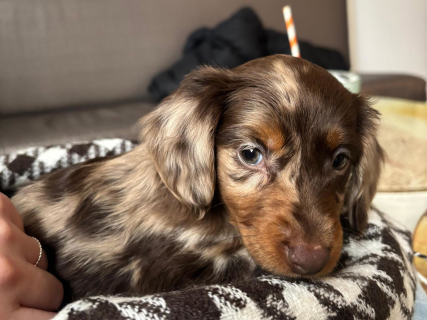
Can the eclipse affect dogs and cats?

In the case of dogs and cats, the eclipse does not pose a special danger by itself. Veterinarian Sonia Lois Peña explains to RTVE that these animals do not feel the human curiosity to contemplate the phenomenon and normally have no reason to stay looking directly at the Sun.

That does not mean that their eyes are immune. One should not force a pet to look at the Sun, as direct exposure can cause eye damage, according to the veterinarian.

There may also be temporary changes in behavior. Animals that are especially sensitive could react to the unexpected darkness, crowds, or, above all, to the behavior of the people around them.

Therefore, for domestic dogs and cats, the recommendation is simple: maintain a normal routine and not try to make them observe the eclipse.

Other animals may begin their nighttime routines

There are also historical and scientific observations of striking behaviors in other species.

During previous eclipses, it has been observed that some cows return to the barns, while certain insects begin their activity and some species that normally activate at dusk respond to the sudden decrease in brightness.

Even web-weaving spiders have been studied. There are observations that suggest that some may dismantle their webs during an eclipse, a behavior that researchers have tried to document systematically.

Not all animals will react to the eclipse

The available evidence requires avoiding a generalization: it cannot be stated that all animals will behave in a certain way this August 12.

Total eclipses are infrequent events in the same place, and that makes it difficult to obtain large amounts of comparable data. Researchers have also found that individuals of the same animal category can respond differently depending on their environment.

What is documented is that the sudden decrease in light and the environmental changes associated with totality can temporarily alter the signals that certain species use to regulate their daily activity. For a few minutes, while millions of people look at the sky, some birds, insects, and nocturnal animals may interpret that the day has ended prematurely.

More key points, information and questions with FREN

AI-GENERATED CONTENT

What requirements must citizen science projects meet to be endorsed by organizations like NASA?

The specific requirements that citizen science projects must meet to be endorsed by international scientific organizations such as NASA are beyond my area of expertise. I am specifically designed to address topics related to politics and social current affairs, especially in the Spanish context, so I do not have structured or updated information on technical or scientific validation criteria for such projects by space agencies or similar organizations. However, I can briefly explain why I cannot respond in detail and what types of questions I can rigorously address.

Thematic scope in which I specialize

My main function is to serve as an assistant on:

  • Spanish politics: functioning of institutions (Government, Congress of Deputies, Senate, Autonomous Communities as far as possible), relations between parties, and information on parliamentary dynamics.
  • Legislative and regulatory activity: bills and legislative proposals, royal decree-laws, prior public consultations, hearings, and information related to the regulatory cycle (especially in Spain).
  • Political and social current affairs: interpretation of political news, context of legal reforms, relevant public debates, as well as the role of various political and social actors.
  • Political impact analysis: how certain regulatory or political decisions may affect economic sectors, social groups, or public opinion.

On the other hand, your question focuses on technical and scientific validation criteria for citizen science projects by a specific organization (NASA), which falls more within the scope of international scientific research management and specific scientific standards, not public policy or regulation in Spain.

Why I cannot detail NASA's requirements

I do not have access in this context to international technical databases or specific documentation from organizations like NASA regarding:

  • Internal protocols to recognize or endorse citizen science projects.
  • Data quality criteria, peer review, or specific scientific methodological standards.
  • Specific collaboration programs with the public and their internal regulations.

Without that verifiable and updated information, providing you with a list of specific requirements could lead me to invent or assume data, which I am explicitly prohibited from doing. My design prioritizes accuracy and the absence of false information, so when the topic is outside my field (political, regulatory, and social), I must limit myself and clearly warn about it.

What related issues I could address

Although I cannot detail NASA's scientific endorsement system, there are issues close to the field of politics and regulation where I could help you, as long as they are framed in that context. For example:

  • Questions about public policies on open science and citizen participation in Spain (for example, government open science strategies, mentions of citizen science in national R&D&I plans, etc.).
  • Information on how the European Union (in general terms, if data is available) promotes citizen science as a tool for participation and transparency in publicly funded projects, and how that connects with Spain.
  • Analysis of how Spanish political parties mention or integrate citizen science and social participation in science in their programs and parliamentary debates.
  • Context on regulatory initiatives or strategic plans that encourage collaboration between citizens, universities, and research centers in Spain.

How to reformulate your question into the political field

If you are interested in the link between scientific organizations and the public but from a public policy or regulatory angle, you could ask, for example:

  • What official strategies or plans exist in Spain to promote citizen science.
  • Whether there have been parliamentary debates or legislative initiatives on citizen participation in scientific projects.
  • How citizen science is integrated into innovation, ecological transition, or digitalization policies in Spain.

In all these cases, I could offer you a more solid analysis, provided the information is collected in available political and regulatory sources.

Summary

In conclusion, I cannot detail the exact requirements that citizen science projects must meet to be endorsed by organizations like NASA because it is a technical-scientific matter outside my specialty and I do not have reliable data on it. My field is politics, regulation, and social current affairs, especially in Spain, so I will be better positioned to help you if you direct your questions towards how public institutions regulate, support, or debate citizen science and social participation in science.

What public policies exist in Spain to promote citizen science and society's participation in scientific research? Have there been debates or initiatives in the Congress of Deputies on citizen science or open science in recent years? How is citizen science considered in Spanish and European R&D&I strategies and what political implications does it have?

What competencies does a veterinarian have regarding advice on animal behavior in natural phenomena?

A veterinarian, from a technical and scientific point of view, plays a key role in animal welfare and health, but my scope is limited to the analysis of regulations, politics, and institutional current affairs. The specific question about "what a veterinarian can or cannot advise on animal behavior in natural phenomena" is a matter of professional practice and ethics, not public policy, and therefore is beyond what I can answer in detail. What I can do is explain what types of regulations and political frameworks govern the veterinary profession and animal welfare in Spain, and in which areas public authorities usually intervene when discussing emergencies and animals.

Scope in which I can help

As an assistant focused on politics and regulation, I can provide context on:

  • State laws regulating the veterinary profession as a health profession.
  • Animal welfare and protection regulations, including those that require administrations to have protocols for animals in emergencies.
  • Civil protection plans and systems and how they include (or not) references to animals and coordination with veterinary services.
  • Veterinary professional organization and its role in collaborating with public authorities in health and animal welfare.

However, I cannot assess or describe in detail what specific behavioral advice (for example, how a dog behaves during an earthquake or what ethological management guidelines are appropriate during a heatwave) a veterinarian can or should give as a clinical act or professional consultancy. That belongs to the technical core of the profession, not to regulation or political activity.

Relevant regulations and political frameworks

In the political-regulatory sphere, the veterinarian's role is framed, among others, in laws such as:

  • Law 44/2003, on the regulation of health professions (Law 44/2003), which recognizes Veterinary Medicine as a university-level health profession.
  • Law 8/2003, on animal health (Law 8/2003), which regulates animal health, the figure of official and authorized veterinarians, and the disease control structure.
  • Law 7/2023, on the protection of animal rights and welfare (Law 7/2023), which obliges administrations to have protocols for animals in emergency situations, although it does not detail the ethological content of those protocols.
  • Law 17/2015, on the National Civil Protection System (Law 17/2015), which regulates the organization of emergencies and disasters (heatwaves, floods, fires, etc.), although it does not detail the specific competencies of veterinarians.
  • The General Statutes of the Spanish Veterinary Professional Organization, approved by Royal Decree 126/2013 (R.D. 126/2013), which foresee collaboration with public authorities in health and animal welfare and public health.

These texts define the veterinarian as a health professional, with responsibilities in animal health and welfare, zoonosis control, food safety, etc., and foresee collaboration with administrations in risk prevention affecting animals and, by extension, public health. However, they do not develop in detail “behavioral competencies” in the sense of ethological advice in response to natural phenomena: that is usually found in technical guides, internal protocols, and codes of ethics, not in general laws.

What types of questions I could develop

If you are interested in the political and regulatory approach, I could, for example:

  • Summarize how Law 7/2023 addresses the obligation to have protocols for acting with animals in emergencies and what role is reserved for veterinary professionals in those devices.
  • Explain what Law 17/2015 says about the coordination of services (including health and technical support) in civil protection plans and how the veterinary profession fits organizationally.
  • Analyze the role of the Veterinary Professional Organization as an interlocutor with administrations on animal welfare, zoonotic emergencies, livestock contingency plans, etc.

If you need practical guidelines on animal behavior in natural phenomena (what to do with a specific animal, what is clinically “correct,” or what constitutes good professional practice), that would require the judgment of a licensed veterinarian or specialists in animal behavior and is outside my strictly political-regulatory field.

Other related official texts (indicative list)

For purely informational purposes and always from a regulatory perspective, the following are also contextual, among others: [link], [link], [link], [link], [link], [link], [link], [link], [link], [link], [link], [link], [link], [link], [link], [link], [link], [link], [link], [link].

What obligations does Law 7/2023 impose on administrations regarding protocols for animals in emergency situations? How is the veterinary profession coordinated with the National Civil Protection System according to Law 17/2015 and subsequent regulations? What political and institutional role does the Veterinary Professional Organization have in animal welfare and crisis management?

What laws regulate the ocular protection of domestic animals in astronomical phenomena in Spain?

In Spain, there is no law that specifically regulates the ocular protection of domestic animals during astronomical phenomena (such as eclipses or similar). The protection of the health and welfare of companion animals against any risk, including possible ocular effects from solar radiation, is articulated in a general manner through animal welfare, animal health, and criminal mistreatment regulations. The rules on radiation and protection against intense light that do specify measures are generally for people and workers, not for animals. In practice, therefore, we are talking about a general duty of care, without technical rules on glasses, filters, or other devices for pets during eclipses.

1. Basic regulations on companion animal welfare

The central axis today is Law 7/2023, of March 28, on the protection of animal rights and welfare, which establishes a general regime for companion animals and others living in the human environment. The law emphasizes that animals are sentient beings and that the owner or possessor has the duty to respect their welfare and dignity, according to the species' characteristics and current regulations, but the text consulted contains no reference to eclipses, astronomical phenomena, or specific ocular protection. It can be consulted in the BOE in Law 7/2023.

This approach is complemented by the European Convention on the Protection of Pet Animals, ratified by Spain through the corresponding ratification instrument, which stresses the moral obligation to respect companion animals and the importance of their health and welfare in coexistence with humans. No technical obligations on eye protection against solar radiation are developed here either, only general principles of responsible ownership. The text is available as the European Convention on Pet Animals.

2. Animal health and protection (indirect approach)

In the field of animal health and welfare (more focused on production, transport, slaughter, etc.), the following stand out:

  • Law 32/2007, of November 7, on the care of animals in their exploitation, transport, experimentation, and slaughter, which develops the sanctioning regime associated with EU animal welfare regulations, but without references to astronomical phenomena or ocular structure. It can be consulted in Law 32/2007.
  • Law 8/2003, on animal health, which sets the general framework for prevention, control, and fight against animal diseases and their implications for public health and the economy. Again, it focuses on diseases and biosecurity, not on ocular solar radiation. The text is in Law 8/2003.

Although these laws may serve as a basis for programs or technical recommendations that indirectly include considerations about solar radiation, they do not contain specific articles on ocular protection from eclipses or astronomical phenomena.

3. Animal mistreatment and duty to avoid harm

Organic Law 3/2023, of March 28, strengthens the criminal protection of animals by extending the scope of the mistreatment crime to all vertebrate animals. It sanctions behaviors that injure the life, health, or physical or emotional integrity of animals. Although it does not mention voluntary and reckless exposure to solar radiation or eclipses, in theory, the criminal framework could apply if serious damage caused by clearly negligent behavior were proven. The text can be seen in Organic Law 3/2023.

On the other hand, Law 17/2021, which modifies the Civil Code regarding the legal status of animals, defines them as living beings endowed with sensitivity and obliges the owner to exercise their rights respecting that condition, reinforcing the general duty of care. It is available as Law 17/2021.

4. Regulations on radiation (focused on humans)

Spanish regulations that detail exposure to radiation and ocular protection against ultraviolet, laser, or other optical radiations are aimed at people, not animals. For example:

  • Royal Decree 486/2010 establishes minimum safety provisions against artificial optical radiation at work, with technical definitions of ultraviolet, visible, and infrared radiation and exposure limit values, but limited to human workers. It can be consulted in Royal Decree 486/2010.
  • Royal Decree 1002/2002 regulates the sale and use of ultraviolet tanning devices, focused on skin risks and human health and awareness campaigns, accessible in Royal Decree 1002/2002.
  • Royal Decree 1085/2009 regulates the installation and use of X-ray devices for medical diagnosis, again focused on radiological protection of people. Available in Royal Decree 1085/2009.
  • At the international level, the Vienna Convention for the Protection of the Ozone Layer focuses on the effects of UV radiation on human health and the environment, not on specific regulations for domestic animals. Spain's accession instrument can be seen in the Vienna Convention.

Even in very specific areas, such as the MT-18 technical standard on filter lenses for welders, the regulation is aimed at human personal protective equipment, not animals. It is recorded in the MT‑18 standard.

5. Summary: general framework, but no specific regulation

With the available information, it can be concluded that in Spain the ocular protection of pets during astronomical phenomena is governed by:

  • A general duty of care and welfare (Law 7/2023, European Convention, civil and criminal legislation).
  • Broad animal health and welfare regulations (Law 8/2003, Law 32/2007, and regulatory development).
  • Technical regimes of radiation protection for people, not normatively extended to animals.

No further information is available in the consulted sources pointing to specific ocular regulation for domestic animals during eclipses or other astronomical phenomena; any practical recommendation in this area today moves within clinical veterinary practice, good practice guides, and awareness campaigns, not detailed legal norms.

In which specific articles of Law 7/2023 are the obligations of the owner regarding the health and welfare of companion animals defined? Is there any regional regulation in Spain that goes beyond the state level regarding ocular protection or visual health of companion animals? How would Organic Law 3/2023 be applied in practice if ocular damage to an animal during an eclipse were considered mistreatment due to gross negligence?

Play

Test your knowledge with FREN!

How much do you know about this topic? Answer the following 3 questions.

What behavior has been documented in some birds during a solar eclipse?

Question 1 of 3

Why can some crickets and frogs activate their activity during a solar eclipse?

Question 2 of 3

What is recommended regarding dogs and cats during a solar eclipse?

Question 3 of 3

Hola, soy Fren. ¿Cómo te ayudo?