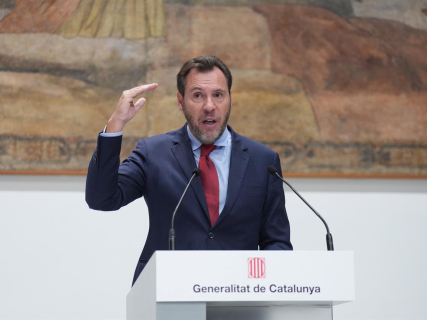

Óscar Puente faces this Thursday, October 29, a day marked by questions about his continuity at the head of the Ministry of Transport. After the Urda rail accident, the debate over a possible resignation has also reached within the PSOE. However, the doubts expressed by socialist officials to different media have not translated, in the information consulted, into an announcement of departure from the Government.
The minister responded on Wednesday that his priority was to clarify what happened. Moncloa, for its part, told laSexta that it maintains its support and that it has no intention of demanding his resignation. That support coexists with testimonies from leaders who question his political future after a new rail tragedy.
What Óscar Puente has said about his resignation
Puente was expressly asked about the possibility of leaving office during his appearance in Atocha. His response placed the focus on the investigation and on attention to those affected: «I am not thinking about myself».
The agency also reported that, in response to another question about his personal situation, the minister considered that what mattered was the condition of the victims' families. These statements have been interpreted as a rejection of resigning, at least at that time, and concentrating his efforts on clarifying and resolving what happened.
ABC reports doubts among PSOE officials
According to the information published in ABC this Thursday, some socialist leaders question whether Puente can continue in the Executive after the accident. The newspaper places those doubts in a particularly delicate context: the proximity of the general elections on November 29.
ABC also reports different positions within the party. Faced with those who consider his permanence compromised, other officials believe that Sánchez will keep one of his closest collaborators.
Those voices coexist with others more critical who think that Puente yesterday should have been dismissed or his resignation announced and that either of these two scenarios is imminent. Even so, last night sources close to the Government placed the priority on clarifying the accident.
Moncloa maintains its support for the minister
The main counterweight to those doubts is the position conveyed from Moncloa. According to laSexta reported on Wednesday afternoon, government sources assured that Puente's management «is not in question» and placed the priority on attending to the victims and coordinating the emergency.
El Independiente also reports that Moncloa maintains its confidence in the minister, although it describes differences between members of the Government and the party over how to address the political consequences of the tragedy. Other media, for their part, publish doubts about his continuity attributed to ministers consulted by that outlet.
The scenario drawn by these reports is that of government backing that coexists with internal questioning. It does not yet allow it to be affirmed that Sánchez has decided to dispense with Puente although all the sources point to today being a critical day for the minister: to the tragedy is added the railway strike and the possible additional traffic chaos in Spain on the eve of the All Saints' bridge.
The audios add new questions about the accident
In parallel to the political debate, the communications between the Adif control center and the train drivers have provided new elements about the sequence prior to the collision.
All the media yesterday published recordings that include instructions to resume circulation normally and warnings that the Iryo train remained stopped. Those communications are relevant to reconstructing what happened, but their publication does not replace the conclusions of the investigation.
What can clarify Puente's future
Sánchez's and the minister's next statements will make it possible to check whether the backing conveyed from Moncloa is maintained or whether the Government's position changes. Pedro Sánchez, let us remember, already pointed out yesterday that it was not "admissible for a country like Spain" to suffer two railway tragedies of this kind.