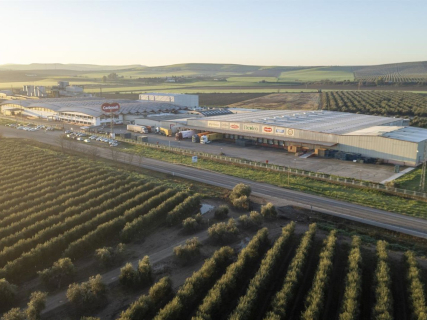

CCOO of Andalusia has alerted about the risks posed by the current process of divestment and sale of Deoleo, owner of brands such as Carbonell and Hojiblanca, for the productive fabric of Andalusia. Therefore, the union demands that priority be given to a buyer of Spanish capital and that the stability and quality of employment be safeguarded.
In a statement, the union organization claims "the entry of investors with technical and financial solvency" that guarantee both direct and indirect employment, as well as the promotion and continuity of the group's strategic brands, among which it mentions Carbonell, Bertolli, or Carapelli.
CCOO has expressed its "concern" over a business operation that could call into question the sovereignty of the olive oil sector, considered "strategic" for the economy of Andalusia and the country as a whole. In this regard, it emphasizes that the "quality, authenticity, and traceability" of olive oil are essential elements, reminding that Deoleo's productive capacity is concentrated in the Sevilla-Córdoba-Jaén axis, with its main center in Antequera.
The General Secretary of CCOO of Industry of Andalusia, José Hurtado Quirós, has stressed that "any potential bidder must assume a firm and unequivocal commitment to maintaining employment in all its operational plants."
CCOO calls for institutional coordination to protect the sector
In this context, the union has urged the Government of Spain and the Junta of Andalusia to act with "maximum institutional coordination" to safeguard the value chain of the olive oil sector.
CCOO, which has insisted on "prioritizing national capital projects," has demanded that the central government use its legal tools to block foreign investments if the sale operation were to endanger industrial implantation and employment stability in Andalusia.
In addition, the union has proposed the creation of a stable space for dialogue between administration and companies to "strictly monitor" the sale process of Deoleo.
The central organization has also warned that it will continue with mobilizations and any actions it deems necessary to halt the deindustrialization of the sector and ensure the future of the company's workforce.
According to today's publication of 'El Economista', which cites sources close to the operation, the Spanish cooperative Dcoop would have presented an offer of 470 million euros for Deoleo and would have prevailed over the proposals from the Italian companies Coricelli, Bonifiche Ferraresi, and Newlat Food, the French Lesieur (Avril), and the Australian Cobram Estate Olive.
Dcoop confirms that it is analyzing the possible purchase of Deoleo
Sources from Dcoop consulted by Europa Press have admitted that "they are studying the opportunities" that the market offers, including that of Deoleo. "We believe that the buyer must be aligned with quality and the fight against fraud and that it would be bad for Spain to lose leadership in such a strategic sector," they have stated.
In parallel, the British fund CVC Partners would be closing the final details of the sale of 57% of Deoleo's capital, an operation that it channels through its financial advisor KPMG, and whose closure could occur in September.
The Italian media 'ItaliaOggi' details that, in the operation and for competition reasons linked to Dcoop, the Italian Bonifiche Ferraresi (BF) would come to operationally control the Carapelli brand as a partner, while the Spanish Acesur would keep Bertolli.
If the transaction is finally completed under the expected terms, a global giant of olive oil would be born, with a turnover exceeding 2.2 billion euros.