Price of electricity today, August 18: the cheapest hour will be at 14:00 and the most expensive at 21:00

The price of electricity today, Tuesday, August 18, 2026, will fall sharply during the central hours of the afternoon, when the lowest values of the day will be recorded. The cheapest hour will be from 14:00 to 15:00, while the maximum will occur between 21:00 and 22:00 hours.

2 minutes

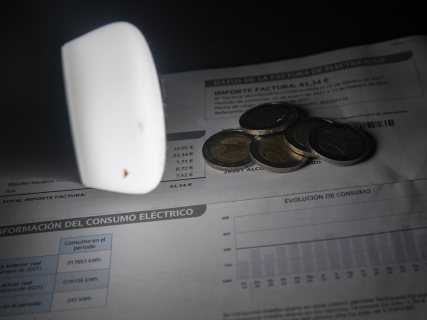
EuropaPress 4165629 lampara refleja importe factura dia precio luz marcado minimo primera vez

EuropaPress 4165629 lampara refleja importe factura dia precio luz marcado minimo primera vez

Add DEMÓCRATA to Google

Ask FREN

Published

Last updated

2 minutes

Most read

The price of electricity today, Tuesday, August 18, 2026, will once again outline a day with significant differences between the cheapest and the most expensive hours for consumers covered by the Voluntary Price for the Small Consumer (PVPC). The minimum will be concentrated in the afternoon, while electricity will clearly become more expensive at the end of the day.

What is the cheapest hour of electricity today?

The cheapest hour will be from 14:00 to 15:00, with a price of 0.0304 €/kWh.

The most favorable period of the day will extend between 14:00 and 17:00 hours, with prices below 0.04 €/kWh during the first three time slots. At 17:00 hours, the cost will begin to recover, although it will still be one of the most economical moments of the day.

What is the most expensive hour?

The most expensive hour will be from 21:00 to 22:00, when the PVPC will reach 0.3910 €/kWh.

Electricity will start to become significantly more expensive at the end of the afternoon. The highest prices will be concentrated between 19:00 and 23:00 hours, with values above 0.27 €/kWh and the daily maximum occurring in the 21:00 time slot.

What is the average price of the PVPC?

The average price for this Tuesday, August 18, 2026 will be 0.1870 €/kWh, calculated from the 24 hourly values of the day.

During the early morning and morning, prices will move in an intermediate range, before starting a sharp decline from 11:00 hours. The drop will culminate between 14:00 and 17:00, while the night will concentrate the highest values of the day.

Price of electricity today by hours, August 18, 2026
Hour PVPC Price Segment
00:00-01:00 0.1977 €/kWh
01:00-02:00 0.2008 €/kWh
02:00-03:00 0.1986 €/kWh
03:00-04:00 0.1870 €/kWh
04:00-05:00 0.1819 €/kWh
05:00-06:00 0.1896 €/kWh
06:00-07:00 0.2013 €/kWh
07:00-08:00 0.2253 €/kWh Expensive
08:00-09:00 0.2431 €/kWh Expensive
09:00-10:00 0.1846 €/kWh
10:00-11:00 0.1615 €/kWh
11:00-12:00 0.0991 €/kWh Cheap
12:00-13:00 0.0997 €/kWh Cheap
13:00-14:00 0.0993 €/kWh Cheap
14:00-15:00 0.0304 €/kWh Cheapest
15:00-16:00 0.0325 €/kWh Cheap
16:00-17:00 0.0374 €/kWh Cheap
17:00-18:00 0.1228 €/kWh Cheap
18:00-19:00 0.2178 €/kWh
19:00-20:00 0.2770 €/kWh Expensive
20:00-21:00 0.3406 €/kWh Expensive
21:00-22:00 0.3910 €/kWh Most expensive
22:00-23:00 0.2937 €/kWh Expensive
23:00-24:00 0.2762 €/kWh Expensive

How to save on the bill this Tuesday

The best time to run the washing machine, use the dishwasher, cook with an electric oven, or charge a vehicle will be between 2:00 PM and 5:00 PM, especially from 2:00 PM to 3:00 PM, when the price will mark the daily minimum of 0.0304 €/kWh.

On the contrary, it is advisable to reduce the consumption of high-power appliances between 7:00 PM and 11:00 PM, especially during the peak at 9:00 PM. The difference between the cheapest hour and the most expensive reaches 36.06 cents per kWh, so shifting consumption to the central hours of the afternoon can have a significant impact on the bill.

The prices correspond to the energy term of the PVPC, the regulated tariff for consumers with a contracted power of up to 10 kW. Red Eléctrica publishes the values that apply hour by hour every day; they should not be confused with the wholesale market price, which does not incorporate all the components used to calculate the regulated tariff.

More key points, information and questions with FREN

AI-GENERATED CONTENT

What are the necessary procedures to modify the hourly structure of the PVPC in Spain?

Modifying the hourly structure of the PVPC (for example, changing peak/off-peak/valley periods or their distribution throughout the day) does not initially require a new formal law, but rather the modification of the regulatory framework that develops it. The legal core is in the Law 24/2013, of the Electric Sector (art. 17) and in the Royal Decree 216/2014, amended by Royal Decree 469/2016 and Royal Decree 148/2021, as well as the charge orders and other rules associated with tolls and operational procedures.

Simplified, the necessary procedures would be as follows:

1. Legal authorization and type of regulation
  • Legal basis: Article 17 of Law 24/2013 defines the PVPC and establishes that:
    • The Government sets the calculation methodology of the PVPC and the last-resort tariffs.
    • By ministerial order (formerly Industry, now MITECO), following an Agreement of the Government Delegated Commission for Economic Affairs, the necessary provisions are issued for the specific establishment of those prices.
  • Regulatory development:
    • Royal Decree 216/2014: establishes the PVPC methodology and regulates its general structure (power terms, energy, hourly cost, etc.), including reference to hourly periods and the structure of tolls and charges.
    • Royal Decree 469/2016: modifies, among others, article 7 of RD 216/2014 (price structure, marketing margin) and adds a Title VII on remuneration of marketing costs.
    • Royal Decree 148/2021: sets the methodology of electrical system charges and again modifies RD 216/2014, aligning the PVPC with the new structure of tolls and charges.
    • Annual ministerial orders (e.g., Order TED/1487/2024) set specific values of charges and other parameters that impact the effective structure of the PVPC.

In practice, a change in the PVPC hourly structure may require:

  • Modifying the Royal Decree 216/2014 itself (if the basic logic of how terms are constructed per period changes).
  • Modifying rules on tolls and charges (RD 148/2021, CNMC circulars, and charge orders) if the system's hourly periods are reconfigured.
2. Technical drafting in the competent ministry
  • The initiative comes from the Ministry for the Ecological Transition and the Demographic Challenge (Secretary of State for Energy and Directorate General of Energy Policy and Mines).
  • A draft royal decree or draft ministerial order is prepared and, in parallel, impact studies (economic, on consumers, competition, regulatory impact, etc.) are requested.
3. Prior public consultation and public hearing and information
  • As it is a general regulation, Law 39/2015 applies:
    • Prior public consultation on the opportunity of the regulation and its objectives, through publication on the participation or transparency portal.
    • Public hearing and information on the already drafted text, allowing claims from consumers, companies, associations, etc.
4. Mandatory reports, especially from the CNMC
  • The PVPC regulation has been issued “in accordance with” Law 3/2013, creating the CNMC, and the PVPC royal decrees expressly include:
    • Report from the National Commission of Markets and Competition, which analyzes impact on competition, consumers, and system operation.
    • Occasionally, consultation with its Electricity Advisory Council or its replacement bodies, to incorporate sector agents' observations.
  • Reports are also obtained from:
    • Ministry of Finance (due to effects on revenues and regulated charges).
    • Other affected ministries, depending on content.
5. Council of State and processing in the Council of Ministers
  • If opting for a Royal Decree (for example, to redesign the basic hourly structure):
    • The Council of State's opinion is mandatory.
    • The text is submitted to the Council of Ministers, which approves it through formal deliberation.
  • If the adjustment is made by ministerial order (within the framework set by law and royal decrees):
    • It does not go through the Council of State, but according to Law 24/2013 and RD 216/2014 itself, it requires the Agreement of the Government Delegated Commission for Economic Affairs.
6. Publication in the BOE and entry into force
  • The royal decree or order is published in the Official State Gazette (BOE) with:
    • The new hourly and term structure (power, energy, hourly periods) or reference to associated methodologies.
    • Transitional provisions for the transition from one structure to another.
  • The regulation enters into force on the date set in its final provision (often several months later) to allow adaptation of billing systems, meters, and communication to consumers.

In summary, changing the PVPC hourly structure is a complex regulatory process: it is based on Law 24/2013, usually executed through royal decree and/or ministerial orders from MITECO, requires public consultation and hearing, key reports from the CNMC and other bodies, approval by the Council of Ministers or Delegated Commission for Economic Affairs, and finally publication in the BOE with the new tariff design.

What powers does the National Commission of Markets and Competition (CNMC) have regarding the electricity market?

The National Commission of Markets and Competition (CNMC) is the Spanish energy regulator and has a very broad set of powers over the electricity market, mainly derived from Law 3/2013, creating the CNMC, and Law 24/2013, of the Electric Sector, as well as the European framework (REMIT, directives and regulations of the internal electricity market).

1. Economic regulation: tolls and network remuneration

In the electricity field, article 7 of Law 3/2013 assigns the CNMC key regulatory functions through circulars:

  • Establish the structure and methodologies of access tolls to electricity transmission and distribution networks, respecting the principle of economic-financial sustainability of the system provided in Law 24/2013.
  • Define methodologies and remuneration parameters for transmission and distribution facilities (unit values of investment, operation and maintenance, regulatory useful life, and financial remuneration rate).
  • Approve, by resolution, the specific toll values and remuneration amounts for transmission and distribution, according to those methodologies.

2. Access and connection to networks and system operation

The CNMC is the national regulatory authority for network access and use issues:

  • Set methodologies for access and connection conditions to electrical networks and to calculate available capacity, which are then reflected in specific resolutions (e.g., on firm demand capacity in distribution networks, published in the BOE).
  • Supervise the management and allocation of interconnection capacity and congestion management mechanisms, in coordination with the system operator and European regulations.
  • Monitor and evaluate investment plans of transmission network managers, issuing reports to the Ministry for the Ecological Transition and European bodies.
  • Promote and approve modifications of system operation procedures (voltage control services, demand response, etc.), through resolutions that adapt the technical operation of the network.

3. Wholesale market supervision and competition defense

As a sector regulator and competition authority, the CNMC:

  • Oversees the integrity and transparency of wholesale electricity markets (day-ahead pool, intraday, balancing markets), applying the REMIT Regulation and European internal market rules.
  • Investigates and sanctions price manipulations and insider trading in electricity markets, in coordination with the European agency ACER.
  • Conducts proceedings for anticompetitive practices (cartels, abuse of dominant position, access restrictions to infrastructures, etc.) in the electricity sector, applying Competition Defense Law and EU law.
  • Determines annually the main and dominant operators in the energy sector and supervises the degree of openness and competition in wholesale and retail markets.

4. Consumer protection and supervision of retailers

Regarding the retail electricity market, the cited regulations assign the CNMC functions of:

  • Supervising prices and supply conditions to end consumers, and publishing recommendations for their compliance with public service obligations and consumer protection.
  • Monitoring the proper functioning of the supplier switching process and sales force behavior, requiring contracting and commercial communications to be transparent and not misleading.
  • Developing tools such as official electricity and gas offer comparators and guides on good commercial practices, as well as supervising companies' customer service.
  • Ensuring customers have access to their consumption data clearly and in interoperable formats.

5. Sanctioning power and conflict resolution

Finally, the CNMC has broad inspection and sanctioning powers in the electricity sector:

  • It can initiate sanctioning proceedings for breaches of sectoral electricity regulations (supply security and quality, operation rules, information obligations) and competition infringements, which may be classified as serious or very serious.
  • Acts as a conflict resolution body in certain disputes between agents (e.g., on network access or technical conditions) and issues reports and interpretations on electricity regulations that guide sector actions.

Overall, these powers make the CNMC the central actor in the economic, technical, and competitive regulation of the Spanish electricity market, with normative capacity (circulars and resolutions), continuous supervision, and the ability to react to conduct that endangers effective competition, system security, or consumer rights.

What requirements must a consumer meet to opt for the PVPC in the Spanish electricity system?

The Voluntary Price for the Small Consumer (PVPC) is the regulated electricity tariff in Spain and its basic framework is established in Law 24/2013, of December 26, of the Electric Sector, which defines the PVPC as the maximum price that reference retailers can charge certain low-power consumers. The technical development is made, among other regulations, through Royal Decree 216/2014 (PVPC calculation methodology) and its amendments, and Royal Decree 897/2017 (vulnerable consumer and social bonus).

Based on that regulation, the main requirements to be able to opt for the PVPC are as follows:

1. Type of consumer and supplier
  • The PVPC is a tariff for the domestic sector and small consumer. Law 24/2013 establishes that it is aimed at consumers with contracted power below a certain threshold, as an alternative to contracting in the free market.
  • The supply must be obligatorily provided by a reference retailer (COR), designated by the Administration. Only these can apply PVPC; if contracted with another retailer in the free market, PVPC cannot be applied.
  • It is not exclusively limited to natural persons: the law refers to “consumers” in general. However, greater protections (social bonus, supply cut limitations, etc.) are reserved for natural persons in their habitual residence, according to the article related to the vulnerable consumer.
2. Contracted power and technical characteristics of the point
  • PVPC applies to supplies with contracted power equal to or less than 10 kW, in low voltage. This is the reference also used by Royal Decree 897/2017 when regulating protection against cuts and the scope of the domestic consumer.
  • It concerns, in practice, low voltage supplies (typically homes, small shops, and premises), not large consumers connected in high voltage.
  • Regarding the metering equipment, the regulation of the metering points system and billing model requires that, when there is a meter with remote management and hourly measurement, PVPC is billed according to actual hourly consumption. If the meter does not record hourly consumption, consumption profiles approved by resolution of the Directorate General of Energy Policy and Mines are applied. That is, having a digital meter facilitates the “full” application of PVPC, but its absence does not automatically exclude from the regime, rather it conditions the calculation method.
3. Regulated market versus free market
  • To opt for PVPC, the consumer must be in the regulated market; that is, contract supply with a reference retailer and submit to the conditions set by regulation (price, energy and power term structure, price revision, etc.).
  • If the consumer signs a contract with any retailer other than the reference ones, they enter the free market and lose the right to PVPC while maintaining that contract.
4. Relationship with the vulnerable consumer and social bonus
  • Law 24/2013 and Royal Decree 897/2017 distinguish between:
    • Consumer entitled to PVPC: meets power requirements and is with a reference retailer.
    • Vulnerable consumer: must be a natural person, holder of a supply point in their habitual residence, subscribed to PVPC and also meeting certain income thresholds or personal situations (income linked to IPREM, large families, pensioners with minimum pension, beneficiaries of Minimum Vital Income, etc.).
  • The social bonus consists of a reduced tariff compared to PVPC for vulnerable and severely vulnerable consumers, financed as provided by law. To access the social bonus, it is mandatory: to be a natural person, have PVPC, and the supply point must be the habitual residence.
5. Habitual residence, second homes, and premises
  • The regulation expressly links the habitual residence of natural persons with the concept of vulnerable consumer and access to the social bonus, not with the general right to PVPC.
  • Therefore:
    • A second home or a premises can, in practice, be under PVPC as long as general requirements are met (power ≤ 10 kW, low voltage, contracting with a reference retailer).
    • However, those supplies cannot benefit from the social bonus, which is limited to natural persons in their habitual residence.

In summary, to opt for PVPC a consumer must have a low voltage supply point with power ≤ 10 kW, contract with a reference retailer in the regulated market, and accept the conditions set by regulation. Being vulnerable is not required to have PVPC, but it is an essential requirement to be vulnerable (and receive the social bonus) to already be under PVPC and for the supply point to be the habitual residence of a natural person.

Play

Test your knowledge with FREN!

How much do you know about this topic? Answer the following 3 questions.

In which time slot is the lowest electricity price recorded on August 18, 2026, according to the PVPC?

Question 1 of 3

What is the average PVPC price for Tuesday, August 18, 2026?

Question 2 of 3

What is the price difference between the cheapest and the most expensive hour of the day according to the PVPC?

Question 3 of 3

Hola, soy Fren. ¿Cómo te ayudo?