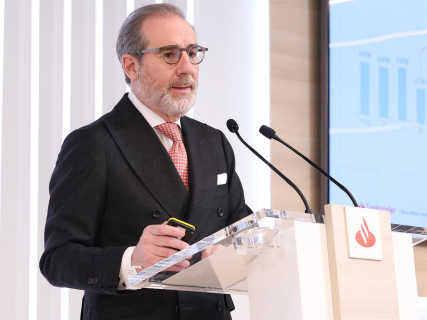

The chief executive officer of Banco Santander, Héctor Grisi, has chosen not to yet specify how he will structure the return of the last 1,000 million euros that remain to complete the 10,000 million euro remuneration plan committed to shareholders between 2025 and 2026, after having already distributed 9,000 million. This lack of definition comes at a time when the CET1 capital ratio stands below the target range set by the entity, of 13%.
Despite this scenario, Grisi has insisted that the bank remains "on the right track to carry it out". "We have been very clear in what we announced to the market and in our hierarchy of use of capital," he noted during the press conference following the presentation of the results for the third quarter of 2026, stressing that the behavior of capital is "tremendously good" if the latest corporate operations are taken into account.
In this line, the executive has focused on the integration effort recently carried out: "It must be taken into account that this year we have paid Webster and TSB and that reduced our capital. The truth is that we have been rebuilding the ratio until adding 100 basis points so far this year".
Grisi has reiterated that the group maintains unchanged its forecasts for the close of the fiscal year thanks to the strength of its organic generation of capital. "Such is the level that we said we were going to be above by the end of the year and the plan remains as such. The very solid organic generation of capital is one of the things that Santander does very well", he emphasized.
Priority to organic investment over remuneration
Questioned about the specific way in which the pending capital deliveries will be executed, the chief executive officer has conditioned the final decision on the profitable growth opportunities that the business may offer, giving priority to organic investment over immediate remuneration to shareholders when this generates a superior return.
"On the subject of dividends, the capital hierarchy is clear: first we invest it organically. If I am able to use that capital to give my shareholders much better returns, I will do it that way", he explained.
In this regard, he has once again recalled the threshold from which the capital surplus will be directly returned to investors. "All the surplus we have above what has been set will be returned to the shareholders, and we will decide at the time whether we do so through share buybacks or through dividends," he added.
As of the end of September 2026, the bank's CET1 'phased in' capital ratio stood at 12.7%, which implies a decline of four basis points compared with the same period of the previous year. In June, this indicator reached 14%. If it were to remain at current levels, the full execution of the 1,000 million euros still pending to be paid out would be called into question.