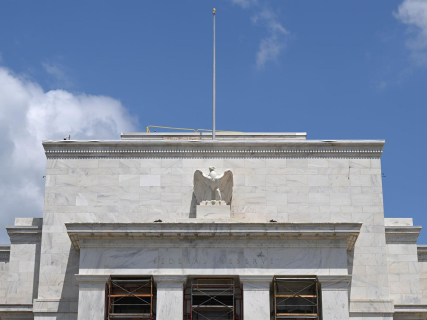

The Federal Open Market Committee (FOMC, for its acronym in English) of the Federal Reserve of the United States (Fed) has decided to increase interest rates by 25 basis points, placing the target range between 3.75% and 4%. This is the first move to tighten monetary policy under the mandate of the newly appointed president of the central bank, Kevin Warsh, who thus distances himself from the pressures of Donald Trump, a proponent of cutting the benchmark rate.
This adjustment represents the first increase in interest rates in the United States since July 2023 and returns the official price of money to the level recorded in December 2025, after the cut in January and five consecutive meetings in which rates remained unchanged. The decision of the body has been adopted unanimously.
The central bank has indicated that economic activity continues to show a "solid" advance, despite the uncertainty generated by the geopolitical scenario. In this context, the Fed emphasizes the "strong" increase in productivity and "robust" capital investment, along with the good performance of the labor market.
"Inflation remains high. The measures adopted today will contribute to a more timely return to the 2% target set by the Committee. The Committee will ensure price stability," reads the statement issued by the central bank.
The rate hike occurs in an environment of inflationary pressures driven by rising energy costs, associated with the prolongation of the conflict in the Middle East and tensions in the oil market. The barrel of West Texas Intermediate (WTI) crude, a benchmark for the United States, is trading above 100 dollars.
U.S. inflation stood at 3.4% in August, the same rate as the previous month, while the core inflation moderated by one-tenth. In parallel, the labor market generated 162,000 new jobs in August, a notable jump compared to the 21,000 positions created in July and above analysts' forecasts.
In this scenario, the rising cost of money may open a new front between the White House and the Federal Reserve, after the U.S. president recently urged the institution to set the lowest interest rate in the world.