Price of electricity today, September 15: the most expensive hour will be from 20:00 to 21:00 and the cheapest from 14:00 to 15:00

The price of electricity will be lower during the central hours of the afternoon and will reach its highest values during the night, with a difference of more than 0.30 €/kWh between both extremes.

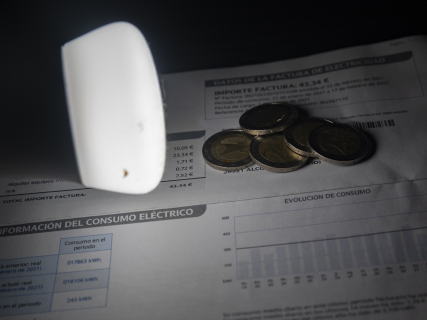
EuropaPress 4165629 lampara refleja importe factura dia precio luz marcado minimo primera vez

EuropaPress 4165629 lampara refleja importe factura dia precio luz marcado minimo primera vez

Add DEMÓCRATA to Google

Ask FREN

Published

Last updated

2 minutes

Most read

España vota · Congreso y Senado

Elecciones generales 29 de noviembre de 2026

Se eligen 350 diputados y los senadores de elección directa. Encuestas, calendario, candidaturas, programas y todo lo que necesitas saber para votar.

Faltan 43 días y 17 horas para que abran los colegios electorales.Hasta que abran los colegios, el domingo 29 a las 09:00 (hora peninsular).
Entra en el especial

Próximas fechas

  1. HoyÚltimo día para comunicar coaliciones electoralesFecha prevista
  2. Presentación de candidaturas al Congreso y al Senado21–26 oct · Fecha prevista
  3. Voto desde el extranjero (CERA): envío de la documentación24–30 oct · Fecha prevista
  4. Publicación de las candidaturas presentadasFecha prevista
Calendario completo

The price of electricity today, Tuesday, September 15, 2026, will have its cheapest hour between 14:00 and 15:00 hours, with a cost of 0.0601 €/kWh. The most expensive hour will be between 20:00 and 21:00 hours, when the price will reach 0.3619 €/kWh.

The day will start with prices around 0.20 €/kWh and will register an increase during the early hours of the morning. The price will reach 0.2681 €/kWh between 08:00 and 09:00, before starting a decline that will take costs to their minimum levels during the afternoon.

What is the cheapest hour of electricity today?

The cheapest hour will be from 14:00 to 15:00, with a price of 0.0601 €/kWh.

The following time slots will maintain relatively low prices: between 15:00 and 16:00 the cost will be 0.0692 €/kWh and between 16:00 and 17:00 it will be 0.0859 €/kWh.

What is the most expensive hour?

The daily maximum will be recorded between 20:00 and 21:00 hours, with 0.3619 €/kWh.

The increase will begin from 18:00 hours, when the price will be 0.2364 €/kWh. Between 19:00 and 20:00 it will reach 0.3208 €/kWh and will continue to rise until it marks the maximum of the day. Between 21:00 and 22:00 the cost will still be 0.3334 €/kWh.

The average price of electricity this Tuesday

The average of the 24 hourly prices of the day is approximately 0.2050 €/kWh.

The difference between the minimum and maximum price will be 0.3018 €/kWh. The central hours of the afternoon will concentrate the lowest costs, while the time slot between 19:00 and 22:00 will be the most expensive.

Hour Price
00-01h 0.2156 €/kWh
01-02h 0.2113 €/kWh
02-03h 0.2059 €/kWh
03-04h 0.2059 €/kWh
04-05h 0.205 €/kWh
05-06h 0.2079 €/kWh
06-07h 0.2534 €/kWh
07-08h 0.2668 €/kWh
08-09h 0.2681 €/kWh
09-10h 0.2199 €/kWh
10-11h 0.2211 €/kWh
11-12h 0.1655 €/kWh
12-13h 0.133 €/kWh
13-14h 0.1137 €/kWh
14-15h 0.0601 €/kWh
15-16h 0.0692 €/kWh
16-17h 0.0859 €/kWh
17-18h 0.1157 €/kWh
18-19h 0.2364 €/kWh
19-20h 0.3208 €/kWh
20-21h 0.3619 €/kWh
21-22h 0.3334 €/kWh
22-23h 0.2342 €/kWh
23-24h 0.209 €/kWh

When is it advisable to run appliances

The most favorable hours to concentrate the consumption of high-power appliances will be between 14:00 and 17:00 hours, especially between 14:00 and 15:00, when the daily minimum will be reached.

On the contrary, it will be advisable to avoid the most expensive hours of the night, especially between 19:00 and 22:00 hours. The highest cost will be recorded between 20:00 and 21:00, when the maximum of the price of electricity today will be reached.

More key points, information and questions with FREN

AI-GENERATED CONTENT

What regulations currently govern the setting of electricity prices in the Spanish wholesale market?

The setting of electricity prices in the Spanish wholesale market (daily and intraday pool and balancing services) is supported by a framework of European and Spanish regulations. The result is a marginal pricing system, harmonized at the EU level, methodologically developed by the CNMC and operated by OMIE (market) and Red Eléctrica (system).

1. European market design framework

The basic design of the marginal market and its European integration is given by:

  • Regulation (EU) 2019/943, on the internal electricity market, which requires competitive wholesale markets, European coupling, and 15-minute imbalance settlement periods. It is the main reference for the marginal pricing model and the participation of renewables and demand.
  • The so-called "network codes" and market guidelines, cited in the CNMC Circular 3/2019:
    • Regulation (EU) 2015/1222 (CACM), on capacity allocation and congestion management, which regulates the coupling of day-ahead and intraday markets.
    • Regulation (EU) 2016/1719 (FCA), on forward capacity allocation.
    • Regulation (EU) 2017/2195 (EBGL), on electricity balancing and reserve markets.
    • Regulation (EU) 2017/1485 (SOGL) and 2017/2196 (NCER), on network operation and emergencies.
    These regulations set how interconnection capacities are calculated, how markets are coupled, and how prices are formed in different time horizons (long term, day-ahead, intraday, balancing).

2. Basic legal framework in Spain

At the national level, the general pillar is the Law 24/2013, of December 26, on the Electricity Sector, which:

  • Configures the liberalized electricity system and the production market as the main mechanism for setting the wholesale price.
  • Defines the functions of OMIE as market operator and Red Eléctrica as system operator.
  • Refers to regulatory development and the CNMC for market and operation methodologies.

This law has been supplemented by royal decree-laws on energy measures (for example, Royal Decree-Law 15/2018, 17/2021, and 23/2021) that introduce adjustments on consumers, transparency, and protection against episodes of high prices, but without altering the principle of marginal pricing.

3. Market methodologies and operational rules (CNMC)

The central piece that details the regulation of the wholesale market is the CNMC Circular 3/2019, of November 20, which establishes the methodologies regulating:

  • The operation of the wholesale electricity market (day-ahead and intraday segments, capacity allocation, integration with CACM).
  • The system operation management and the structure of balancing and adjustment services (reserves, imbalances, technical constraints).

In development of that circular, the CNMC has been approving resolutions containing the Operating Rules for the day-ahead and intraday markets and the Operating Procedures (PO) that practically determine how prices are formed:

  • The Resolution of May 23, 2024, approving new rules for the day-ahead and intraday markets to adapt them to European intraday auctions (BOE-A-2024-11958), integrates the European auction design and details the marginal pricing scheme in MIBEL.
  • The Resolution of February 28, 2025, by the CNMC, publishes updated operating rules for the day-ahead and intraday markets to adapt to quarter-hourly trading and a new type of offers (BOE-A-2025-4908). This regulation is key because:
    • It implements quarter-hourly products (96 periods per day) in line with Regulation 2019/943.
    • It adjusts the types of offers admitted and how the OMIE algorithm matches energy and sets marginal prices.
  • Various resolutions on operating procedures 14.3 and 14.4 regulate the settlement and prices of adjustment services, which complement the day-ahead market price (for example, the Resolution of December 16, 2021, and its subsequent modifications).

4. Balancing services and system control

Besides the pool price, reserve markets and other services impact the wholesale cost:

  • The aforementioned Circular 3/2019 and resolutions such as those of December 11, 2019, and December 10, 2020, develop operating procedures to adapt the Spanish system to European balancing conditions (aFRR and RR platforms, imbalance methodologies, etc.).
  • Later resolutions (for example, those of March 17, 2022, or September 8, 2022) define and remunerate services such as tertiary regulation, active demand response, and other non-frequency services, whose prices are also determined by competitive mechanisms and are passed on to the wholesale cost.

5. Extraordinary measures: "Iberian mechanism"

During the gas price crisis, an exceptional regime was introduced that has temporarily conditioned price formation:

  • Royal Decree-Law 10/2022, of May 13, which temporarily establishes a production cost adjustment mechanism to reduce electricity prices in the wholesale market (BOE-A-2022-7843). It establishes the so-called "Iberian gas price cap mechanism", which introduces an adjustment payment linked to gas costs to partially decouple the electricity price from natural gas.
  • Royal Decree-Law 3/2023, of March 28, extends this mechanism and adjusts its reference gas price path (BOE-A-2023-7937).

Although these are temporary and exceptional regulations, while in force they form part of the legal regime that determines the effective price resulting from the Spanish wholesale market.

In summary, today the setting of prices in the Spanish wholesale market rests on: the European framework (Regulation 2019/943 and network codes), Law 24/2013 on the Electricity Sector, CNMC Circular 3/2019 and its resolutions on market rules and operating procedures, along with royal decree-laws that have created and extended the "Iberian mechanism" as a temporary intervention on prices.

What are the competencies of the Ministry for the Ecological Transition regarding energy policy?

The Ministry for the Ecological Transition and the Demographic Challenge (MITECO) is, according to Royal Decree 503/2024, the competent department within the General State Administration for proposing and executing the Government's policy on energy, framed within the transition towards a more ecological productive and social model. Its energy competencies are structured around planning, regulation, and promoting the decarbonization of the energy system.

General framework of energy competencies

The very reference to Royal Decree 503/2024, included in the Official State Gazette (BOE) in the Resolution of November 20, 2025, regarding an agreement with the University of Alcalá, summarizes the Ministry's function: to propose and execute government policy on energy along with combating climate change, pollution prevention, and natural heritage protection. This implies that energy is conceived as a vector serving the ecological transition and not as an isolated area of industrial policy.

On this basis, MITECO's energy competencies can be grouped into several major blocks: planning and coordination of the energy system, regulation and supervision of the normative framework, promotion of energy efficiency and savings, development of renewable energies, and management of environmental impacts of energy infrastructures.

Planning and coordination of energy policy

MITECO designs the medium- and long-term energy strategy, aligned with climate and decarbonization goals. Within its structure, the General Directorate of Energy Planning and Coordination, also mentioned based on Royal Decree 503/2024, assumes key functions, among others:

  • Reviewing and updating instruments such as the catalog of standardized energy efficiency measures, through resolutions that modify and expand subsidizable or incentivizable actions in savings and efficiency.
  • Technically coordinating the planning of the energy system, including the electricity transmission grid and investment needs to integrate renewables, storage, and new consumption.
  • Providing technical support to aid programs and to the definition of instruments such as energy savings certificate systems or the design of efficiency support schemes.

Regulation and normative development of the energy sector

MITECO plays a central role in the development of energy regulations of legal and regulatory rank. Through the Ministry itself and its governing bodies, it promotes:

  • Drafts of royal decrees on electricity production, operation of electrical systems (including non-peninsular territories), energy requirements for data centers, or development of renewable fuels.
  • Ministerial orders that set remuneration parameters for generation facilities, gas system charges, catalogs of energy efficiency measures, or aid programs for storage and self-consumption.
  • Adapting the internal framework to European regulations on renewables, efficiency, renewable fuels, or supply security.

These normative functions are often exercised in coordination with other departments (for example, Economy or Digital Transformation), but technical leadership in designing the energy framework rests with MITECO.

Promotion of energy transition and efficiency

The Ministry manages a very relevant part of energy transition policies, including:

  • Energy efficiency programs in buildings and the public sector, channeling European and national funds and coordinating with autonomous communities, supported by IDAE, an agency dependent on the Ministry.
  • Measures to integrate renewables, self-consumption, and storage into the electrical system and accelerate the processing of associated infrastructures.
  • Instruments to combat energy poverty and protect vulnerable consumers, in coordination with other ministries.

Environmental assessment and energy infrastructures

Although located in the environmental area, the General Directorate of Environmental Quality and Assessment exercises essential competencies for energy policy, also according to Royal Decree 503/2024:

  • Resolving environmental impact assessment procedures for state-competent energy projects, such as high-voltage lines, wind farms, photovoltaic plants, or large storage facilities.
  • Conditioning the authorization of energy infrastructures on environmental protection criteria, land-use planning, and social acceptance.

In practice, this means that MITECO not only designs energy policy but also controls its environmental compatibility and the adequacy of each major energy project to environmental assessment regulations.

Overall, the Ministry concentrates the strategic direction of energy policy focused on decarbonization, efficiency, and environmental protection, and articulates this competence both through planning and regulation and through economic instruments and evaluation of specific projects.

What requirements must consumers meet to access regulated tariffs or electricity discounts in Spain?

In Spain, there are three key protection figures on the electricity bill for households: the regulated PVPC tariff, the electric social bonus, and the thermal social bonus. Each has different requirements, although they are closely related.

1. Requirements to access the regulated PVPC tariff

The PVPC (Voluntary Price for the Small Consumer) is the regulated electricity tariff. According to the framework of Royal Decree 216/2014, later modified by several regulations, and the official explanations collected in Government notes, the following can access it:

  • Type of customer: natural persons and microenterprises holding the contract.
  • Voltage and power: supply at low voltage, with contracted power equal to or less than 10 kW.
  • Supplier: the contract must be with one of the authorized Reference Suppliers (not any company in the free market).
  • Free choice: it is not necessary to be vulnerable; any small consumer who meets the above points can switch to PVPC if they wish.

That is, the key requirement to access the regulated tariff is to be a small domestic consumer (or microenterprise) with power ≤10 kW and contract the supply with a Reference Supplier.

2. Requirements for the electric social bonus

The electric social bonus is a discount on the bill for vulnerable consumers, mainly regulated by Royal Decree 897/2017 and its development (Order ETU/943/2017), with multiple extensions and subsequent adjustments. According to official fact sheets and the note on aid for vulnerable consumers (Moncloa, 01/29/2025) , to access it one must simultaneously meet:

  • Contract requirements:
    • Have the regulated PVPC tariff contracted.
    • The supply must be for the main residence.
    • Contracted power equal to or less than 10 kW.
    • The applicant must be the contract holder.
  • Be a vulnerable, severely vulnerable consumer or at risk of social exclusion. The condition is defined by a combination of income and family situation:
    • By income: generally, the annual income of the household must be ≤ 1.5 times the IPREM of 14 payments, increasing the threshold for each additional adult and minor in the household. For severely vulnerable consumers, the limit is generally ≤ 50% of that threshold.
    • Large family: the right to the social bonus is recognized simply by holding a large family certificate, although the Energy Poverty Strategy 2026-2030 foresees linking this access more to income level.
    • Pensioners: all members with income are retirement or permanent disability pensioners at the minimum amount and do not exceed a small aggregated income supplement.
    • Minimum Vital Income (IMV): those who, meeting the other conditions, belong to a unit receiving the IMV have the right.
    • Other special circumstances (recognized in regulations and regional guides such as that of the Generalitat of Catalonia): single-parent family, presence of a member with disability ≥33%, dependency grade II or III, or being a victim of gender-based violence or terrorism. These situations raise the allowed income thresholds.
    • Risk of social exclusion: besides being severely vulnerable, regional or local social services must co-finance at least half of the bill. In that case, supply cannot be cut while this situation lasts.

Current discounts are around 35–50% for vulnerable and 50–65% for severely vulnerable, with a progressive reduction path from the extraordinary percentages applied during the energy crisis, as explained in "Measures against the energy crisis in Spain" .

3. Requirements for the thermal social bonus

The thermal social bonus is an annual monetary aid for heating, hot water, and cooking expenses, created by Royal Decree-Law 15/2018. According to that regulation and the explanatory note from Demócrata , the essential requirement is:

  • Be a beneficiary of the electric social bonus as of December 31 of the previous year.

It cannot be requested solely based on income: the electric social bonus must be recognized on that date. With that list, the State and autonomous communities assign and pay the aid:

  • It is granted ex officio: normally no new application is required.
  • The amount varies according to the degree of vulnerability and the climatic zone (colder zones receive a higher amount).
4. What a consumer should be clear about
  • If they only want the regulated tariff, it is enough to meet power ≤10 kW and contract PVPC with a Reference Supplier.
  • If they also want a discount (electric social bonus), they must: have PVPC + meet the income thresholds and/or the special family circumstances described.
  • If they obtain the electric social bonus, they can automatically receive the thermal social bonus the following year.

Play

Test your knowledge with FREN!

How much do you know about this topic? Answer the following 3 questions.

In which time slot is the lowest electricity price recorded on September 15, 2026?

Question 1 of 3

What is the maximum electricity price during the day of September 15, 2026?

Question 2 of 3

During which period is it recommended to avoid intensive use of appliances due to the electricity price?

Question 3 of 3