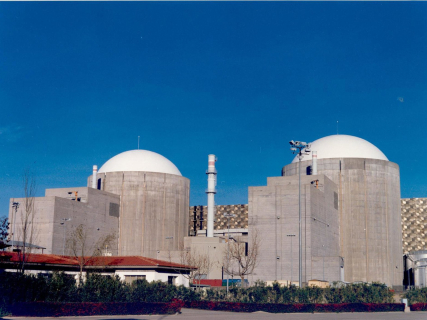

Spain currently maintains five nuclear power plants in operation, although it has seven reactors because Almaraz and Ascó each have two units. The recent extension of Almaraz until June 2030 has modified the first major milestone of the calendar, but the Government currently maintains 2035 as the date for the complete closure of the nuclear park.
In total, the facilities in operation sum up to 7,398.77 megawatts of electrical power. Almaraz is in Cáceres; Ascó and Vandellós II, in Tarragona; Cofrentes, in Valencia; and Trillo, in Guadalajara.
Almaraz I and II: until June 8, 2030
Almaraz was originally supposed to open the closure calendar. The previous authorization set the end of operation for unit I in November 2027 and for unit II in October 2028.
That will no longer happen.
The Order TED/864/2026, published in the BOE on August 14, authorizes the two reactors to continue operating until June 8, 2030. The extension represents approximately 31 additional months for Almaraz I and 19 months for Almaraz II.
Almaraz I began commercial operation in 1983 and has 1,049.4 MW. Almaraz II started a year later and contributes another 1,044.5 MW.
Ascó I: October 2030
After the extension of Almaraz, Ascó I is now among the next reactors in the calendar.
The unit began its commercial operation in 1984 and has a power of 1,032.5 MW. The calendar set by the Nuclear Safety Council places its end of operation in October 2030.
Cofrentes: November 2030
The Valencian plant of Cofrentes has a characteristic that differentiates it from the other Spanish facilities in operation: it is the only boiling water reactor, or BWR. The other six are pressurized water reactors.
It began commercial operation in 1985 and has 1,092.02 MW, the highest individual power of the seven reactors in operation. Its calendar sets the end of operation for November 30, 2030.
Ascó II: October 2031
The second unit of Ascó began its commercial activity in 1986.
With a power of 1,027.21 MW, its expected end of operation date is set for October 2031.
Its exit would then leave only two reactors within the planned calendar: Vandellós II and Trillo.
Vandellós II and Trillo would close in 2035
The last reactors of the current Spanish nuclear calendar are also two of those that started operating later.
Vandellós II, in Tarragona, began commercial operation in 1988 and has 1,087.14 MW. Its closure is scheduled for February 2035.
Trillo, in Guadalajara, also started in 1988 and has 1,066 MW. The schedule foresees its closure in May 2035, which would make it the last nuclear power plant to leave the system if no new modifications occur.
| Reactor | Province | Power | Expected closure |
|---|---|---|---|
| Almaraz I | Cáceres | 1,049.40 MW | June 8, 2030 |
| Almaraz II | Cáceres | 1,044.50 MW | June 8, 2030 |
| Ascó I | Tarragona | 1,032.50 MW | October 2030 |
| Cofrentes | Valencia | 1,092.02 MW | November 30, 2030 |
| Ascó II | Tarragona | 1,027.21 MW | October 2031 |
| Vandellós II | Tarragona | 1,087.14 MW | February 2035 |
| Trillo | Guadalajara | 1,066.00 MW | May 2035 |
Five plants are not seven distinct installations
The difference between plants and reactors explains a common confusion.
Spain has five plants in operation and seven reactors. Almaraz and Ascó each have two independent units, while Cofrentes, Vandellós II, and Trillo have one reactor each.
There are three other Spanish plants that have already stopped generating electricity and are in different phases of decommissioning: José Cabrera, Santa María de Garoña, and Vandellós I.
The extension of Almaraz has eliminated, for now, the start of the closure scheduled for 2027, but it has not moved the end of the schedule. The ministerial order itself states that the extension does not modify the forecast that the entire nuclear fleet will have ceased operation by 2035.