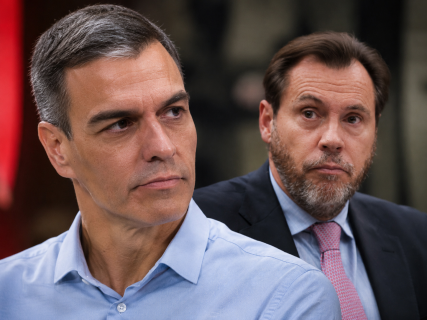

The signs were there: Óscar Puente was leaving the Government, but not necessarily the political battle. His resignation against Pedro Sánchez’s criterion, the organizational posts he kept, and a send-off directed at the rank-and-file allowed that appearance to be read as something more than the end of a ministerial stage.
Was it a “pact-made” resignation, or, as Puente himself indicates, a personal decision that the president refused? Or was it perhaps a move to get ahead of one of Sánchez’s moves? DEMÓCRATA already indicated that the past Friday’s rally in Valencia was announced on Monday, one day before the resignation that the Government “didn’t want” Puente to file. Would it have been possible to hold a rally in a Valencia marked by the DANA and the echoes of Mazón, with Puente still serving as minister after a double railway tragedy in his term? Surely not.

Now, Lucía Méndez in El Mundo and Ketty Garat in ABC add sources and details to that discussion, describing tensions, competing interpretations about the relationship between the two, and a possible move by Puente among the militants in Valladolid. The departure from Transportes has not closed the questions about his future.
The leak of “sources from the Government” and a resignation that outgrew the official version
On Tuesday, November 3, both EFE and various media published that sources from the Government were ruling out Puente’s resignation, his dismissal, and his renunciation of heading the Socialist Party candidacy in Valladolid. The minister’s continuation was presented as a firm decision.
Hours later, Puente announced before the Permanent Deputy Commission of Congress that he was leaving Transportes and the lists for 29N. The position that the Executive had conveyed was denied by the minister himself.
The WhatsApp later disseminated by laSexta clarified how he had communicated his decision to the president. “When you read this, your first reaction will be of stupefaction,” it began. Puente was not asking for permission: he was notifying of a resignation he was going to carry out.
A gesture of “disloyalty” on Puente’s part
In El Mundo, Lucía Méndez reconstructs an exit that surprised the president and collects government testimonies that consider it a gesture of disloyalty both in the way it was announced and in the subsequent dissemination of the messages.
“Something has happened between them,” they say, sources cited by the journalist. Those voices interpret that there has been a distancing and point to the expectations of support that Puente could have had.
In any case, the journalist also collects a different version: officials who deny a break and underscore that the resignation gave the PSOE an argument to differentiate itself from the PP in taking on responsibilities.
The coincidence between both readings lies in the autonomy of the former minister, and the disagreement appears when assessing its consequences: for some, it damaged the relationship with Sánchez; but for others, it was a decision that the president did not want, yet that ended up helping his campaign.
And although there is no bad that does not come to some good, it could be said that Sánchez is not the kind of profile who likes his trusted people to break the script for him. Especially if, politically, he considered himself finished after the tragedy of Urda to whoever broke it for him and who, moreover, months earlier had raised the succession of Sánchez himself.
That the former Transport minister is still at least moderately operational in the organizational sphere and is applauded from a distance at rallies could be a collateral effect that the current secretary general of the socialists is not seeing entirely well, despite being the first to join that chorus. Or not?
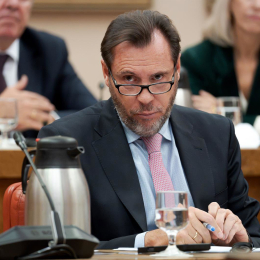
“Silent” coordination or “intimate” enmity?
Let’s not rule out some coordination at a distance and that everything is an attempt at “controlled exit and succession” on Sánchez’s part. Let’s remember that on Monday, November 2, the PSOE announced Sánchez’s return to rallies in Valencia. Puente was still a minister and Moncloa defended his continuity after the Urda accident.
According to the reconstruction by laSexta collected by DEMÓCRATA, that same Monday Puente had prepared the message with which he would communicate his resignation. On Tuesday, he resigned. On Friday, Sánchez was able to present his exit as an example of political responsibility in a community where the handling of the dana and the actions of Carlos Mazón occupied the center of the debate.
It was already considered whether that call could be interpreted as a “dog whistle”: a signal whose political meaning certain recipients would recognize before the whole of the public. The hypothesis referred to the rally’s schedule and its setting: setting it up could have been a signal to Puente that, no matter how verbally he told him “no,” Sánchez was showing him the exit door.
Be that as it may, what is incredible is the turn of the script: on Tuesday the Government defended that Puente should stay to manage the crisis and, after his exit, on the same Friday it turned his departure into a demonstration of dignity.
Does postsanchismo begin?
Ketty Garat provides in ABC information that shifts the focus to the party. According to PSOE sources in Castilla y León cited by the journalist, Puente is preparing a closed-door event with members of his group in Valladolid.
Garat links that move to a prior distancing from Sánchez and to the prominence acquired by other members of the Government. That reading points to a different hypothesis about coordination: that Puente’s departure would alter a script that Sánchez had written. It also interprets that he could be laying a first stone for a stage after 29N. All of this, unless we are dealing with a move 'controlled' by Sánchez, who wants to be able to 'choose' his successor.
The preparation of the meeting is information attributed to ABC sources. But Valladolid has its own relevance. The former minister retains the provincial general secretariat and his position in the Federal Executive. He has left the Council of Ministers without letting go of his position within the PSOE.
Sacrificing for the PSOE and keeping aspirations
Sources close to Puente were considering possible primaries if the succession were opened, but they also believed that the railway tragedies had closed off their leadership options. Now, however, nothing is clear after his resignation.
His supporters can present the resignation as proof of responsibility. His critics can understand it as recognition of the political cost of his management. The farewell addressed to the members adds another dimension. Puente asked them for unity and pride in what has been achieved and in what remains pending. Garat highlights that passage as a sign of political continuity.
Carlos Martínez himself, secretary general of the PSOE in Castilla y León, has defended that the party should continue to count on Puente.
Sánchez rejects feeling betrayed
While the sources describe tensions, Sánchez publicly maintains recognition for his former minister. In his interview with La Vanguardia today, the president rejected feeling betrayed by the resignation and stated that Puente had dignified politics. Therefore, there is no public statement of confrontation between the two.
Carlos Cuerpo takes care of Transportes. Puente retains his positions in the PSOE. The meeting with party militants that ABC reports on and the electoral result of November 29 will be the next elements for assessing his scope of action within the party. Therefore, either the swords start to be raised high for Sánchez and Puente... or else Sánchez has, publicly, begun to write his political epitaph at the head of the PSOE by ensuring that the person who wants to replace him understands how and when he should have made his move, step out... and wait.