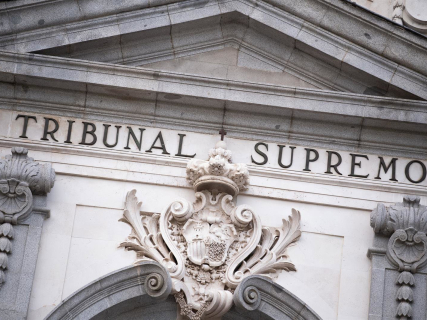

The Administrative Litigation Chamber of the Supreme Court has upheld the appeal for cassation filed by a couple and has concluded that the wife of a man subjected to a vasectomy has standing to demand liability from the health administration when the intervention is not effective and she has not been adequately warned of that possible risk.
The case originates from a vasectomy performed on a patient in a public hospital in the Community of Madrid. After the operation, there was a spontaneous recanalization of the vas deferens, which caused the failure of the sterilization method and, as a direct consequence, an unwanted pregnancy.
The Administration and the High Court of Justice of Madrid had already admitted that there was a deficit in the clinical information provided, granting the patient compensation for the moral damage resulting from the violation of his right to informed consent. However, they rejected the wife's claim for compensation, understanding that she did not have active standing to claim.
The issue with cassational interest focused on clarifying whether the patient's partner can claim her own compensation in such cases.
The ruling of the Fifth Section of the Third Chamber of the Supreme Court emphasizes that the right to receive healthcare information and to grant informed consent belongs only to the patient, as it is a personal right linked to their autonomy and their fundamental right to physical and moral integrity. However, the court distinguishes between who holds that right and who may be harmed by its violation.
The Supreme Court reasons that, although the lack of medical information directly harms the patient's right, the consequences of the failure of the vasectomy also affect their partner. The absence of an explanation about the risk of recanalization prevented both from making fully informed decisions regarding family planning and resorting to other contraceptive methods. "Therefore, the woman suffered her own, autonomous, and individualized damage, consisting of the frustration of her reproductive self-determination and family planning capacity," the Court states.
The Chamber establishes as jurisprudential doctrine that, when relevant information about the possibility of failure of a vasectomy is omitted, the stable partner of the patient is entitled to claim patrimonial responsibility for the damages arising from that omission. It specifies, moreover, that such legitimization does not proceed from a shared ownership of the right to informed consent, but from the autonomous damage suffered by those who endure the consequences of the lack of information.
Applying this doctrine to the specific case, the Supreme Court estimates the appeal, nullifies the sentence issued by the High Court of Justice of Madrid, and recognizes the right of both appellants to be compensated. The Chamber sets a compensation of 35,000 euros for each of them, to which the corresponding legal interests will be added.