
United States and Iran reach this Monday, August 17, the end of the 60-day deadline that they had granted themselves to negotiate a definitive peace agreement. The date does not automatically trigger a new phase of the war, but eliminates the time horizon set in the memorandum signed last June 17 and leaves the conflict without an agreed roadmap.
The expiration occurs, moreover, at a time of increasing tension. Iran has announced that its military stance will cease to be exclusively "defensive" to acquire an "offensive" character and has warned of possible "strategic surprises." At the same time, Brent oil remains above 88 dollars amid fears of a new escalation in the Middle East.
What the expiration of the deadline between the United States and Iran means
This Monday marks the end of the 60-day period established in the memorandum of understanding signed by the United States and Iran on June 17. The document proclaimed the immediate end of military operations and opened a negotiation to transform the truce into a definitive agreement.
The deadline was extendable, but the parties have not announced a consensual extension. Pakistani sources assured last week that Washington and Tehran had agreed to extend it, but an Iranian source later denied that such an extension was being negotiated and demanded that the United States first return to compliance with the memorandum.
Therefore, it is not simply the expiration of a ceasefire of limited duration. The time set to close a broader negotiation that was supposed to resolve the main political, military, and economic causes of the conflict ends.
Among the pending issues are the future of the Iranian nuclear program, the effective implementation of the ceasefire, free navigation in the Persian Gulf, the reopening of the Strait of Hormuz, the lifting or easing of U.S. sanctions, authorizations for Iran to sell oil, the unlocking of Iranian funds abroad, as well as the scope of the truce in Lebanon and other regional fronts.
Diplomatic communications continue indirectly through mediators like Pakistan and Qatar, but there is no evidence of direct conversations between the United States and Iran or sufficient progress to close an agreement.
The ceasefire was already seriously damaged
The expiration of the deadline has evident political importance, although it does not mean that the war will exactly start again this Monday. In reality, hostilities had already resumed much earlier. The memorandum began to deteriorate just a few days after its signing. Washington accused Tehran of attacking commercial ships in the Strait of Hormuz, and the United States responded with new bombings in southern Iran. Donald Trump even declared the pact terminated on July 7.
Tehran, for its part, maintains that the United States violated the agreement just 48 hours after reaching it and subsequently withdrew from its commitments. Iran uses that accusation to reject a simple extension of the deadline: it demands that Washington first return to the memorandum and present a schedule to fulfill its obligations.
The consequence is that the truce remains as a diplomatic reference but has lost much of its military effectiveness. The end of the 60 days formalizes the failure of the negotiation, although it does not itself establish an automatic authorization to launch new attacks.
Iran announces an "offensive" military strategy
The increase in tension is reflected in the statements of Yadollah Javani, deputy commander for Political Affairs of the Iranian Revolutionary Guard.
"From now on, every action we take, even if it is defensive, must have an offensive character," Javani stated in an interview broadcast by Iranian television. The military leader also assured that the Armed Forces will adopt new approaches and warned that the adversary could encounter "strategic surprises."
The message does not equate to the announcement of a specific military operation. However, it does imply a threat to elevate Iran's anticipation and response capacity, possibly through missiles, drones, attacks on U.S. interests, or actions on the maritime routes of the region.
The verbal escalation also reaches Washington. Trump has stated that he intends to declare the Strait of Hormuz as part of U.S. territory, a declaration without recognized fit in international law and which Iran interprets as a direct threat to its sovereignty and its position in the Persian Gulf.
What can happen now with the war
The end of the deadline opens several scenarios. The first is an informal prolongation of the current situation: limited confrontations, public threats, and indirect contacts, but without a widespread offensive. The mediators could try to buy time even without a formal extension of the memorandum.
The second scenario would be a new round of American and Iranian attacks. The United States could respond to actions against its forces or against commercial navigation, while Iran could expand its operations with missiles, drones, or associated forces in other Middle Eastern countries.
The third possibility involves rebuilding the negotiation. For this, Washington would have to offer guarantees regarding its commitments and Tehran would have to accept some verifiable mechanism regarding navigation and its nuclear program. The distance between the positions remains considerable.
The immediate risk does not lie, therefore, in a clause that forces the resumption of war starting August 18. It lies in both parties having lost the diplomatic framework that served to contain a greater escalation.
What will happen with the Strait of Hormuz
The Strait of Hormuz is one of the main bottlenecks in the negotiation. Iran maintains that it will not allow complete normalcy to be restored while the United States does not modify its actions, comply with the provisional agreement, and address demands such as the unlocking of Iranian funds.
Tehran and Oman are working on a provisional formula to organize the passage of ships through determined routes close to their coasts. This initiative could partially alleviate maritime circulation, but it does not resolve the political confrontation with Washington nor guarantee a complete and stable opening.
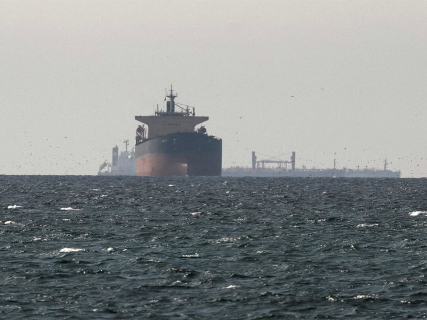
About one-fifth of the oil and liquefied natural gas transported by sea in the world passed through Hormuz before the interruption caused by the war. Any attack on a tanker, port infrastructure, or energy facility could again drive up the cost of crude oil, maritime insurance, and transportation.
There is also the risk that the United States may try to guarantee navigation through a greater naval presence. That option could facilitate the transit of some ships, but it would raise the possibility of a direct confrontation with Iranian forces.
How it can affect the price of oil
The markets still do not reflect a scenario of total rupture, but they do maintain a high risk premium. The barrel of Brent for delivery in October was trading this Monday at 88.57 dollars, 0.05% more, after having risen 1.67% on Friday due to tensions in the Middle East.
From now on, the evolution of oil will mainly depend on three factors: the possibility of new attacks against ships or energy facilities, the degree of effective opening of the Strait of Hormuz, and the ability of mediators to maintain contacts between Washington and Tehran.
If the conflict remains contained and safe corridors are enabled, Brent could stabilize or reduce part of the accumulated premium. A more serious disruption of Hormuz, on the other hand, could cause a rapid rise in oil and subsequently transfer to fuels, transportation, and inflation.
For Spain, an energy importer, the main channel of contagion would be economic. A persistently high Brent would make gasoline and diesel more expensive, increase business costs, and complicate the evolution of prices, although the final effect would also depend on the exchange rate of the euro against the dollar.
the keys to the expiration of the deadline
The 60-day deadline concludes without the definitive agreement that was to replace the provisional memorandum. It does not mean that there is a new formal declaration of war nor that attacks must automatically resume, but it confirms the failure of the negotiation within the agreed calendar.
Attention is now focused on three signals: whether Iran specifies its announced offensive stance, whether the United States adopts new military or economic measures, and whether the mediators manage to prevent the Strait of Hormuz from becoming the epicenter of the confrontation again.
The evolution of Brent above 88 dollars shows that the market remains cautious. Oil still does not discount the worst scenario, but any incident in Hormuz can quickly alter that perception.