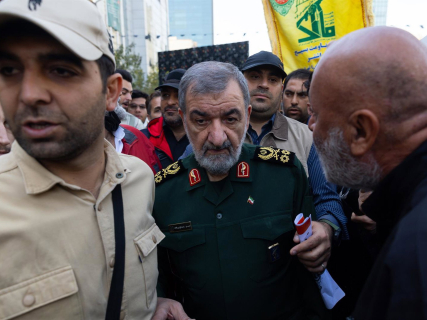

The head of Iran's Supreme National Security Council, Mohsen Rezai, pointed out this Sunday that Washington has given its approval to part of the seven demands made by Tehran to allow the reopening of the Strait of Hormuz, although, in general terms, he considers that the U.S. response is "inadequate."
"The United States has agreed to some of Iran's seven conditions, but we consider that their response is inadequate," Rezai indicated in a message disseminated through social media, where he also emphasized that "Iranian diplomacy has changed and there will be no return to the 'statu quo ante'."
In that same context, he criticized the former U.S. president by stating that "Trump, deceived by the fantasy of conquering Iran, has launched one of the most stupid wars in human history after being duped by (Israeli Prime Minister, Benjamin) Netanyahu."
According to Rezai, the United States "has failed in its attempt to reopen Hormuz and is resorting to smuggling" and has denounced that "U.S. military forces have never fallen so low," statements that he has also disseminated on his official accounts.
The Iranian public television Press TV aired an interview with Rezai this Sunday in which he reiterated that "there will be no negotiation unless the seven conditions" posed by Tehran are fully met.
In that conversation, the head of the Supreme National Security Council specified that "the Americans have already responded to us. In their response, they accept some of our conditions, while the situation of others remains unclear and there are ambiguities."
Rezai also warned that if hostilities break out again, they will target "new objectives" and specifically referred to "high-value assets" located in the United Arab Emirates and in the vicinity of the Strait of Hormuz.
He emphasized that internet cables, data centers, artificial intelligence facilities, and other critical infrastructures located in the area "will be destroyed" in the event of a military escalation, thus maintaining pressure on the United States and its allies in the region.