
The authorities of Iran have pointed out that the "phased plan" agreed with Oman to organize transit in the Strait of Hormuz does not translate into the "immediate opening" of this strategic enclave, as they have emphasized, any reopening will depend on the fulfillment of the conditions set by Tehran.
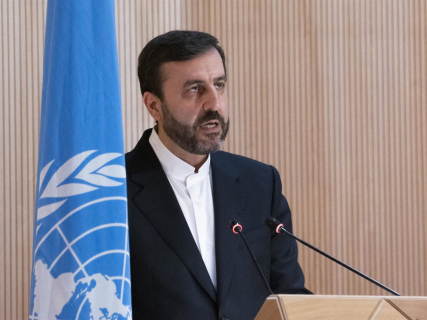
"This agreement does not imply the immediate opening of the Strait of Hormuz starting tomorrow," explained Iran's Deputy Foreign Minister, Kazem Qaribabadi, according to statements collected by the Iranian state chain IRIB in which he emphasized that the reopening is subject "to the fulfillment of the definitive conditions imposed by Iran." Otherwise, he warned, this waterway "will remain closed."
After pointing out that "before the recent wars, there were no problems in the Strait of Hormuz" and that Tehran "did not pay special attention" to issues related to the corridor linking the Persian Gulf and the Gulf of Oman, the senior official has claimed the strait as "a matter of national security" for the Islamic Republic, which requires modifications to the entry and exit routes.
In this sense, Qaribabadi detailed that access to the Persian Gulf will be made through Iranian waters and exit through Omani territorial waters. Nevertheless, he indicated, "in both, the ships will cross Iranian waters" within a kind of "two-way highway with a total width of about seven miles (about eleven kilometers)."
As the deputy minister has specified, this route will have a "temporary" nature, as Iran and Oman must finalize a new scheme that is "permanent" within a period of 30 to 60 days.
He also assured that "the southern route of the Strait of Hormuz will be closed," referring to the southern corridor under U.S. control, which, according to two U.S. officials cited by the Axios portal, is associated with the transport of 10 million barrels of crude daily. "This is an agreement. Oman agrees that this route will be closed, and the matter will be communicated to the International Community," Qaribabadi asserted.
In parallel, after warning that if contacts with the United States are resumed, these conversations "will not be like before" because "the circumstances have changed," the 'number two' of Iranian diplomacy has emphasized that Tehran's demands to reopen Hormuz include "the total lifting of the economic blockade, the definitive end of the war on all fronts, including Lebanon, and the determination of the status of the blockade on Yemen."
This same Tuesday, the governments of Oman and Iran have agreed to set a "phased plan" for the control of maritime traffic in the strait, although negotiations to fully restore navigation have not yet borne fruit.
"The proposed framework includes the creation of a temporary joint maritime corridor through the Strait of Hormuz and an agreement to launch a joint demining project for the strait," both parties explained after a meeting in Tehran between the foreign ministers of Oman and Iran, Badr al Busaidi and Abbas Araqchi, respectively.