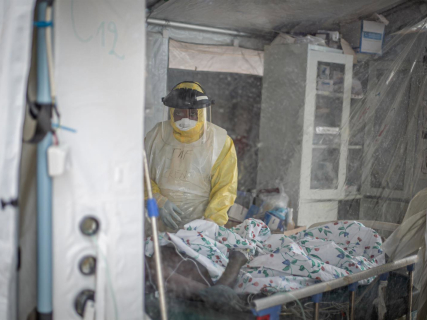

The Ebola outbreak declared in mid-May in the east of the Democratic Republic of the Congo (DRC) has already surpassed the barrier of 10,000 cases and is approaching 4,900 deaths, in a context of growing concern both within the country and internationally due to the rapid spread of the disease, which has already reached several neighboring states.
The latest report released by the National Institute of Public Health (INSP) details that to date, 10,060 infections and 4,887 deaths have been confirmed, including 96 new cases and 46 deaths in the last day, which places the global fatality rate at 48.6%. On the other hand, 2,684 patients have managed to overcome the disease, while the contact tracing rate stands at 81.6%.
The province of Ituri continues to be the main focus of the outbreak, accounting for 71.7% of the total infections. However, in the last day it has only added 33.3% of the new positives, a figure that reflects the expansion of the virus to other areas of the country. In total, eight provinces are already affected: North Kivu, South Kivu, Tshopo, Haut-Uele, Bas-Uele, North Ubangi, and South Ubangi, in addition to Ituri itself.
This outbreak in the DRC has become the deadliest recorded in the country's history, surpassing the one that took place between 2018 and 2020. Projections even suggest that it could exceed the large outbreak in West Africa between 2014 and 2016, which resulted in 28,616 cases and 11,325 deaths in Guinea, Liberia, and Sierra Leone, according to data from the World Health Organization (WHO).
In recent weeks, cases linked to the outbreak originating in the DRC have also been detected in Kenya and Nigeria, caused by the Bundibugyo strain -- which has no vaccine or approved treatment. This situation has led several countries in the region to intensify controls and strengthen epidemiological surveillance with the aim of curbing the spread of the disease.