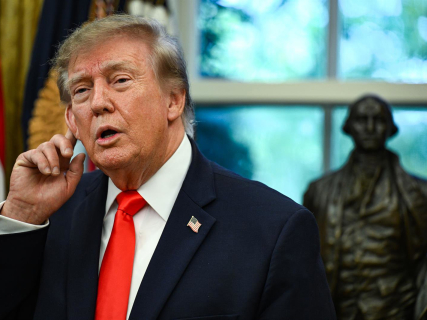

The United States celebrates today its midterm elections, known as midterms. They are called that because they are held halfway through the four years of the presidency, between a presidential election and the next one.
The main idea is simple: citizens elect the Congress that can help advance, negotiate, or block Trump’s initiatives. The White House is not voted on today. The elections affect three major levels:
| Institution | What is being elected | What it is for |
|---|---|---|
| House of Representatives | Its 435 seats. | Passes laws and public spending together with the Senate and oversees the Government. |
| Senate | 35 of its 100 seats. | Participates in laws and confirms presidential appointments, including federal judges. |
| State governments | Governors in 36 states. | They lead their respective states. Numerous state and local elections are also held. |
The House of Representatives is fully renewed every two years. Senators serve six-year terms and are renewed in groups: for that reason, today only part of the Senate is voted on.
What is Trump playing for?
His ability to push through his program. Republicans arrive at these elections with control of both chambers. Democrats are seeking to take at least one from them in order to increase their influence over laws, budgets, and oversight of the Administration.
To understand it from Spain, the importance that it has for a Government to have a parliamentary majority can be thought of in that way. There is, however, one fundamental difference: the U.S. president does not need the confidence of Congress to remain in office.
Trump can lose support from the chambers and continue governing, though with more difficulties in getting his initiatives approved. For a law to reach his desk, the House of Representatives and the Senate must approve the same text.
What happens if the Republicans win?
If they keep both chambers, Trump will maintain a politically favorable Congress to push forward his priorities.
That does not mean he can approve any measure: he also needs to keep his party united and respect the rules of the Senate, where many initiatives require support higher than a simple majority to overcome a debate blockade.
And if the Democrats regain a chamber?
They will be able to block legislative projects, negotiate changes in spending, and strengthen parliamentary investigations into the Government’s actions.
If they regain the Senate, they will also be able to make it harder to confirm Trump’s appointments. If they only win the House of Representatives, that power will remain in the hands of the Senate majority.
A Democratic victory would also not allow them to impose their program on their own: the president retains the right of veto over laws.
Can Trump lose the presidency today?
No. These elections do not elect a president or trigger his removal if his party loses. The next presidential elections are scheduled for 2028.
The midterms do allow measuring political support for the president: even though Trump is not listed as a candidate, voters can use their vote to support or punish his performance.
At what time will results be known in Spain?
The count will be followed during the early hours of Wednesday, November 4, in Spain. At one in the morning, Peninsular Time, polls close in states such as Georgia and Virginia. The last precincts, in the Aleutian Islands of Alaska, close at seven in the morning.
There is no guaranteed time to know who will control Congress. If the decisive races are very close, it will be necessary to wait for the count of outstanding votes. The results from election night are provisional, and their certification may take days or weeks.