
The president of the Government and general secretary of the PSOE, Pedro Sánchez, has asked this Monday the Federal Executive Commission of the party to give "more voice" to the actions deployed by the Executive in the face of the Ceuta crisis. Ferraz will accompany this political and communicative offensive with a manifesto in which it defends the measures adopted during the last month and demands cooperation from the rest of the administrations.
Sánchez conveyed the request during the first meeting of the socialist leadership after the August break, focused mainly on the situation in Ceuta. The order seeks for the different levels of the party to more intensely claim the governmental management in the face of criticisms from the PP, Vox, and some representatives of the PSOE in Ceuta itself.
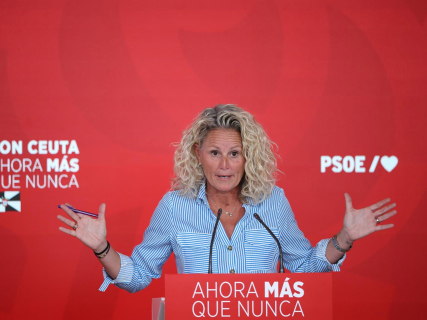
The spokesperson for the Federal Executive, Montse Mínguez, appeared after the meeting to assert that the Government has provided "security," "resources," and "solutions," and has accused the PP of spreading "lies" about the actions of the Executive and of already being in "election mode."
The PSOE claims the deployment of the Government
To defend its response, the socialist leadership has reviewed the agenda developed since the massive entries at the end of July. Mínguez recalled that Sánchez traveled to Ceuta on July 31 and presided over coordination meetings on August 7, 17, and 29.
The spokesperson also listed the movements or interventions of the ministers Fernando Grande-Marlaska, Margarita Robles, Sira Rego, Ángel Víctor Torres, Mónica García, Elma Saiz, Carlos Cuerpo, and Félix Bolaños during the weeks following the crisis.
Ferraz also claims the emergency plan for Ceuta, which Mínguez estimated at 345 million euros, as one of the main economic measures adopted to address the needs of the city and mitigate the consequences of the crisis on public services, neighborhoods, and business activity.
The communication strategy will have a new test this Thursday, when Sánchez appears from 9:00 a.m. before the Plenary of Congress to inform, at his own request and that of the Popular Group, about the management of the Government and the situation in Ceuta.
The request comes after the criticisms from the PSOE in Ceuta
Sánchez's order to reinforce the defense of governmental action comes after the socialist deputies in the Assembly of Ceuta Melchor León and Sebastián Guerrero distanced themselves from the management of the central Executive.
Both demanded a more forceful response and proposed measures such as the declaration of a state of alarm, the intervention of the Military Emergency Unit, and the permanent deployment of Frontex at the border. León even called for Marlaska's resignation if he did not fulfill his commitment to return to Morocco those who had entered irregularly and did not have the right to remain in Spain.
The federal leadership is now trying to close ranks around the Government's management and convey a common message before Sánchez's appearance in Congress. The manifesto concludes by defending the rule of law, the recovery of coexistence, and the protection of human rights: "Now more than ever, we are with Ceuta".