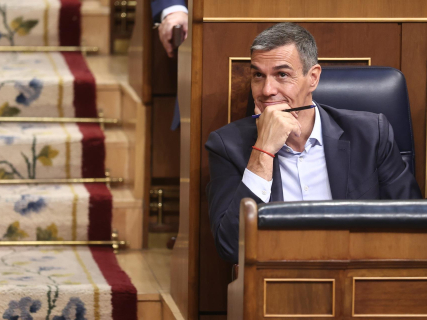

The president of the Government, Pedro Sánchez, will finally appear on September 3 at 9:00 a.m. in Congress to report on the management of the Ceuta crisis. The Government had initially proposed that the president attend the Chamber on the 9th, but the Board of Spokespersons has moved the appointment forward after several groups, including parliamentary partners of the Executive, considered that waiting until the first ordinary Plenary was too late.
The Executive formally registered the president's appearance request this Wednesday and had suggested to the groups to fit it in on September 9, the date planned for the start of the new parliamentary session.
The proposal did not receive enough support in the Board of Spokespersons. Some groups have demanded that Sánchez provide explanations earlier about a crisis that began with the massive entry of migrants at the end of July and has led the Government to declare the situation of interest for National Security in Ceuta.
Finally, the appearance will take place on Thursday, September 3 at 9:00 a.m., in an extraordinary Plenary.
The PNV demanded "immediate" explanations
One of the groups that has pressured to move the date forward has been the PNV. The Basque nationalists had already argued that Sánchez should be the first to provide political explanations about what happened in Ceuta and not leave the response exclusively in the hands of his ministers.
During the Board of Spokespersons, the PNV insisted that the appearance should occur in an "immediate" manner, without waiting for the first ordinary Plenary of September.
The position of the nationalists gained special importance because this Wednesday the Permanent Deputation is scheduled to vote on a request from the PP to force Sánchez to appear urgently before the end of August.
Some parliamentary allies of the Government were considering supporting that initiative if the Executive maintained September 9 as the first date for the president's explanations.
Podemos also rejected waiting until the 9th
Podemos has also demanded that Sánchez appear earlier. Its spokesperson, Ione Belarra, has described the Government's initial proposal as "regrettable."
"It is evident that, regardless of the party you vote for, everyone in Spain has seen that it was necessary for the president of the Government to interrupt his vacation to address this crisis, something that has not happened," she pointed out.
Belarra also does not consider the new date sufficient, although she acknowledges that it represents a step forward compared to the initial proposal: "They have finally committed to appearing on September 3rd. It is not enough, obviously, but I think it is better than on the 9th".
The PP claims the advance
The PP has interpreted the change of date as a rectification caused by the pressure exerted during the last few weeks.
The popular spokesperson in Congress, Ester Muñoz, argues that her party had been demanding Sánchez's presence since early August and that the Government has finally brought forward the appearance due to the possibility of losing the vote in the Permanent Deputation.
"Several parliamentary groups were willing to support the request for Sánchez's appearance before the ordinary session period, and that has made them have to rectify and say that he is coming on September 3rd," she stated.
The PP intended for the Permanent Deputation to force the president to appear during the remaining days of August, even before the date now agreed upon by the Board of Spokespersons.
The decision comes hours before the vote of the Permanent Deputation
The calendar is not minor. The date of September 3rd has been agreed upon hours before the Permanent Deputation pronounces on the request registered by the PP.
The possibility that some partners would support the initiative of the popular party increased the chances that the Chamber would formally demand the president's presence during August.
With the new call, Sánchez will appear six days before the date initially proposed by the Government and before the ordinary start of the sessions of Congress.
The president will have to explain to the groups the actions of the Executive since the massive entry recorded at the end of July, the measures adopted during the following weeks, and the response deployed by the State to manage the crisis.
His intervention will come after the appearances of several ministers and amid controversy over what information the Government had before July 30th, the functioning of the intelligence services, and the measures adopted subsequently in Ceuta.