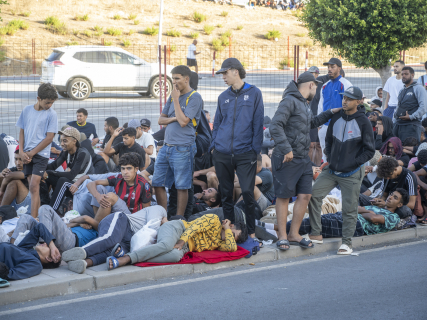

JUPOL has claimed today to the General Directorate of the Police, which depends on the Ministry of Interior, led by Fernando Grande-Marlaska, that it permanently reinforce the Units of Prevention and Reaction (UPR) after the police needs that have been exposed by the latest crisis situations. The union requests eight new groups in Spain, including one additional in Ceuta and another in Melilla, and proposes to create a Central UPR that can be immediately deployed to any point in the country when a security or public order emergency occurs.
The request is particularly relevant in Ceuta, where the massive influx of migrants at the end of July forced the reinforcement of the police device and the mobilization of forces to address an extraordinary situation. JUPOL argues that this type of deployment should not depend on transferring police officers usually assigned to other territories and leaving their original units weakened.
The union already defended in 2025 the creation of a Central UPR and now recovers the proposal within a broader plan. Its approach involves having a stable reserve contingent, prepared to mobilize when a crisis requires more police than those available in the affected territory.
A new group for Ceuta and another for Melilla
JUPOL considers it a priority to increase the operational capacity of the two autonomous cities due to their status as the external border of the European Union and the specific security needs they face.
The proposal includes a new UPR group in Ceuta and another in Melilla to reinforce the existing devices in the face of episodes of migratory pressure, public order disturbances, or other situations that require a rapid increase in police presence.
The UPR are part of the specialized units of Citizen Security of the National Police and are designed to act in situations that require a reinforced operational response. Among their functions are the prevention of crime, maintenance of order, and intervention in events that exceed the needs of an ordinary police device.
The union understands that the characteristics of Ceuta and Melilla justify having more own capacity before an emergency occurs, instead of systematically depending on forces sent from the Peninsula.
A Central UPR to mobilize police in the event of an emergency
The other piece of the proposal would be a Central UPR dependent on the General Commissioner of Citizen Security. Unlike the groups assigned to a specific city, this unit would function as a national operational reserve and would be prepared to move wherever necessary.
JUPOL argues that this model would allow for addressing unforeseen events without continuously resorting to police assigned to other units.
"It is not reasonable that the response to extraordinary situations depends on improvisations or on stripping other units to reinforce a specific territory," says the general secretary of the union, Aarón Rivero.
The organization already proposed this unit in 2025, but now it is once again demanding it along with the general expansion of the UPR.
"Spain cannot face extraordinary situations with a Police force sized only for normality. When a security crisis arises, the State must have the capacity to respond immediately, organized, and with sufficient personnel," defends Rivero.
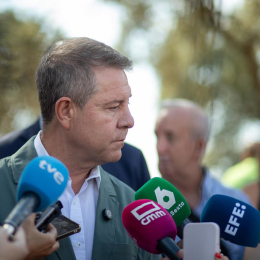
Eight new groups across Spain
The plan sent to the General Directorate of the Police includes eight new UPR groups throughout the country, although JUPOL particularly highlights those assigned to Ceuta and Melilla and the creation of the central unit.
The union demands that the expansion not be limited to reorganizing the available personnel. The new groups should have their own agents, vehicles, equipment, and sufficient material means to operate without reducing the capacity of other units.
This point constitutes one of the main demands of JUPOL. Extraordinary deployments sometimes require moving police from their usual posts to temporarily reinforce another territory, which is why the union demands a structure capable of absorbing those movements without reducing the original units.
"We do not want more patches. We want planning, foresight, and a real capacity for response," notes Rivero.
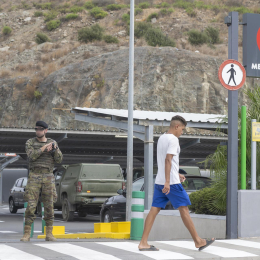
The Ceuta crisis reinforces the request
The proposal comes after the migratory crisis in Ceuta has forced the State to significantly reinforce the security device of the city.
The massive entries recorded at the end of July led the Interior to mobilize new forces of the National Police and Civil Guard. Since then, the management of the border and the thousands of people who remained in the city has kept extraordinary resources deployed.
The Government decided this week to elevate the institutional response by declaring the situation of interest for the National Security and placing the Minister of Territorial Policy, Ángel Víctor Torres, as the functional authority in charge of coordinating the actions.
JUPOL now uses the experience of Ceuta to advocate for a more permanent change in the police structure. Its proposal is not limited to responding to the current crisis, but seeks for the National Police to have reserved forces to intervene in future extraordinary situations without having to reorganize staff every time an urgent deployment is necessary.
Featured story
Why doesn't the King preside over the National Security Council with the Ceuta crisis on the table?
7 minutes