Spain activates surveillance for the Shamonda virus after the first human death in France

Agriculture confirms the presence of the pathogen in livestock farms in six Spanish provinces and asks for "calm" in the face of a disease that until now was not considered transmissible to humans.

fotonoticia 20260930191653 1920

fotonoticia 20260930191653 1920

Add DEMÓCRATA to Google

Ask FREN

Published

Last updated

3 minutes

Most read

Elecciones 29N · Encuestas

La media de las encuestas

Media a 21 de octubre de 2026 · 15 institutos

  • PP31,6 %
  • PSOE26,9 %
  • Vox18,7 %
  • Sumar6,3 %
  • Podemos3,1 %
  • ERC2,2 %
010203040ene 2024jul 2024ene 2025jul 2025ene 2026jul 2026

Media del último estudio de cada instituto en 30 días y su evolución semanal desde el 23J. Partidos con al menos un 2 %.

Todas las encuestas

Elecciones generales del 29 de noviembre · Demócrata

The Ministry of Agriculture, Fisheries and Food has confirmed this Thursday that Spain is in a state of "alert" due to the presence of the Shamonda virus (SHAV) in livestock farms in the country. The warning comes after France reported the death of a man with severe immunodeficiency infected by this pathogen, which would be the first known case of human infection in the world.

The department led by Luis Planas has asked for "calm" and has assured that it is monitoring the evolution of the disease in coordination with the autonomous communities, health authorities, and the French government. So far, the virus had been primarily identified in animals and was not considered transmissible to humans.

In Spain, detections have been confirmed in farms in Córdoba, Toledo, Ávila, Madrid, Girona, and Cantabria, according to the latest update from the Ministry. Surveillance has intensified following the appearance of the human case in France, although French authorities insist that, for the moment, "no health risk has been identified for the general population".

The first known human case

The death recorded in France represents a change in the understanding of this pathogen. According to information provided by French authorities and collected by Agriculture, the deceased had severe immunodeficiency and was infected with the Shamonda virus, whose transmission to humans had not been documented until now.

French authorities have initiated clinical, biological, and epidemiological investigations to clarify the circumstances of the case. The work is being carried out under the One Health approach, which studies human, animal, and environmental health jointly.

For the moment, it has not been established that the virus represents a risk to the general population. Agriculture has stated that it continues to be in permanent contact with France to learn about the results of the investigations and assess any changes in the health situation.

Six Spanish provinces with affected farms

The Shamonda virus was first detected in Spanish livestock last September. Since then, the Central Veterinary Laboratory of Algete has confirmed the presence of Shamonda type 1 in cattle farms in Córdoba, Toledo, Ávila, and Madrid.

These outbreaks are joined by three dairy cattle farms in Girona, where the pathogen was identified on October 20. In Cantabria, for its part, the presence of Shamonda virus type 2 has been confirmed.

The detections have occurred through the passive surveillance system, from animals that presented symptoms compatible with those described in other European countries. The Ministry will continue studying the evolution of the cases and the characteristics of the identified viruses.

The expansion is not limited to Spain. The pathogen has already been detected in twelve European countries, including France, Portugal, Germany, Italy, Belgium, and the Netherlands, after it was first identified in Europe last summer.

How the Shamonda virus is transmitted and what symptoms it causes

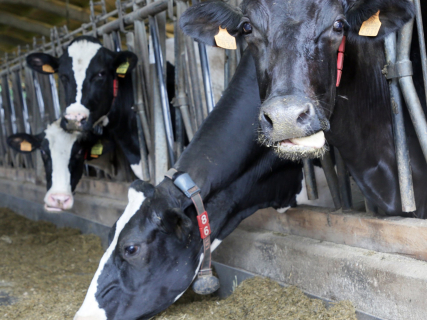
Shamonda is an emerging virus that primarily affects cattle, although it has also been identified in sheep and goats. Its transmission among animals occurs through the bites of small insects of the genus Culicoides, known as midges.

Infected animals may present fever, diarrhea, lethargy, and a decrease in milk production. According to Agriculture, the disease usually does not cause the death of the animal, but it can lead to productive losses in the affected farms.

Currently, the virus is not classified as a notifiable disease in livestock. However, its recent expansion across Europe and the identification of the first human case have led to strengthened epidemiological monitoring.

The Ministry has assured that surveillance will continue with special attention to the evolution of the outbreaks, the characterization of the detected viruses, and their relationship with the variants identified in other European countries.

More key points, information and questions with FREN

AI-GENERATED CONTENT

What additional procedures or measures must Spain implement to officially declare the Shamonda virus as a notifiable disease in livestock?

Spain must distinguish between making the reporting of Shamonda virus infection mandatory and officially declaring a specific outbreak. To establish a permanent national regime, it requires explicit regulatory coverage and an operational procedure for surveillance, diagnosis, and notification; it does not necessarily have to wait for the European Union to include the disease in its lists.

The consulted sources do not confirm a specific inclusion of Shamonda. They do show that there is already a communication pathway for emerging diseases, which can be applied if the infection meets the criteria for that condition.

1. Determine the sanitary and legal framework

The Ministry of Agriculture, Fisheries and Food (MAPA), together with the autonomous communities, must specify which infection will be subject to notification, the affected species, and the criteria for suspicion and confirmation. This must be supported by a scientific risk assessment: capacity for spread, health and economic consequences, availability of diagnosis, and usefulness of the proposed measures.

This analysis must be contrasted with the European Animal Health Regulation, which establishes the criteria for including diseases in the European list. The veterinary relevance of the virus alone does not equate to its legal inclusion.

2. Explicitly establish the national obligation

The current Spanish framework is Royal Decree 779/2023, which repealed Royal Decree 526/2014. Its annexes regulate the information that must be reported; they do not simply constitute a national catalog to which the virus name can be added.

Its third final provision allows the minister to modify the annexes to adapt them to European or international changes, or "for urgent animal health reasons." That authorization does not allow assuming that a ministerial order is sufficient to create any new obligation. If a permanent regime for Shamonda exceeding those annexes is intended, the route would be to amend the royal decree or approve specific regulation with coverage in the Animal Health Law.

The provision must specify obligated subjects, notifiable events, deadlines, recipients, and territorial scope. Its processing must include the technical justification, reports, and participation as appropriate, including consultation with autonomous communities and affected sectors, and culminate with its publication in the BOE.

3. Do not wait for reform to report an emergency

Article 3.1.a of Royal Decree 779/2023 requires autonomous communities to report to MAPA, within 24 hours after confirmation, any emerging disease. Therefore, if Shamonda fits that category, the absence of a nominal inclusion does not prevent activating that communication.

This deadline corresponds to the autonomous community's communication to the Ministry: it should not be confused with a general 24-hour deadline automatically applicable to all farmers.

4. Prepare practical application
  • Diagnosis: agree on tests, sample collection, confirmation, and responsible laboratories.
  • Surveillance: establish common detection criteria and communicate instructions to veterinarians and farms.
  • Notification: ensure the circuit between the farm, autonomous authority, and MAPA, with dates, location, affected animals, and measures adopted.
  • Response: define actions proportionate to the risk. Mandatory declaration does not by itself imply culling, vaccination, or automatic trade restrictions.
5. Promote, if appropriate, European inclusion

For a harmonized regime, Spain must provide evidence to the European Commission. It would be appropriate to update the list of Regulation 2016/429 and determine categories and species according to Regulation 2018/1882, as well as adjust the relevant European notification obligations. That European decision is distinct from immediate national action.

What are the competencies and functions of the Ministry of Agriculture, Fisheries and Food in cases of veterinary health alerts?

The Ministry of Agriculture, Fisheries and Food (MAPA) coordinates the state response to animal health alerts, centralizes epidemiological information, and communicates outbreaks to European and international institutions. It does not generally replace the autonomous communities: these exercise executive powers in their territory, including the official declaration of diseases and the application of corresponding measures.

1. Coordination of the health response

The Animal Health Law 8/2003 constitutes the basic framework. Its article 6 establishes that administrations act "within the scope of their respective competencies." Coordination includes setting common criteria for health programs, minimum prevention and veterinary assistance objectives, and methods to evaluate their effectiveness.

Royal Decree 1440/2001 organizes the veterinary health alert system and its National Committee, attached to the Ministry. This committee brings together state, regional representatives, and national reference laboratories; in zoonoses, it includes health representation. Its functions include:

  • Monitoring epidemiological evolution and proposing investigation, control, and eradication measures.
  • Preparing the proposal for the State Coordinated Veterinary Health Alert Plan.
  • Approving emergency plans, vaccination, and urgent diagnosis of national scope.
  • Coordinating livestock and farm identification, and promoting training and drills.
2. Receiving alerts and international communication

MAPA receives autonomous community communications about notifiable diseases and uses them to coordinate necessary measures. Royal Decree 779/2023 regulates this circuit, in accordance with European animal health and notification regulations.

Autonomous communities must report certain emerging diseases and primary outbreaks within 24 hours after confirmation, according to the established cases. The Ministry notifies the information to the European Commission, other Member States, and the World Organisation for Animal Health, respecting applicable formats and deadlines. It also communicates the official extinction of diseases and channels periodic reports.

3. Information, surveillance, and operational support

The system integrates health information on production animals, wildlife, and companion animals, along with European and international data. This information allows tracking outbreaks, assessing their spread, and guiding actions, and is available to autonomous and health authorities.

Royal Decree 1440/2001 foresees a Rapid Intervention Service for emergencies and to support autonomous communities that request it. It also contemplates collaboration in training, drills, and health dissemination, with participation of specialized technical personnel.

4. Control measures and limits

The response may include diagnosis, epidemiological investigation, vaccination, and culling of sick or suspected animals, according to applicable regulations. The Ministry should not automatically be attributed the material execution of each action: its coordinating function must be distinguished from the responsibilities of the competent territorial authority.

Article 4 of Law 8/2003 requires that measures be proportionate, based on risk assessment and scientific knowledge, and minimize negative effects on trade as much as possible.

5. When there is risk to humans

Royal Decree 1940/2004 defines the coordination of zoonoses, diseases transmissible between animals and people: MAPA handles live animals and animal feed, except animals suspected of rabies; AESAN handles food intended for human consumption; and Health handles human cases and animals suspected of rabies. Therefore, a veterinary alert with food or human consequences requires coordination among these areas, not exclusive competence of MAPA.

How many notifiable animal diseases are currently registered in Spain and how is their inclusion in that list processed?

An updated total number of notifiable animal diseases in Spain could not be verified with the consulted sources. It can be specified that the current regulation does not contain a single closed national list: Royal Decree 779/2023 refers to European and World Organisation for Animal Health (WOAH) lists, and also requires reporting emerging diseases. Therefore, it would not be correct to give the current number as the count of the old Spanish list.

What should be counted and what being on the list means

It is important to distinguish between diseases whose reporting is mandatory and diseases actually detected in Spain. The obligation to notify a disease does not mean it is present in the country: it allows monitoring and reporting its appearance when appropriate.

Royal Decree 779/2023, published on October 25 and effective since October 26, 2023, replaced Royal Decree 526/2014. Its article 3 establishes several communication scopes:

  • Outbreak notification to the European Union: refers to Annex I of Implementing Regulation (EU) 2020/2002, with conditions depending on the disease, affected population, and sanitary status of the area.
  • Annual information: includes category E diseases — subject to surveillance — confirmed in the corresponding species of Implementing Regulation (EU) 2018/1882.
  • International semiannual declaration: covers diseases included in the terrestrial and aquatic animal health codes of the WOAH.
  • Emerging diseases: must be reported within 24 hours after confirmation, without waiting to be incorporated into an ordinary enumeration.

These scopes overlap, so their respective lists should not be summed without removing duplicates. To offer a unique total, the current versions of all must be contrasted and how grouped diseases and infections differentiated by agent are counted must be established.

How a disease is incorporated

Inclusion is a normative matter, distinct from declaring a specific outbreak. In the current system, the scope of Spanish obligations depends on the European and international lists to which the royal decree refers. An update of those references must be examined within the corresponding European or international regime; it does not equate to requesting the registration of a disease in a Spanish administrative registry.

At the national level, the royal decree was approved by the Council of Ministers, at the proposal of the Minister of Agriculture, Fisheries and Food, after consulting the autonomous communities and representative entities of the affected sectors, with public participation and opinion from the Council of State.

Additionally, its third final provision empowers the minister to modify its annexes "to adapt to modifications introduced by European or international regulations, or for urgent animal health reasons". However, those annexes establish the information that must be reported: that power should not be confused with a general authorization to modify the European or WOAH lists.

How an outbreak is declared afterwards

Once the disease is confirmed, autonomous authorities communicate the information to the Ministry of Agriculture, which forwards it to the European Commission, other Member States, and WOAH. Depending on the case, communications within 24 hours, weekly, annual, or semiannual are applied. This circuit allows action in the event of an outbreak; it is not the procedure for including a new disease in the lists.

Play

Test your knowledge with FREN!

How much do you know about this topic? Answer the following 3 questions.

Why has Spain intensified surveillance of the Shamonda virus?

Question 1 of 3

Which animals are mainly affected by the Shamonda virus?

Question 2 of 3

How is the Shamonda virus mainly transmitted among animals?

Question 3 of 3