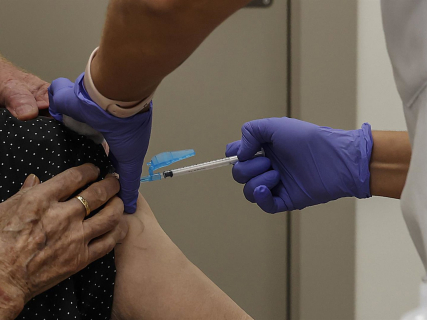

The announcement from Moderna and Merck —MSD outside the United States— has sparked interest this Wednesday in a possible vaccine against melanoma, but the treatment resembles little to conventional vaccines. It is not administered to healthy people to prevent them from developing cancer, but to patients who have already suffered a melanoma and have been operated on, with the aim of training their immune system to detect any tumor cells that may remain and reduce the risk of relapse.
The advance is relevant because the trial INTerpath-001, phase 3, has achieved its two main objectives: to increase the time without cancer recurrence and to reduce the occurrence of distant metastases compared to treatment with pembrolizumab alone. Moderna and Merck qualify the improvements as statistically significant and clinically relevant, although they have not yet published the specific figures that allow measuring the size of the benefit.
What is the "vaccine" against melanoma really
The treatment is called intismeran autogene, previously known as mRNA-4157 or V940, and is a personalized therapy based on messenger RNA.
Its functioning is based on a fundamental characteristic of cancer: each tumor accumulates its own mutations. Some cause cancer cells to produce abnormal proteins, known as neoantigens, which can distinguish them from healthy cells.
After surgically removing the melanoma, material from each patient's tumor is analyzed. Based on that information, certain tumor characteristics are selected, and a messenger RNA therapy specifically designed for that person is manufactured.
That is why there is no single identical vaccine for all patients: each treatment is personalized based on the specific tumor.
What role does messenger RNA play
The logic bears technological similarities to the messenger RNA vaccines developed against covid, but its purpose is different.
The messenger RNA contains instructions that allow the immune system to display certain signals associated with cancer. The goal is for the defenses to learn to identify those characteristics and generate a response against tumor cells that present the same neoantigens.
The strategy seeks to solve one of the major problems of cancer: tumor cells come from the body itself and, therefore, may be more difficult to recognize as a threat.
Why it is combined with Keytruda
The vaccine is not being tested alone. The trial combines intismeran with pembrolizumab, marketed as Keytruda, an immunotherapy already used against different types of cancer.
Pembrolizumab blocks the PD-1 protein, one of the mechanisms that can act as a brake on certain immune system cells. The strategy of Moderna and Merck consists, simplifying, in attacking the problem from two directions: teaching the immune system what characteristics it should look for through personalized therapy and then enhancing its ability to attack the tumor through immunotherapy.
The trial precisely compares that combination against pembrolizumab administered without intismeran.
In which patients it has been tested
The result announced this Wednesday does not refer to any person with melanoma.
INTerpath-001 studies patients with melanoma in stages IIB to IV completely removed through surgery, but who continue to have a high risk of the disease reappearing.
It is, therefore, an adjuvant treatment: it is administered after the surgical intervention with the intention of eliminating or controlling possible residual tumor cells and preventing a relapse.
The phase 3 trial includes approximately 1,089 participants, according to the official registry of ClinicalTrials.gov.
What was known before the phase 3 result
The optimism does not stem solely from the announcement this Wednesday. The combination had already offered positive results in the phase 2b study KEYNOTE-942.
The five-year follow-up data presented in June 2026 showed that the benefit initially observed was maintained over time. Moderna and Merck have been following these patients for several years before making the leap to the confirmatory phase 3 trial.
The U.S. FDA had already granted the combination in 2023 the designation of "Breakthrough Therapy", a mechanism aimed at accelerating the development and evaluation of treatments for serious diseases when preliminary results indicate a significant improvement over available options.
Why the phase 3 result is so important
Clinical trials progress through different phases and phase 3 normally constitutes the major exam prior to requesting regulatory approval.
In this stage, many more patients participate and the new treatment is compared with a reference alternative to verify whether the benefit observed in previous studies is confirmed.
That INTerpath-001 has reached its main objectives represents, therefore, a much stronger evidence than the preliminary results that Moderna and Merck had presented so far.
It also represents a milestone for individualized therapies based on messenger RNA: Moderna maintains a portfolio of trials with intismeran in different tumors, while the collaboration with Merck has extended to cancers such as lung, bladder, and kidney.
What we still do not know
Here is the main caution of the announcement. The companies have not yet disseminated the complete numerical results of the trial.
We know that the combination has achieved a statistically significant and clinically relevant improvement in relapse-free survival and distant metastasis-free survival, but it is still not publicly known how much it reduces the risk in percentage terms in this phase 3.
Detailed data on adverse effects of the trial and definitive results on overall survival, that is, whether treated patients live longer, have not yet been presented.
Moderna and Merck have announced that they will present the complete results at an upcoming medical congress and that they will submit them to regulatory authorities.
Therefore, the treatment is still experimental and one cannot speak of a vaccine against melanoma available for patients. The phase 3 result brings that possibility closer to clinical practice, but complete data and overcoming the regulatory process remain to be known.