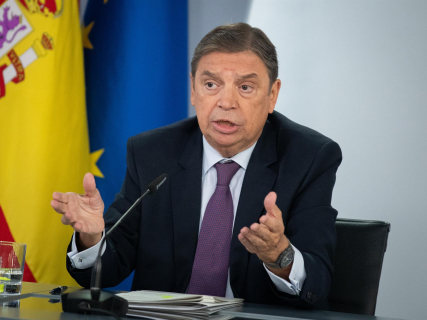

SEO/BirdLife has sent a letter this Monday to the Minister of Agriculture, Fisheries and Food, Luis Planas, in which it demands that Spain defend at the Council of Agriculture and Fisheries of the European Union (EU) a reduction of "unnecessary" bureaucracy without lowering environmental guarantees or control over public funds. The meeting of the ministers will take place on October 26 and 27 in Luxembourg.
According to the environmental organization, eliminating duplications, unifying procedures, and preventing farmers, ranchers, and fishermen from having to provide the same information multiple times are "legitimate objectives" that can make compliance with regulations easier, especially for family farms and the artisanal and small-scale fleet.
However, they warn that this simplification should not become an excuse to eliminate basic rules, reduce controls, or weaken monitoring and evaluation systems. Therefore, they insist that the reduction of administrative burdens should be accompanied by better coordination between administrations, tools adapted to the particularities of each sector, and sufficient technical and financial support.
At the EU Council of Agriculture and Fisheries, member states will address crucial issues for the future of community agricultural and fisheries policies, such as the conditions for implementing the aid of the future Common Agricultural Policy (CAP), the relationships between agriculture and trade, and the situation of the olive oil market.
The agenda also includes fishing possibilities for 2027 in the Baltic Sea and the preparation for the next annual meeting of the International Commission for the Conservation of Atlantic Tunas. Additionally, the Council will discuss the simplification of agricultural and fisheries regulations, as well as their implementation and control.
A common framework for the CAP and avoiding "unjustified" differences
SEO/BirdLife demands that the next CAP preserve a solid European framework, with common rules and guarantees that provide stability to the sector and avoid "unjustified" differences between producers and member states. In this line, it calls for maintaining protection practices equivalent to or superior to the current Good Agricultural and Environmental Conditions, such as the conservation of landscape elements, the protection of soil and water, and the maintenance of high natural value agricultural systems.
Likewise, it emphasizes that the interventions of the CAP, especially the investment aids, must apply the principle of not causing significant harm. This means that public funds should not be allocated to new irrigation in areas with structural water scarcity, to industrial livestock facilities with relevant environmental impacts, nor to intensive transformations of agricultural systems of high natural value.
Environmentalists demand that the aids be directed primarily to professional farms and those managed directly by those who carry out agricultural activity, favoring the rooting in the territory and generating greater social and environmental benefits. Among the examples they cite are agriculture and livestock of high natural value, organic production, and farms located in the Natura 2000 Network whose management contributes to conserving biodiversity.
In addition, they propose various measures to improve the distribution of income support, such as progressively reducing payments as their amount increases, setting effective limits per farm, and preventing resources from concentrating in large landowners or investment funds that do not need this support to ensure the viability of a professional agricultural activity.
In general terms, they emphasize that the future CAP must have "sufficient and predictable" funding for its environmental and climate measures, with a specific allocation for the conservation and recovery of biodiversity. "These budgetary reserves must be minimal, mandatory, and applicable in all member states, and accompanied by a transparent methodology that allows verifying their effective contribution," they have demanded.
Agricultural trade and olive oil market
On the other hand, the NGO demands that agricultural trade policy be based on "fair competition conditions, traceability, and coherence" with the objectives of the CAP and with European environmental regulations. Regarding the olive oil market, it asks that measures to strengthen its stability prioritize professional and family farms, particularly traditional olive groves, rainfed or located in areas with natural limitations.
The organization recalls that the viability of these operations also depends on conserving the natural resources that sustain their production. Therefore, it argues that the aids should contribute to recovering the fertility and functions of the soil, improving water management, promoting biodiversity, and reducing dependence on external inputs.
Likewise, it demands avoiding intensification processes that increase pressure on already overexploited water resources, eliminate elements of the landscape, or displace traditional models that generate employment and provide environmental benefits to society as a whole.
Fishing in the Baltic and tuna conservation
Regarding fishing possibilities for 2027 in the Baltic Sea, SEO/BirdLife demands that Spain support decisions "fully in line with the best available scientific advice, the precautionary principle, and the ecosystem approach."
"The concerning situation of several fish populations is framed within the deterioration of an ecosystem subjected to multiple environmental pressures. Fishing possibilities cannot exceed scientifically recommended levels and must maintain strict limits for the unavoidable bycatch of populations in worse condition, contributing to their recovery and preserving the functioning of the marine ecosystem," it emphasized.
Finally, in view of the upcoming annual meeting of the International Commission for the Conservation of Atlantic Tunas (ICCAT), which will take place in Vilamoura (Portugal) from November 16 to 23, the organization urges Spain to promote measures that ensure the sustainability of exploited populations and reduce the impacts of fishing activity on accidentally captured species.