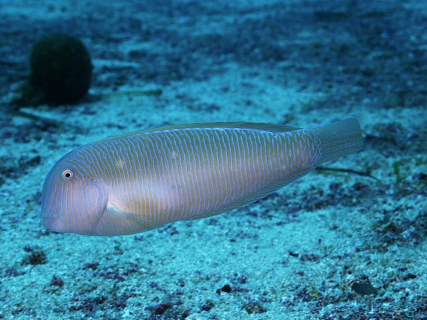

The new fishing campaign for raor will begin next Tuesday, September 1, with a population of this species considered fully recovered and with the measure in effect until March 31, 2027.
On this occasion, the opening is set uniformly for the entire Balearic coast, including marine reserves. The only exception will be the High Protection Zone of the Malgrats, where fishing will remain prohibited until October 1, as detailed in a note by the Ministry of Agriculture, Fisheries, and Natural Environment.
The minister in charge, Joan Simonet, has emphasized that the evolution of the raor clearly illustrates the benefits of proper fishing management, maintained over time and supported by scientific criteria.
"Today we have larger specimens and a recovered population, and the goal is to maintain this situation and ensure that future generations can continue enjoying a fishery that is deeply rooted in the Balearics," he stated.
The regional department reminds that the daily limit allowed remains at 50 raors per person per day. Simonet has also called for the responsibility of the fishing community. "The vast majority of enthusiasts respect the rules and are the first interested in conserving this resource. Complying with catch limits and closed seasons is essential for this fishery to remain in good condition," he explained.
Reinforcement of controls and impact of the closed season
Coinciding with the start of the season, the fishing inspection of the Govern will increase its presence in the main fishing areas of raor in order to prevent illegal fishing and detect possible violations.
Violating a closed season is considered a serious offense according to fishing regulations and can result in a minimum fine of 151 euros per captured specimen, an amount that can increase significantly depending on the circumstances of the case.
The closed season for raor, in effect for decades, aims to prevent the capture of the species during its breeding stage. Scientific work from the Marine Research and Aquaculture Laboratory (Limia) and the Mediterranean Institute of Advanced Studies (Imedea, CSIC-UIB) has confirmed that this restriction has favored the recovery of the species, increasing both the abundance and the average size of the fish.
The General Directorate of Fisheries has been conducting specific monitoring of the populations of raor in the archipelago since 1994, especially in Mallorca, analyzing parameters such as the average size of the specimens and the performance of the fishery.
In 1999, a scenario of overexploitation was detected, reflected in a continuous decrease in the average size of the raor. This situation led to the agreement between the Govern and the Ministry of Agriculture for a fishing ban that is currently applied from April 1 to August 31.
The data collected since then points to a very notable improvement. After the establishment of the ban, the size of the raors has been recovering across all the islands, and since 2013, the average size has always exceeded that recorded in 1994.
In the last analyzed campaign, the average size of the populations studied directly by the Govern in Mallorca reached 168 millimeters, 35 percent more than the 124 millimeters measured in 1999.
This difference is even more pronounced when observing the weight: the average individual weight of the raors analyzed in 2025 was 70 grams, compared to 26 grams in 1999, practically triple.
The General Directorate of Fisheries expects results in line with those of 2025. The current average size is already close to the maximum expected for a population subjected to fishing activity, given that values close to 180 millimeters are only observed in areas where fishing is banned.
Obligation to declare catches in marine reserves
In marine reserves, it remains mandatory to record catches and send the information to the Marine Resources Service of the Govern, preferably through the mobile application "Diari de Pesca" or, in the case of marine reserves under state jurisdiction, through the Ministry's app "PescaREC".
Since 2019, about 6,600 catch declarations have been recorded. This data confirms that the raor is, by number of individuals, the most captured species by recreational fishermen from boats in the Balearic Islands and that, in terms of weight, it represents 15.7 percent of the total annual landed by this group.