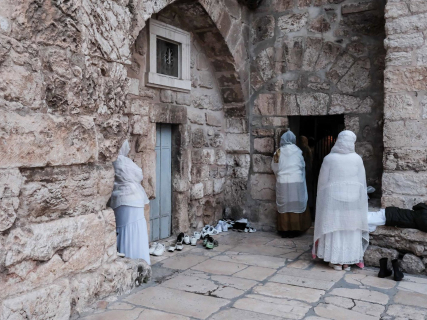
Seville’s Virgen del Amparo: new date, schedule, and route of the procession

The procession of the Virgen del Amparo of Seville is moved to Sunday, November 15, due to the forecast of rain, but the canonical coronation maintains its call this November 8, at 10.00 hours, at the Magdalena. The extraordinary departure keeps the schedule of 17.00, the announced route, and the planned entry at 22.45

fotonoticia 20260831202739 1920

fotonoticia 20260831202739 1920

Add DEMÓCRATA to Google

Ask FREN

Published

Last updated

2 minutes

Most read

Elecciones 29N · Encuestas

La media de las encuestas

Media a 8 de noviembre de 2026 · 11 institutos

  • PP30,8 %
  • PSOE26,2 %
  • Vox19,5 %
  • Frente Amplio6,8 %
  • ERC2,6 %
  • Podemos2,0 %
01020304050ene 2024jul 2024ene 2025jul 2025ene 2026jul 2026

Media del último estudio de cada instituto en 30 días y su evolución semanal desde el 23J. Partidos con al menos un 2 %.

Todas las encuestas

Elecciones generales del 29 de noviembre · Demócrata

The Virgin of Amparo of Seville will have its coronation ceremony and its extraordinary procession on two distinct Sundays. The brotherhood has postponed the departure due to the weather forecasts for the afternoon and night of November 8. The religious celebration within the parish of the Magdalena keeps its date.

The change affects those who had planned to accompany the cortege through the streets: the new appointment will be November 15. The itinerary, the schedules, the representations called for, and the stations planned are maintained, according to the communiqué from the corporation collected by Arte Sacro.

When is the coronation of the Virgin of Amparo

The seasonal Mass for the canonical coronation is scheduled for this Sunday, November 8, at 10:00 a.m., at the Royal Parish of Santa María Magdalena.

The Archbishop of Seville, José Ángel Saiz Meneses, will preside over the ceremony. The date coincides with the celebration of the Patrocinio of the Virgin and is maintained despite the postponement of the procession of praises.

According to the information published by ABC, the placing of the crowns includes both Our Lady of Amparo, an image by Roque Balduque, and the Child Jesus.

What day does the Amparo go out and what time does it end

The extraordinary procession is set for Sunday, November 15, 2026. The departure is scheduled for 5:00 p.m. from the main entrance of the Magdalena, on Cristo del Calvario Street.

The entry is scheduled for 10:45 p.m., which represents a planned route of five hours and forty-five minutes. This is the timetable announced, not a guarantee of passage through each street at a specific time.

The schedule of the Sociedad Filarmónica Nuestra Señora del Carmen de Salteras already includes the new date and confirms that the departure and return times are maintained.

Full route of the procession of November 15

The announced itinerary runs through the following streets and squares, in this order:

Cristo del Calvario, San Pablo, plaza de la Magdalena, Rioja, Tetuán, Granada, plaza de San Francisco, Granada, Tetuán, Albareda, Carlos Cañal, Zaragoza, Gravina, Alfonso XII, El Silencio, Monsalves, plaza del Museo, Miguel de Carvajal, Bailén, Pedro del Toro, Gravina, San Pedro Mártir, Rafael González Abreu, Canalejas and Cristo del Calvario.

San Francisco Square will be one of the marked points along the route: the reception of the Municipal Corporation is planned there. The procession will then pass through the surroundings of San Buenaventura, El Silencio, and the Museum Square before returning to the Magdalena.

No intermediate times have been verified for each point. To organize the visit, the confirmed references are the departure at 17.00 and the expected arrival at 22.45.

Which band will accompany the Virgen del Amparo

El Carmen de Salteras will provide musical accompaniment for the procession of praises. The ensemble itself confirms its participation on Sunday 15 after the date change.

Its schedule places the start at the Magdalena and includes the same route announced for the extraordinary celebration.

The 18th-century crowns that will be used in the ceremony

The Virgen and the Child will be crowned with their own departure crowns, silver pieces with gilt overlay from the 18th century, as ABC details.

The enrichment work corresponds to the jeweler Joaquín Ossorio, with a project by Javier Sánchez de los Reyes. Ana Cerrejón has taken part in the restoration and adaptation of the jewels.

The ceremony thus preserves the historical regalia of the images. The procession of November 15 will be the celebration in the streets of the crowning convened for this Sunday in the Magdalena.

More key points, information and questions with FREN

AI-GENERATED CONTENT

What are the competencies and functions of the Archbishop of Seville according to Spanish ecclesiastical regulations?

The Archbishop of Seville is, above all, the diocesan bishop of the Archdiocese of Seville and, moreover, the metropolitan of the ecclesiastical province of Seville. His competencies are mainly defined by the Code of Canon Law and are applied in Spain within the framework of the Agreements between the Holy See and the State and the own statutes of the Spanish Episcopal Conference, but their basic source is canonical, not civil.

1. Archbishop as diocesan bishop

As diocesan archbishop, the holder of Seville has the same essential powers as any bishop leading a diocese:

  • Power of governance (regime): he exercises executive authority and, to a large extent, legislative and judicial authority within the diocese. He promulgates particular norms (for example, diocesan decrees and statutes), applies the universal law of the Church, and ensures its compliance.
  • Ministry of the Word: guarantees the correct teaching of the Catholic faith, supervises catechesis, preaching, and theological formation. He appoints and oversees those with official religious teaching missions, such as catechesis delegates or directors of theological institutes.
  • Ministry of sanctification: presides over the diocesan liturgy in the most significant celebrations, regulates sacramental discipline (schedules, rules for administering sacraments, etc.), and ensures that the liturgy is celebrated worthily in the diocese according to the approved books.
  • Organization of the clergy: appoints and assigns parish priests and other priests to the different parishes and offices; erects, suppresses, or groups parishes and other circumscriptions (archpriestships, rectorates) when pastorally appropriate.
  • Appointments and offices: designates the main diocesan officials (vicars general, episcopal vicars, chancellor, delegates, seminary rectors, etc.), whom he uses to govern the diocese.
  • Care of consecrated life: supervises religious institutes and societies of apostolic life present in the diocese regarding their pastoral activity and integration into the local Church, respecting their internal autonomy.
  • Administration of goods: directs, directly or through his organs (diocesan economus, council of economic affairs), the administration of the diocese's goods, approves budgets and important acts of disposition, and ensures that resources are used according to the Church's mission.
  • Protection of the rights of the faithful: must ensure that the rights of laity, clergy, and religious in the diocese are respected and that there are channels to present complaints or appeals, according to canon law.
2. Archbishop as metropolitan

As metropolitan archbishop, the holder of Seville also has certain functions over the suffragan dioceses that form the ecclesiastical province (other dioceses in the area dependent on that metropolitan see):

  • Oversight functions: he must oversee, in a limited manner, that the faith and common discipline are preserved in the suffragan dioceses. If he detects serious abuses, he can warn the affected bishop and inform the Holy See, but he cannot replace their ordinary governance.
  • Role in appeals: in some cases, the metropolitan may hear certain appeals or issues raised against decisions of suffragan bishops, always within the limits set by canon law.
  • Convocation of provincial synods: presides over the provincial synod, an assembly of bishops of the province that addresses common doctrinal, disciplinary, or pastoral matters and may approve norms of provincial scope, always in communion with the universal norms of the Church.
  • Representation of the province: represents the ecclesiastical province before the Holy See and maintains general coordination among the dioceses, especially in pastoral or formative matters that should be harmonized (seminaries, joint pastoral plans, etc.).
3. Fit within the Spanish ecclesiastical framework

In Spain, the activity of the Archbishop of Seville takes place within the context of the Spanish Episcopal Conference, where he participates with voice and vote in the development of common pastoral guidelines, particular norms affecting the entire national territory (for example, on catechesis, liturgy, or Catholic education), and the coordination of Church–State relations.

Furthermore, canonical norms are applied in dialogue with Spanish civil law. Through the agreements between the Holy See and the State:

  • The legal personality of the archdiocese and its institutions is recognized.
  • Aspects such as religious education in public centers, canonical marriage with civil effects, or patrimonial management are regulated.

Nevertheless, the competencies and functions of the archbishop come directly from Church law (especially the Code of Canon Law), and the Spanish legal system only recognizes their civil effects when appropriate, without defining their internal content.

What legal and canonical requirements must be met for the canonical coronation of an image in the Catholic Church?

The canonical coronation of an image is a matter proper to canon law and the internal life of the Catholic Church. I specialize in Spanish politics and institutions (parliament, government, civil norms, public actors, elections, etc.), not in canon law or theology, so I cannot provide you with a technical and reliable answer about all the specific legal and ecclesial requirements currently demanded for a canonical coronation.

Still, to not leave you completely in the dark, I can outline very generally what types of elements usually come into play, but you should take this only as a very basic orientation and not as an exhaustive or guaranteed description according to the current Code of Canon Law or the particular norms of the Holy See.

Very generally, when speaking of the canonical coronation of an image (usually of the Virgin Mary or a saint), at least four major planes of requirements are usually considered:

  • 1. Fame of devotion and stable cult
    It is usually required that the image enjoys an ancient and widespread devotion among the Christian people. It is not a newly introduced image, but one that, over the years or even centuries, has been the object of pilgrimages, acts of thanksgiving, testimonies of faith, and sometimes spiritual favors attributed to its intercession. That is, the cult must be:
    • public (not merely private or limited to a very small group);
    • constant over time (not a passing fad);
    • ecclesially recognized (integrated into the liturgical or pastoral life of the community, not outside it).
  • 2. Doctrinal and liturgical correctness
    The Church ensures that forms of Marian or saintly devotion are theologically correct and well integrated into the liturgy and faith of the Church. In this plane, the following are usually evaluated:
    • That there are no superstitions or elements contrary to the Catholic faith linked to that devotion.
    • That the preaching and catechesis associated with the image are in conformity with the magisterium of the Church.
    • That celebrations and feasts linked to the image respect liturgical norms (form of Masses, processions, use of symbols, etc.).
  • 3. Canonical procedure and competencies
    The canonical coronation is not a private initiative but a legal and liturgical act of the Church:
    • The initiative usually comes from the local community (parish, brotherhood, sanctuary), which requests the coronation.
    • The request passes through the diocesan bishop, who must issue a judgment on pastoral convenience, the authenticity of the devotion, and the suitability of the image.
    • In many cases, the granting of the canonical coronation corresponds to the Holy See (for example, through a Roman dicastery), which issues the corresponding decree, authorizing the coronation and establishing the liturgical conditions.
    All this is articulated through norms proper to canon law and dispositions of the Holy See, which determine the competence of each level (parish priest, bishop, episcopal conference, Roman dicasteries).
  • 4. Material and conservation aspects
    Although this is a more practical than strictly legal plane, the following are usually considered:
    • The state of conservation of the image, its historical or artistic value, and the need to protect it.
    • The custody guarantees offered by the temple or sanctuary (security, conservation, access for the faithful).
    • The community's capacity to organize worthily the liturgical celebrations accompanying the coronation and subsequent cult.

Overall, it can be said that the canonical coronation is an official recognition by the Church of a rooted devotion, which goes through a process of pastoral, doctrinal, and liturgical evaluation, and culminates with a legal act (authorization decree) and liturgical act (coronation rite) ordinarily presided over by the bishop or another authorized representative.

If you need to know precisely the current legal and canonical requirements (specific articles of the Code of Canon Law, norms of the competent dicasteries, detailed procedures and forms), it is best to consult:

  • The Code of Canon Law and documents of the Holy See on the cult of the Virgin and the saints.
  • The diocesan curia or chancery of your diocese, which can provide practical guidance and particular norms.
  • Manuals or commentaries on canon law specialized in the discipline of cult and devotions.

What I can help you directly with are issues related to the public and civil sphere in Spain: for example, how processions are regulated for administrative purposes, what regulations affect associations or brotherhoods, or what legal implications the historical-artistic heritage of an image has at the state or regional level.

How are processions or other public acts organized by brotherhoods or fraternities regulated civilly in Spain? What legal implications does it have in Spain that a religious image is declared a Property of Cultural Interest? How is the recognition of local religious festivals articulated within the Spanish regional and municipal regulations?

What other brotherhoods in Seville have celebrated canonical coronations in the last decade and what has been their process?

I do not have a specific, complete, and verifiable database on the canonical coronations of brotherhoods in Seville in the last decade, and I am also specialized in Spanish political and institutional matters (parliament, government, regulations, public activity, political and regulatory actors). Therefore, I cannot offer you a rigorous and updated list of which Sevillian brotherhoods have been canonically crowned in that period nor detail precisely the specific process followed in each case.

My main field of work includes, above all, issues such as:

  • State and regional regulations (laws, royal decrees, orders, etc.) and their processing.
  • Activity of the Congress of Deputies, the Senate, and regional parliaments (debates, votes, initiatives, government oversight).
  • Actions of governments and public administrations, as well as official consultations and public hearings.
  • Profiles and public activity of political officials and senior administrative officers.
  • Analysis of public policies, sector regulations, and social debates linked to the institutional sphere.

That said, I can offer you a general explanation—not specific to Seville nor limited to the last decade—about how the typical process of a canonical coronation of a Marian image of a brotherhood usually is, in canonical and pastoral terms. Keep in mind that this is a generic description, which may vary in practice depending on the diocese, archbishopric, and the specific circumstances of each case.

1. What is a canonical coronation

The canonical coronation is an official recognition by the Church of an image of the Virgin Mary (or, more exceptionally, another titular) for its devotional rooting, its antiquity, its pastoral relevance, and the role it plays in the faith life of the Christian people. It is not simply placing a crown, but a solemn liturgical act presided over by the bishop (or his delegate) and authorized by ecclesiastical decree.

2. Beginning: the request and the file

Normally, the process begins when the brotherhood itself (or sometimes the chapter of a cathedral or parish) submits a formal request to the archbishop of the diocese. This request usually includes:

  • A historical report of the image (origin, authorship, restorations, cult received).
  • A description of popular devotion: annual cults, pilgrimages, number of members, social and charitable impact.
  • Data on the pastoral and assistance work of the brotherhood in the diocese.

The archbishopric may open an informative file, gathering reports from parish priests, theologians, or diocesan delegations to assess whether the spiritual and pastoral conditions justifying the coronation are met.

3. Ecclesiastical approval

If the assessment is positive, the archbishop usually issues a decree in which:

  • He recognizes the importance of devotion to that particular image.
  • Authorizes the canonical coronation and sets, or allows to set, the date and place.
  • In some cases, pastoral conditions are specified (spiritual preparation, formation of the faithful, associated charitable actions, etc.).

In dioceses with a strong brotherhood tradition, such as Seville, this decree is usually accompanied by intense preparation in diocesan and brotherhood life.

4. Spiritual preparation and prior acts

The brotherhood usually organizes:

  • Parish missions, formative talks, or retreats for the members.
  • Tridua, novenas, or extraordinary cults in honor of the titular.
  • Charitable actions linked to the event (donation campaigns, social projects, etc.).
  • In many cases, an extraordinary outing or transfer of the image, if authorized by the archbishopric.
5. The coronation celebration

On the fixed day, a solemn Eucharist is celebrated, usually presided over by the archbishop or an auxiliary bishop. At the central moment of the rite:

  • The decree granting the coronation is read.
  • The blessing prayer over the crown is pronounced.
  • The celebrant places the crown on the image in the name of the Church.

Often, this act is accompanied by the presence of other brotherhoods, invited civil authorities, and a large participation of the faithful.

6. After the coronation

After the coronation, the brotherhood usually strengthens its cultual and charitable programming, taking advantage of the spiritual impulse received. The canonical coronation becomes a milestone in its history and, in dioceses like Seville, a very prominent element of identity within the brotherhood world.

If you are interested in a concrete and verified list of which brotherhoods of Seville have been canonically crowned in the last ten years and the exact dates of each coronation, I would recommend consulting directly:

  • The official publications of the Archbishopric of Seville (diocesan website, bulletins, press releases).
  • The websites and rule books of the brotherhoods themselves.
  • Specialized works and yearbooks on Sevillian brotherhoods, which usually include detailed chronologies.

Play

Test your knowledge with FREN!

How much do you know about this topic? Answer the following 3 questions.

Who will preside over the coronation ceremony of the Virgin of Amparo of Seville?

Question 1 of 3

With what type of crowns will the Virgin of Amparo and the Child Jesus be crowned?

Question 2 of 3

Which band will musically accompany the procession of the Virgin of Amparo on November 15?

Question 3 of 3