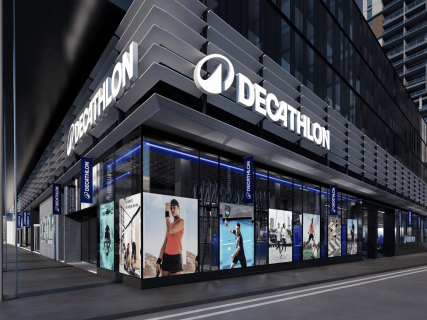
Does Decathlon open on September 11 in Barcelona? Hours for the Diada

Some Decathlon stores will open this Friday despite the holiday of the Diada, although they will apply special hours that may vary according to the establishment.

1 minute

Decathlon earned 16% more in 2025, up to 910 million, and revenue was 16.8 billion (+5.6%). DECATHLON

Decathlon earned 16% more in 2025, up to 910 million, and revenue was 16.8 billion (+5.6%). DECATHLON

Add DEMÓCRATA to Google

Ask FREN

Published

Last updated

1 minute

Most read

Does Decathlon open this Friday, September 11? The answer depends on the store. The Diada is a holiday throughout Catalonia, but some establishments of the sports chain will open during the day with exceptional hours.

This is the case of Decathlon City Gràcia, in Barcelona, which has expressly confirmed its opening on September 11.

Decathlon Gràcia opens on September 11

The store Decathlon City Gràcia, located at number 54 on Gran de Gràcia street, will open this Friday from 12:00 to 20:00 hours.

The chain specifically identifies this schedule as an exceptional opening for September 11, 2026.

The hours will therefore be different from a usual Friday, when this establishment operates from 9:00 to 22:00 hours.

Not all Decathlon stores have the same hours

The opening of a store during the Diada does not imply that all Decathlon establishments in Catalonia operate in the same way.

The company has different stores in Barcelona and its metropolitan area, so holiday hours may vary depending on the establishment.

Before going, it is advisable to check the specific store's information.

Why some stores can open during the Diada

The September 11 is a holiday throughout Catalonia, but there are exceptions to the general limitations on commercial opening.

Barcelona also has areas where certain establishments can open during Sundays and holidays in the tourist season.

For this reason, it is possible to find stores open in Barcelona while other establishments of the same chain remain closed.

Shopping during the holiday

Customers who need to make a purchase during the Diada should pay special attention to the exceptional hours.

At Decathlon City Gràcia, the opening will begin three hours later than usual: the doors will open at 12:00 hours and close at 20:00 hours.

More key points, information and questions with FREN

AI-GENERATED CONTENT

What legal requirements allow some businesses to open on holidays in Barcelona?

In Barcelona, the possibility of opening a business on Sundays and holidays does not depend on a single regulation, but on the combination of three levels: the state law on commercial hours, the Catalan regulation, and the specific agreements/calendars of the Generalitat and the Barcelona City Council itself. From this overlap come the main “legal pathways” to be able to open.

1. State framework: Law 1/2004 on Commercial Hours

Law 1/2004, of December 21, on Commercial Hours (BOE) sets the basic framework:

  • Autonomous communities cannot allow fewer than a minimum number of authorized Sundays and holidays for opening (amended by Royal Decree-Law 20/2012).
  • The total weekly schedule cannot be reduced below 90 hours.
  • Article 5 recognizes full freedom of days and hours for certain types of businesses throughout the national territory:
    • Pastry shops, confectionery, churro shops, bread.
    • Prepared dishes.
    • Press.
    • Florists and plants.
    • Fuel and gasoline establishments.
    • Convenience stores (up to 500 m² and at least 18 hours daily).
    • Stores in stations, ports, airports, and areas of high tourist influx (ZGAT).
    • Other businesses with a surface area under 300 m², provided they do not belong to large groups exceeding SME size.
    These establishments can open on Sundays and holidays without limit, except for very specific additional regional or municipal restrictions (such as the case of the Tuset street area, discussed below).
2. Catalan regulation: Law 18/2017 and holiday calendar

Catalonia specifies this framework through Law 18/2017, on commerce, services, and fairs (BOE and consolidated text in the Legal Portal), partially amended in 2020 and 2025.

  • Article 36 establishes that, as a general rule, establishments may only open a maximum of eight Sundays and holidays per year, and each city council must add two more to reach ten.
  • The Order EMC/117/2021 and subsequent orders from the Generalitat establish each year the regional calendar of 8 authorized opening holidays; city councils must:
    • Communicate their two additional holidays.
    • May substitute up to two of the general holidays for other days, respecting a closed list of days that must remain closed (January 1 and 6, Easter, May 1, June 24, September 11, December 25 and 26).
  • A 2025 press release from the Generalitat includes the commercial opening calendar on Sundays and holidays for 2026, with 8 common dates for all Catalonia and the obligation for municipalities to add 2 more.
  • The Catalan law also reproduces the exclusions from the general schedule regime for certain businesses (bread, pastry, convenience stores, gas stations, vending in facilities, etc.), which are not affected by Sunday and holiday limitations.
3. Specific regulation of Barcelona

On top of this regional framework, Barcelona adds its own rules:

  • The municipal opening calendar specifies the 2 additional holidays and possible swaps. For example, for 2026 Demócrata notes that August 15 is expressly listed as a day of free commercial opening in the city.
  • Since 2022 there is a Social Agreement of the Commercial Hours Pact for the High Tourist Influx Zone (ZGAT) of Barcelona:
    • It allows businesses located in zones 1 and 2 of the PEUAT (neighborhoods of Ciutat Vella, much of Eixample, Sants-Montjuïc, Les Corts, Sarrià-Sant Gervasi, Gràcia, part of Horta-Guinardó, and Sant Martí) to open Sundays and holidays between May 15 and September 15, from 12:00 to 20:00.
    • The City Council has confirmed in several press releases that this regulation is in force until December 31, 2025.
    • This is an authorization: opening remains voluntary, not mandatory.
  • Additionally, the City Council can issue more restrictive decrees for coexistence reasons. An example is the decree of 04/26/2024 that:
    • Requires certain bakeries and 24-hour food stores in the Tuset street area to close from 22:00 to 7:00 on Thursday, Friday, Saturday nights, and holiday eves, despite having abstract freedom of hours under state and Catalan regulations.
4. Summary of requirements to open on holidays in Barcelona
  • Small business or excluded sectors: if the premises are under 300 m² and/or belong to exempt categories (bread, press, flowers, gas stations, convenience stores, etc.), they have freedom to open on holidays, except for specific municipal restrictions.
  • Other businesses under the general regime:
    • They can only open on the 10 authorized holidays each year (8 set by the Generalitat + 2 decided by the Barcelona City Council).
    • In neighborhoods included in the ZGAT, they can also open every Sunday and holiday between May 15 and September 15, from 12:00 to 20:00.
    • The final decision to open or not always lies with the establishment owner.
  • Additional neighborhood limitations: certain areas (such as the Tuset zone) may have restricted night hours for public order reasons, even though the general regulations allow them to open.

In practice, therefore, a business can open on a holiday in Barcelona if it fits into one of the categories with freedom of hours (type of product or size), if it is in the ZGAT during the summer period, or if it adheres to the specific authorized holidays in the current regional and municipal calendar.

What are the competencies of the Barcelona City Council regarding the regulation of commercial hours?

Regarding commercial hours, the Barcelona City Council has regulatory leeway, but always subordinate to the basic state framework and the Generalitat of Catalonia's regulations, which set the general regime in Catalonia. Its role is mainly to develop and apply that framework within the municipal area and to modulate it in specific areas (tourist zones, vending machines, urban goods distribution, etc.).

1. Basic state framework

At the state level, Law 1/2004 on Commercial Hours (BOE) establishes:

  • A minimum limit of 90 weekly hours of total schedule below which autonomous communities cannot restrict (art. 3).
  • A minimum number of Sundays and holidays for opening (currently 10, with possibility of extension) that communities must allow (art. 4).
  • The concept of “zones of high tourist influx” (ZGAT), which grant full freedom of hours to businesses located within them. The law assigns to the autonomous communities the declaration of these zones, at the proposal of city councils (art. 5.4 and 5).
  • The possibility for communities to empower city councils to order the closure for public order reasons of certain establishments (final provision).

Therefore, the State does not detail Barcelona specifically but sets a floor of liberalization and the basic ZGAT procedure that conditions what the Generalitat and City Council can later do.

2. Generalitat of Catalonia regulations

Catalonia exercises its competence over internal commerce and hours mainly through Law 18/2017 on commerce, services, and fairs (BOE; consolidated text in the Legal Portal). This law:

  • Integrates and updates Catalan commercial hours regulations (repealing and consolidating previous laws such as the 2004 hours law and Law 3/2014).
  • Establishes the general schedule applicable throughout Catalonia, the cases excluded from that schedule, and the procedure to declare tourist zones as exceptions to the general regime (title four, according to the preamble).
  • Recognizes a specific role for municipalities in various points: ordinances on non-sedentary sales, market and fair conditions, distribution of internet-purchased products and use of lockers (“drop box”), and, very relevant, possibility to impose night closures for public order on vending establishments (articles on non-sedentary sales and vending machines, positions 52543–53551 and 57416–59850 of the text).

Additionally, the Constitutional Court has curtailed regional excesses when they deviated from the minimum freedom set by the State (e.g., SSTC 211/2016 and 25/2017 on Catalan hours rules), reinforcing the character of basic state framework + regional development.

3. Specific leeway of the Barcelona City Council

Within this scheme, Barcelona can:

  • a) General or special hours
    The City Council cannot unilaterally set the general hours for all businesses (this corresponds to Law 1/2004 and Law 18/2017). But it can:
    • Regulate specific hours for certain formats linked to its competence in public order, coexistence, noise, mobility, etc. A clear example is the possibility, foreseen in Law 18/2017, to require night closure of vending establishments for public order reasons.
    • Set hours for related activities (loading and unloading, terraces, street markets, etc.) that indirectly impact commercial operation, as seen in municipal notes on urban goods distribution or reduced terrace hours in saturated leisure areas.
  • b) Zones of high tourist influx (ZGAT)
    Here the municipal role is central but not decisive in the final instance:
    • Law 1/2004 establishes that Autonomous Communities determine ZGAT at the proposal of city councils. Barcelona proposes the perimeter and, eventually, temporal limits; the Generalitat approves or expands.
    • In practice, Barcelona has promoted a Commercial Hours Pact and a Social Agreement to allow businesses in tourist zones to open Sundays and holidays from 12:00 to 20:00 between May 15 and September 15, in areas delimited by the PEUAT (Ciutat Vella, Eixample, Sants-Montjuïc, Les Corts, Gràcia, Sant Martí, etc.), according to the municipal note of 01/30/2024 (Barcelona City Council).
  • c) Opening holidays
    • The determination of the annual calendar of opening holidays corresponds to the Generalitat, within the state minimum. The City Council participates de facto by proposing and negotiating dates with the sector, but cannot reduce below the regional minimum nor establish an independent calendar.
    • However, it can publish and manage the “municipal commercial opening calendar” (for example, the one that expressly includes August 15 as a day of free opening in 2026 in Barcelona, as cited in Demócrata), which translates the regional decision to the local level.
  • d) Singular regulations (neighborhoods, types of commerce, etc.)
    Barcelona has leeway to:
    • Approve sectoral ordinances affecting certain formats (kiosks, 24-hour self-services, street markets, street sales…), within the regional framework.
    • Impose specific time restrictions for noise, security, coexistence, or protection of local commerce reasons (for example, suspension of new 24-hour self-service licenses while a specific regulation is developed, or night closure of certain businesses during neighborhood festivals).
    • Order the distribution of goods and logistics associated with e-commerce, regulating loading and unloading hours and conditions and the implementation of pickup points, as expressly allowed by Law 18/2017.

In summary, the Barcelona City Council does not define the basic regime of commercial hours, but it has significant capacity to modulate it territorially and functionally: it proposes and manages ZGAT, specifies opening calendars, regulates hours of certain formats, and adopts specific restrictions linked to public order, coexistence, and protection of the city model and local commerce.

What other businesses or chains usually open in Barcelona during the Diada?

In Barcelona, the Diada (September 11) is a regional holiday, but some businesses can open, especially in tourist areas and in local food formats. There is no single list of “open stores” because the regulation authorizes opening but does not oblige each establishment. Still, several types of businesses and chains that usually operate that day can be identified.

Legal framework: why some businesses can open

The Barcelona City Council and the Generalitat have agreed on a specific model of opening on Sundays and holidays for the High Tourist Influx Zone (ZGAT). According to a 2024 municipal note, businesses in these zones can open Sundays and holidays between May 15 and September 15 from 12:00 to 20:00, if their owners so decide (City Council note). The Diada falls within this interval, so much of the potential offer is concentrated in these areas.

The same note indicates that, in tourist zones, the everyday food sector is the one with the highest percentage of opening on holidays (around 47.3% of businesses of this type reported having opened on some Sunday or holiday).

Areas where it is easier to find open businesses

Within Barcelona, the ZGAT includes, among others, very tourist neighborhoods and axes such as:

  • Ciutat Vella: Raval, Gòtic, Born/Sant Pere, Barceloneta.
  • Eixample: Right and Left Eixample, Sagrada Família, Fort Pienc, Sant Antoni.
  • Sants-Montjuïc: Sants, Hostafrancs, Poble-sec, around Plaza Espanya and Montjuïc.
  • Les Corts and part of Sarrià-Sant Gervasi.
  • Gràcia (Vila de Gràcia and adjacent areas) and parts of Horta-Guinardó.
  • Sant Martí: Vila Olímpica, Poblenou, Diagonal Mar, and Fòrum.

In these neighborhoods, it is relatively common to find convenience stores, neighborhood supermarkets of chains and franchises, souvenir shops, and tourism-oriented fashion stores, especially on axes like La Rambla, Portal de l’Àngel, Passeig de Gràcia, Diagonal, or the waterfront.

Large centers and chains that usually have an open presence

The city’s large shopping centers located in tourist areas are authorized to open on holidays under this regime. An article from Demócrata about commercial holidays in 2026 cites, for example, in Barcelona: Westfield Glòries, Diagonal Mar, Maremagnum, and Westfield La Maquinista, noting that opening is allowed but each store decides whether to open and with what schedule (analysis on commercial holidays).

In these complexes and on main shopping streets, it is common to find open:

  • Fashion and accessories chains (Inditex, H&M, Mango, etc.), especially on Passeig de Gràcia, Diagonal, shopping centers, and high tourist influx areas.
  • Sports, electronics, and leisure stores located in large centers (depending on each operator’s decision).
  • Restaurants, cafes, and cinemas in shopping centers, which usually operate even if some stores close.
Supermarkets and food

In food, the pattern varies by chain:

  • Mercadona: from September 1, 2026, the chain returns to its general schedule from Monday to Saturday and establishes that Sundays and holidays remain generally closed, with some very specific exceptions (article on the new schedule). This means most Mercadona stores in Barcelona will be closed on the Diada, although there may always be some authorized openings that must be checked in the official locator.
  • Other supermarket chains (Carrefour —especially Express formats—, Caprabo, Bon Preu/Esclat, Ametller Origen, Condis, Dia, Lidl, Aldi, etc.) tend to take more advantage of flexibility in tourist areas and smaller premises. In recent years many of these chains have increased openings in Barcelona and some of their stores already operate Monday to Sunday; some open certain holidays in authorized areas, although there is no uniform rule.
  • Convenience stores and gas stations (including some associated with groups like Repsol–El Corte Inglés or similar) usually operate with greater freedom of hours, so it is common to find establishments open on September 11.
What is worth keeping in mind

Both official Catalan documentation and commercial holiday analyses emphasize the same idea: that a day being authorized to open does not mean all stores do so. Each business decides whether to open or not and may set reduced hours. Therefore:

  • The likelihood of finding open commerce is higher in tourist areas, large shopping centers, and high-traffic axes.
  • In food, neighborhood supermarkets and small stores have more chances to open than large-format stores.
  • For a specific chain (Mercadona, Carrefour, Bon Preu, Ametller, etc.), the most reliable is to consult the official store locator or the shopping center’s website on September 11 before going.

In summary, during the Diada Barcelona does not “shut down” commercially: the city maintains a significant offer of open businesses, but very concentrated in tourism, restaurants, leisure, and local food in neighborhoods included in the ZGAT.

Play

Test your knowledge with FREN!

How much do you know about this topic? Answer the following 3 questions.

What will be the opening hours of the Decathlon City Gràcia store on September 11?

Question 1 of 3

Why can the Decathlon City Gràcia store open during the Diada?

Question 2 of 3

What does the news recommend to customers before going to a Decathlon store in Barcelona during the Diada?

Question 3 of 3

Hola, soy Fren. ¿Cómo te ayudo?