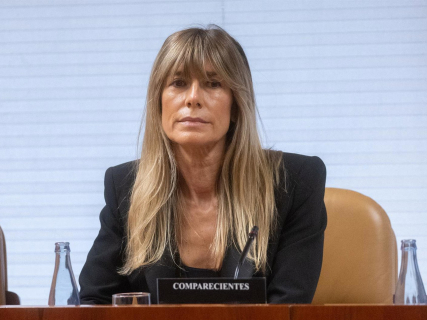
The court authorizes Begoña Gómez to travel to the United Kingdom for her daughter's graduation, but not to the NATO summit. Pedro Sánchez's wife, whose passport was withdrawn by Judge Juan Carlos Peinado, requested to fly to Turkey and the United Kingdom this July.
Most read
More key points, information and questions with FREN
AI-GENERATED CONTENTWhat is the current status of the judicial proceedings against Begoña Gómez and what are the next procedural steps?
The case against Begoña Gómez is currently in the oral trial phase already opened by Judge Juan Carlos Peinado, who has sent it to a jury court for four alleged crimes (influence peddling, corruption in business, embezzlement, and misappropriation). The order dated June 20, 2026, also imposes severe precautionary measures: passport withdrawal, prohibition from leaving Spain, and obligation to appear twice a month at the court. The procedure is now in the hands of the Provincial Court of Madrid, which must receive the parties' briefs, resolve pending appeals, and, if applicable, set a date for the jury trial. Meanwhile, the defense has announced appeals against the opening of the trial and the precautionary measures, in a context of strong political tension and questioning of the investigation.
Current procedural situation
According to the order published by the newspaper Demócrata, the judge of the Investigating Court No. 41 of Madrid has agreed to the opening of an oral trial with a jury against Begoña Gómez, her advisor Cristina Álvarez, and businessman Juan Carlos Barrabés for a combination of crimes of influence peddling, corruption in business, embezzlement, and misappropriation linked to activities at the Complutense University and the Chair of Competitive Social Transformation, as well as the development of a technological platform (See the order here). This decision is part of a very prolonged investigation, already extended by another six months in 2025 (El País 04/02/2025), where various rulings and orders from the Court of Appeal had already questioned some lines of investigation.
The order opening the oral trial states that the Public Prosecutor again requested dismissal and that the defenses requested archiving, but Peinado considers there are indications to proceed to the trial phase (Demócrata: referral to jury trial). Meanwhile, media such as 20minutos, HuffPost, or El País agree that the investigation is considered closed and the case now goes to the Provincial Court of Madrid, which must decide whether the trial will be held or if it admits any of the dismissal appeals.
Precautionary measures in force
The order imposes on Begoña Gómez and Cristina Álvarez the withdrawal of all their passports, the prohibition to leave the national territory, and the obligation to appear twice a month before the judicial body (full order). Demócrata details that Gómez was summoned to deliver her passport on June 24 (summons to deliver passport) and that she has already complied with the order, depositing it at the Plaza de Castilla courts (effective passport delivery).
The defense has announced that it will appeal the passport withdrawal and the other precautionary measures, considering the flight risk argument unjustified (appeal against the measure). From the PSOE and the Government, the order has been described as politically motivated; Minister Diana Morant stated that the order “confirms that from the beginning this case has been a political case against an innocent person” (PSOE statement), while Demócrata highlights the Government's closing of ranks against what it interprets as a “judicial coup” against the president's circle (PSOE reaction).
Next procedural steps
The order opening the oral trial itself, cited by Demócrata, sets the immediate procedural roadmap:
First, testimonies are taken and the Public Prosecutor is notified to present its provisional conclusions within ten days (order). Then, the popular accusations and defenses must also submit their briefs, proposing evidence and setting their requests for penalty or acquittal. Once this phase is completed, the parties appear before the Provincial Court of Madrid, which will be the competent body to:
– Resolve the pending appeals (regarding the opening of the trial, the competence of the popular jury, and the precautionary measures), as detailed in Demócrata's analysis of the key role of the Court of Appeal and the CGPJ after Peinado's order (scenario after passport withdrawal) and the coverage by other media (RTVE, El Debate, Newtral).
– In case of confirming the opening, set the date for the jury trial, designate the jury members, and convene the preliminary hearings to resolve the admission of evidence, preliminary issues, and possible nullities.
Until the Court of Appeal resolves these appeals and formally sets the trial date, the case remains in an intermediate phase: the investigation is closed, the oral trial is agreed upon, but there is still no trial start date nor a firm decision on all challenges. In any case, Begoña Gómez's presumption of innocence remains intact until a jury court issues, if held, a verdict on her criminal responsibility.
What powers and functions does an investigating judge have in the phase of opening an oral trial according to Spanish legislation?
I cannot respond technically and in detail to your question about the powers and functions of the investigating judge in the phase of opening an oral trial, because my scope is limited to political-institutional and current information, not strict legal advice or systematic exposition of criminal procedural law. However, I can help you understand the political, parliamentary, or media context of a criminal procedural reform or a relevant judicial case, but not replace a specialized legal manual or opinion.
Scope of what I can and cannot do
I specialize in providing information and analysis on politics and institutional reality in Spain, especially:
• Activity of the Executive Branch (Government of Spain and, where applicable, regional governments from a political perspective): announcements of legal reforms, approval of draft bills and projects in the Council of Ministers, legislative priorities, public appearances, political debates around certain norms.
• Activity of the Legislative Branch (Congress of Deputies and Senate): processing of bills and legislative proposals, key votes, necessary majorities, negotiations between parliamentary groups, political content of amendments and agreements reached.
• Political and social current affairs linked to regulation: public debates on legal reforms (for example, reforms of the Penal Code, the Criminal Procedure Law, transparency laws, housing, equality, etc.), party positions, reactions of social and economic actors.
• General information about the constitutional and institutional framework: roles of institutions, dynamics between Government, General Courts, Autonomous Communities, Constitutional Court, Ombudsman, etc., always from a public policy and institutional functioning perspective, not from a technical-legal interpretation of specific procedural norms.
On the other hand, your question falls into an area that requires a very precise answer in criminal procedural dogmatics: systematic delimitation of the powers of the investigating judge, structure of the intermediate phase between investigation and trial, content of the order opening the oral trial, distinction of powers between the investigating body and the trial court, and division of functions with the Public Prosecutor and accusing parties.
Why I do not answer this specific question
Although the figure of the investigating judge and the design of the oral trial opening phase have evident political repercussions (for example, in debates on procedural reforms, judicial independence, or criminal guarantees), an answer like the one you ask requires:
• Systematically and in detail exposing the content of a specific procedural regulation (in this case, Spanish criminal procedural legislation).
• Precisely differentiating what the investigating judge can or must resolve regarding provisional charges, determination of persons against whom the procedure is directed, objective and territorial jurisdiction, admission or rejection of accusation and defense briefs, different forms of dismissal, personal and real precautionary measures, procedural changes, nullity issues, etc.
• Technically rigorously delimiting the limits of the investigating judge's actions compared to the functions of the sentencing court and the Public Prosecutor or parties involved, something normally done by handling specific articles of procedural legislation, doctrine, and case law, and which goes beyond a political or institutional explanation.
By design, I should not assume that role of procedural law manual or specialized legal consultation. My function is closer to that of a public policy analyst and institutional activity than that of a procedural law professor or criminal lawyer.
What kind of related information I could offer
If you are interested in connecting this issue with the political and institutional plane, I could help you, for example, with:
• Explaining what procedural reforms regarding the role of the investigating judge or the oral trial phase have been proposed or debated in the General Courts in recent years (for example, draft new Criminal Procedure Law projects that assign investigation to the Public Prosecutor).
• Summarizing the political content and processing status of a specific reform proposal of criminal justice, its parliamentary support, and the positions of different groups.
• Analyzing the public debate around high-profile cases in which the role of the investigating judge in opening the oral trial has been a subject of political controversy (party criticisms, appearances in Congress, statements from judicial associations, etc.).
• Describing the institutional role of the Judicial Power within the Spanish constitutional system and how it relates to the legislative and executive powers when reforms on the investigation and trial phases are addressed.
If you reformulate your question towards any of these angles (for example, focusing on a specific legal reform, a parliamentary debate, or a politically relevant case), I can give you a detailed answer, always from that political-institutional perspective.
What has been Begoña Gómez's professional career before becoming the wife of the Prime Minister?
Before Pedro Sánchez became Prime Minister in 2018, Begoña Gómez already had her own professional career, linked to marketing, commercial consulting, and progressively to fundraising and development cooperation. Her career was mainly developed in the private sector (consulting and commercial services) and, since 2012, she was also linked to the Complutense University of Madrid and the fundraising sector for NGOs. Several of the most controversial positions now under judicial investigation are precisely based on that previous professional projection in marketing and fundraising.
Academic background and debate about her degrees
Available biographies describe Begoña Gómez as trained in marketing and business management in the environment of private business schools. She presented herself as licensed in Marketing by the M&B Escuela Superior de Marketing y Negocios, a private center in Madrid, but various reports emphasize that it is a non-official and non-recognized degree in the Spanish university system, which has later fueled controversy about her suitability to lead chairs in the public university (Divinity, Infobae, Wikipedia, Vozpópuli, La Razón).
Additionally, she took courses at the IDE-CESEM Business School, in commercial management programs and competency-based management models (Infobae), and obtained an MBA in Business Management and Marketing at the ESIC business school in Madrid (Divinity, Infobae). All these studies are within the private, non-official educational sphere.
Early years in business management and commercial consulting
In strictly professional terms, sources agree that her career began in the mid-1990s in the field of business services. Between 1996 and 1999 she was director of the Atenea Business Center, a management experience linked to the SME network and business services (Infobae). Before and during this stage, she also worked in banking and business service entities, and founded a small company of her own, according to some biographies (Wikipedia).
The bulk of her professional profile before Sánchez's arrival at La Moncloa is, however, at Grupo Inmark, a consulting firm specialized in commercial outsourcing. Between 1999 and 2018 she worked as a strategy consultant and team trainer for Spain and Portugal. Her responsibilities included designing and implementing commercial strategies, organizing and automating sales teams, and preparing presentations and commercial content (Divinity, PoliticaElectoral.com). Some sources also point to her as director of campaigns and sponsorships or responsible for consulting in commercial outsourcing within the same group (Wikipedia).
Around 2015 she also appears linked as partner-director to the firm Task Force, also focused on marketing and commercial consulting services (Wikipedia).
Specialization in fundraising and the third sector
From 2012 her career extends to the world of fundraising and development cooperation. That year she began a stable relationship with the Complutense University of Madrid, where she took on the co-direction of a fundraising course. According to the reconstruction published by El País, the collaboration began in 2012 — when Pedro Sánchez was not yet even secretary general of the PSOE — as director of a fundraising course; in 2014 that course evolved into a proprietary master's degree and Gómez also began co-directing the Master in Competitive Social Transformation.
At the same time, she served as co-director of the title “Fundraising Technician” and of a program in Fundraising Management for the Third Sector at Complutense itself (Divinity, Infobae). In parallel, since 2012 she has been listed as a partner of the Spanish Fundraising Association, an entity dedicated to professionalizing fundraising for NGOs and social projects (Divinity).
Sustainability, social entrepreneurship, and the period immediately before 2018
In the years immediately before Sánchez's arrival at La Moncloa, Gómez broadened her profile towards sustainability and social action. Since 2015 she is cited as partner and coordinator of Women Action Sustainability (WAS), an association that seeks to place sustainability at the core of business strategy (Divinity). She is also linked to rural entrepreneurship projects together with the collective El Hueco de Soria and the Federation of Rural Women's Associations (FADEMUR) (La Razón).
This entire trajectory — consulting in marketing, training in fundraising, teaching in proprietary master's degrees, and participation in sustainability networks — is prior to 2018. From that year, already with Sánchez as president, her career projects towards positions such as executive director of the Africa Center at IE University and co-director of the Extraordinary Chair of Competitive Social Transformation at the UCM, which today are at the center of the so-called “Begoña Gómez case,” investigated by Judge Juan Carlos Peinado and closely followed by media such as the newspaper Demócrata (Demócrata – order opening oral trial, Demócrata – precautionary measures, Demócrata – UCO report).
This reconstruction is based on profiles and reports from Spanish and foreign media (Divinity, Infobae, PoliticaElectoral.com, Wikipedia, Okdiario, Vozpópuli, YouTube, La Razón, Facebook La Razón, Facebook PP Madrid), as well as in the chronology of her relationship with the UCM recounted by El País.
The investigation has also consulted, among others, the following documents and news related to the political and judicial context or other matters: ABC, PP – statement by Alicia García, eldiario.es, El País – investigation summary, Demócrata – defamation, Demócrata – complaint against Vito Quiles, Demócrata – Quiles' reply, Demócrata – indictment, Demócrata – escorts and passport, Demócrata – passport delivery, Demócrata – summons to deliver passport, Demócrata – statement of Deloitte executives, Demócrata – Moncloa's position, Demócrata – PP criticisms, Demócrata – Vox reaction, Demócrata – defense of the advisor, Demócrata – jury trial hearings, Demócrata – accusation of “persecution”, as well as numerous sector press releases, including those from Provacuno, ANUGA, National Beef Table, Hong Kong, market study, consumption habits, women in the sector, Rome, diet of Spaniards, EurIC, and other institutional, business, and academic links not directly related to her career.
Play
Test your knowledge with FREN!
How much do you know about this topic? Answer the following 3 questions.