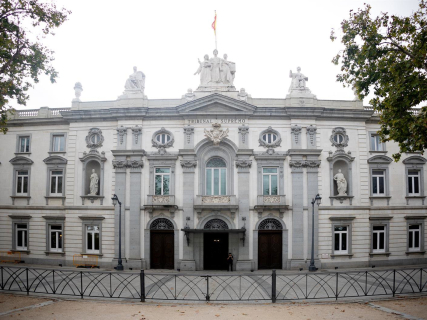

The Government delivered this Wednesday to the Supreme Court the identity of 163,355 people who obtained Spanish nationality through the so-called grandsons law and whose right to vote remains provisionally suspended ahead of the general elections next November 29. The documentation was sent after the high court demanded that the Executive individually identify those affected and warned of possible sanctions if it did not comply with the requirement before 3:00 p.m. on October 28.
The final list includes 335 more people than the 163,020 initially reported by the State Attorney’s Office, a difference that, according to government sources cited by El País, is due to the review of the naturalization files carried out in recent days by the Spanish consulates.
The suspension affects citizens registered in the Register of Overseas Residents (CERA) who acquired nationality under the Democratic Memory Law and its administrative implementation. However, the judicial ruling contemplates an exception for those who prove through a consular certificate that they are children or grandchildren of Spaniards exiled for political, ideological, or sexual orientation reasons.
The Supreme Court had given the Government five days to identify those affected
The delivery of the list responds to the requirement issued last Friday by the Administrative Litigation Chamber of the Supreme Court, which granted five days to the ministers Félix Bolaños and José Manuel Albares to provide the nominal list both to the court and to the Central Electoral Board and the Electoral Census Office.
The judges had warned of the possibility of imposing fines and demanding criminal liability in the event of noncompliance, considering it essential to have the identities of those affected in order to apply the precautionary measures before the general elections.
The Ministry of Foreign Affairs has coordinated the review of the files processed in the different consular offices and, according to the cited government sources, has authorized the hiring of the technical assistance requested to complete the work within the judicial deadline.
The Executive maintains that it had already provided part of the information before the latest request. Specifically, the Ministry of the Presidency, Justice and Relations with the Courts sent on October 15 to the Electoral Census Office a list of 76,600 people identified in the digital Civil Registry, known as Dicireg, which constituted the information available in that department.
According to the Government’s version, the Census Office forwarded those data to the Supreme Court on October 21. However, in two orders notified on the 23rd, the court reproached the Administration for not having provided the complete nominal list of the affected voters, despite having their identities by having processed the corresponding naturalization files.
Only 91 certificates issued among more than 31,000 files reviewed
The documentation previously examined by the Supreme Court showed that, as of October 21, the consulates had reviewed 31,390 files of naturalized persons under the grandchildren law, of which only 91 had resulted in the issuance of certificates certifying the status of descendant of exiles.
These certificates are decisive for those affected, since they make it possible to prove that they meet the exception contemplated by the court and, therefore, retain the right to participate in the general elections on November 29.
The Supreme Court has questioned the delay in identifying the voters, considering that the lack of information could jeopardize the application of the judicial resolutions in the middle of the electoral process.
The figure of 91 certificates corresponds to the review communicated up to October 21 and does not constitute a definitive balance of the citizens who will be able to prove their status as descendants of exile.
The Government asks to protect the list against a possible improper use of the data
Along with the delivery of the nominal list, the State Attorney’s Office has asked the Supreme Court to declare the list confidential, as it contains personal information of the 163,355 affected citizens.
The Executive argues that this protection is necessary to prevent the data from being used for purposes other than those provided for in the judicial proceeding.
In particular, the request refers to Vox e Iustitia Europa, the two formations that promoted the appeal before the Supreme Court and that are participating in the proceedings. The State Attorney's Office seeks to prevent them from making a "malicious or illegitimate" use of the information, according to El País.
The request for confidentiality must be examined by the court and does not by itself alter the precautionary measures that affect the voting rights of naturalized citizens.