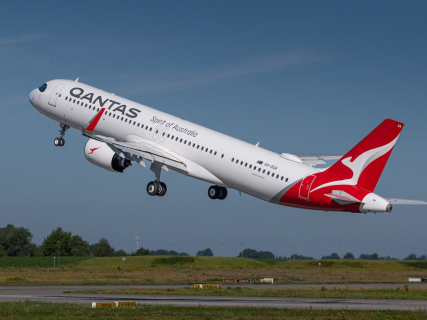

The Federal Aviation Administration of the United States (FAA) has approved a new airworthiness directive that requires the inspection of 1,069 Airbus A320 and A321 aircraft from the U.S. registry due to the possible appearance of cracks that, if not corrected, could affect the structural integrity of the aircraft.
The problem was discovered during a fatigue test of an A320 conducted as part of the campaign to extend its operational life. Cracks appeared around the fastening holes located at the upper front and rear corners of the bulk cargo door, in sections 16 and 17 and on both sides of the fuselage.
The U.S. regulation, identified as AD 2026-17-01, incorporates the actions previously established by the European Union Aviation Safety Agency (EASA). The FAA published the final directive in the Federal Register on August 27, after having submitted its regulatory proposal in May.
Which Airbus models are affected
The measure does not apply to all A320 and A321. In the first family, the models A320-211, -212, -214, -216, -231, -232, and -233 are included, while in the second, the A321-111, -112, -131, -211, -212, -213, -231, and -232 appear.
There is also an additional condition. The directive applies to aircraft identified by EASA regulations that have incorporated a extended service goal (ESG) in the airworthiness limitations section of their continuing maintenance instructions.
This means that the fact that an airline operates an A320 or A321 does not automatically imply that that specific aircraft is included. The obligation depends on both the version and the technical characteristics established in the directive.
What is the rototest inspection they will have to undergo
The FAA requires a rototest inspection to be performed in the affected areas. This is a non-destructive testing technique used to search for cracks around holes in metal structures without the need to damage them during the examination.
The review will allow checking for cracks in points that may not be evident through simple visual observation. The FAA estimates that the basic mandatory action requires approximately four hours of work per aircraft.
With an estimated labor cost of 85 dollars per hour and without the necessary parts for that first review, the regulator calculates an outlay of 340 dollars per plane and 363,460 dollars for the set of affected U.S. operators.
What happens if the technicians find a crack
The mandatory inspection does not mean that the 1,069 planes have cracks. Its purpose is precisely to determine which aircraft present the problem and act before it can evolve.
The U.S. directive establishes that, if a crack is detected, it must be repaired before the plane flies again. The repair must be carried out using a method approved by the FAA, EASA, or the authorized design organization of Airbus.
The FAA does not provide a definitive economic estimate for those potential repairs because it does not have sufficient data to calculate how many aircraft will need additional intervention or the extent that each one would require.
The FAA order comes into effect on October 1
The new directive will be effective on October 1, 2026. From then on, operators must comply with the actions and deadlines established in the EASA regulations that the FAA incorporates as a reference, except for the exceptions specifically introduced by the U.S. regulator.
The publication of the order does not mean that more than a thousand Airbus must be immediately withdrawn from service. The FAA establishes a mandatory inspection program and, when necessary, repair, with compliance deadlines determined by the applicable technical conditions for each aircraft.
For passengers, this means that there is no general immobilization of the affected A320 and A321. The consequences on flight scheduling will depend on how companies organize the reviews and, especially, whether any inspection discovers damage that requires a repair before returning to operate.
The alert originated in Europe
The action of the FAA has its origin in the EASA directive AD 2025-0193, dated September 8, 2025. EASA acts as the reference authority of the State of design for the affected Airbus and conveyed the potentially unsafe condition that the United States has subsequently evaluated.
The FAA published in May 2026 a proposal to transfer those requirements to the aircraft of the U.S. registry. After analyzing the available information and completing the regulatory procedure, it has now adopted the final standard.
The objective is to locate possible cracks before they progress to affect the structure of the fuselage. The directive thus makes inspections and the corresponding corrective actions mandatory airworthiness requirements for the affected aircraft in the United States.