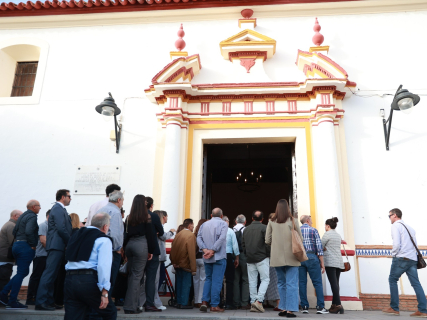

Fátima Báñez returned this Friday to San Juan del Puerto, the Huelva municipality where she was born and to which she never stopped feeling connected, to receive her final goodbye. The former Minister of Employment and Social Security, deceased at 59 in the Urda (Toledo) train accident, has been bid farewell by family, friends, neighbors, and numerous colleagues from her political career, on a day in which the memory of someone who held one of the most important ministries of Mariano Rajoy's Government has coexisted with the pain over the loss of a much-loved neighbor.
The parish of San Juan Bautista, a temple to which Báñez professed special devotion, has hosted at 16.30 the funeral mass presided over by the bishop of Huelva, Santiago Gómez. The ceremony has preceded the burial in the municipal cemetery, chosen by the express wish of the family, which had wanted to open the wake held during the morning in Huelva so that all those who wished could pay their respects, reserving the burial for privacy.
The farewell has brought together a large part of those who shared with Báñez her years in Government and in the Partido Popular, but also representatives of the business world and neighbors who knew her long before her arrival in Madrid. A coincidence that reflects the two sides of her public and personal life, that of a minister who took part in some of the most important economic and labor decisions of the last decade and that of a woman who kept her family and social ties with her town.
Rajoy and his former Government colleagues, in the final goodbye
The former president Mariano Rajoy has gone to the Huelva funeral home to bid farewell to the one who was his Minister of Employment between December 2011 and June 2018. Visibly affected, he has admitted to journalists that he never imagined having to travel to the province under such circumstances.
"The reason for my stay today in Huelva is a reason for which I would never in my life have wanted to be here and I never believed I would be here for this," said the former president, who remembered Báñez, above her political career, as a "good person".
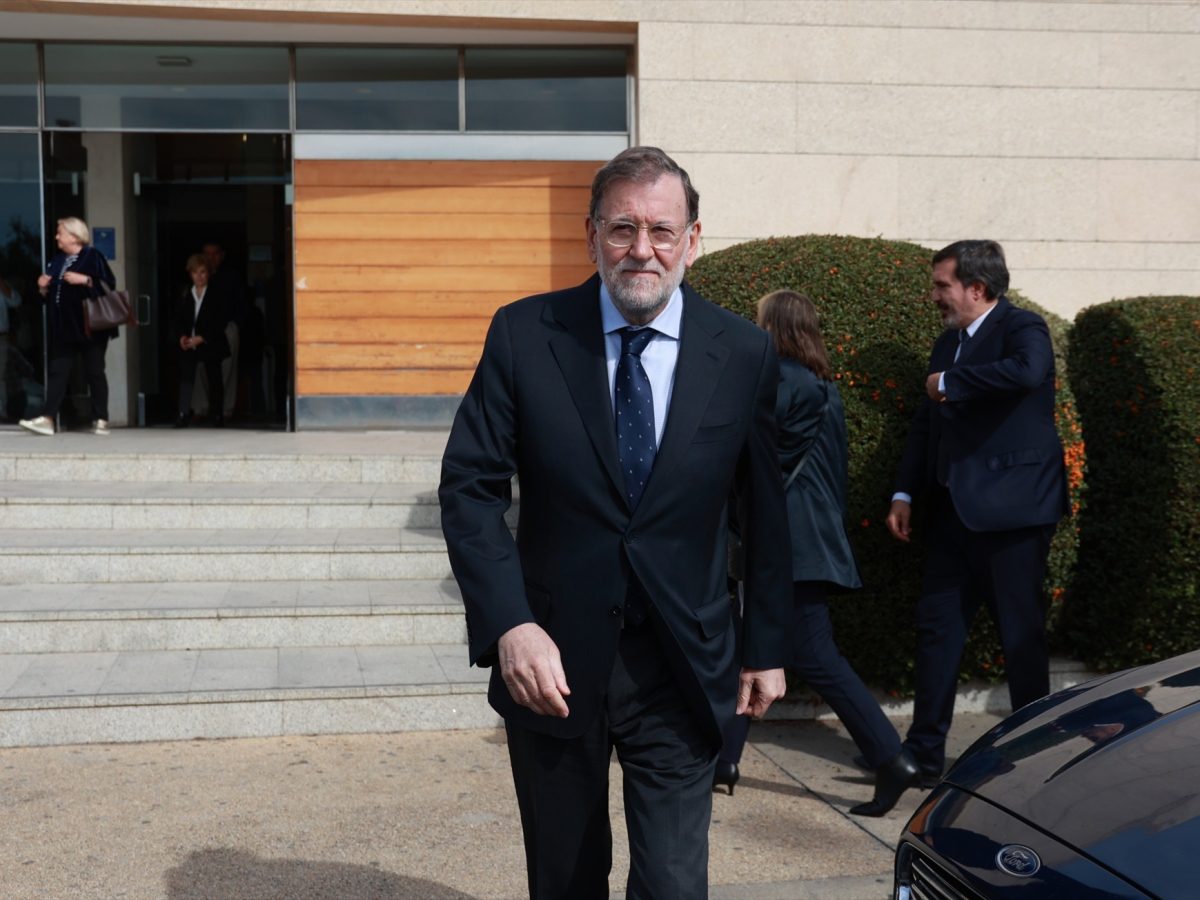
Throughout the morning, the former vice president Soraya Sáenz de Santamaría, the former ministers Ana Pastor and Isabel García Tejerina, the former vice president of the Government Javier Arenas, the former mayor of Cádiz Teófila Martínez and the deputy secretary of the PP Elías Bendodo, among other former colleagues, have also come to the wake.
Institutional Andalusian representatives and local authorities have also attended, including the mayor of Huelva, Pilar Miranda; the mayor of Sevilla, José Luis Sanz; the president of the Diputación de Huelva, David Toscano, and the mayor of San Juan del Puerto, Rocío Cárdenas.
Juanma Moreno relives the pain of Adamuz
The president of the Junta de Andalucía, Juanma Moreno, attended the ceremony accompanied by his wife, Manuela Villena. Before entering the church, he recalled his personal and political relationship with Báñez, with whom he shared years of work within the Partido Popular.
"She was a very good collaborator, in good times and in bad. I shared many things with her, we are very saddened," he said.
Moreno also related the pain over the death of the former minister to the consequences that the Urda accident has had for other families and to the still recent memory of the Adamuz rail tragedy, which occurred in January.
"We have once again relived the drama of Adamuz, which marked me emotionally. I have spoken with some families from that accident in these days: they are reliving everything," he explained.
The Andalusian president also pointed out that some political colleagues who wanted to attend the funeral had not been able to travel to Huelva due to the difficulties of rail connections with Andalucía after the crash.
Garamendi says farewell to a companion of dialogue and a friend
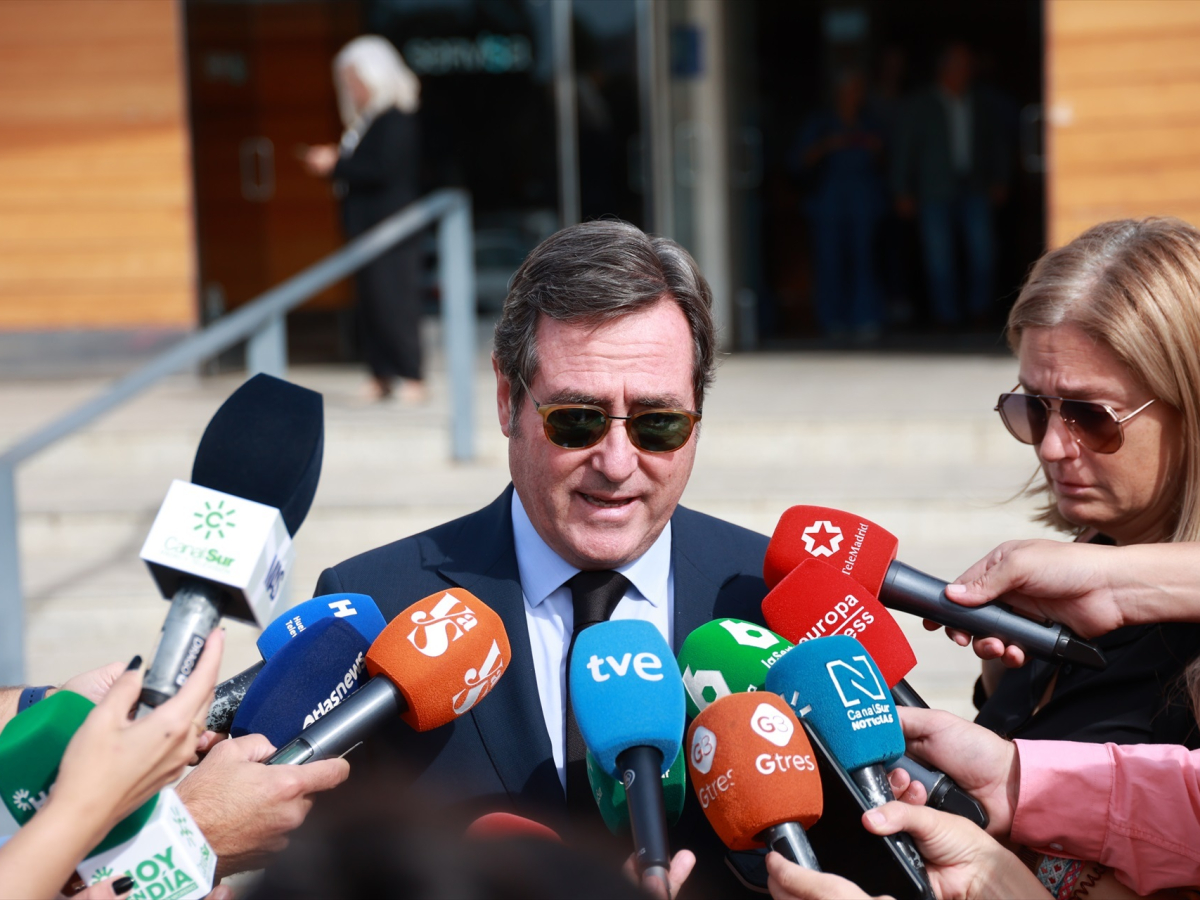
The business world also wanted to accompany the family of the former minister. Among those attending the wake was Antonio Garamendi, president of the Confederación Española de Organizaciones Empresariales (CEOE), an institution to whose foundation Báñez had been linked since July 2020.
Garamendi described the former Employment head as a person "generous, an example of dialogue and of good politics," and expressed his sadness over the loss of someone he considered a friend and a close collaborator.
"Fátima was one of the most generous people I have known. A wise and loyal adviser and a dear friend," he noted in a farewell message.
Also attending the mortuary was Lorenzo Amor, president of ATA and vice president of CEOE, along with other business representatives who had worked with Báñez after her departure from the Government.
Her activity at the CEOE Foundation had allowed her to remain linked to labor relations and dialogue between companies and institutions, an area in which she had developed much of her political career. Precisely she was heading to Sevilla to participate in a business event when she was traveling on the train Iryo that was hit by an AVE from Renfe in Urda.
The town that never forgot
Beyond the public offices and the personalities who have come to say goodbye to her, San Juan del Puerto has wanted to remember Fátima Báñez as one of its neighbors.
The mayor, Rocío Cárdenas, has highlighted that the former minister carried the name of her town throughout Spain without ever losing contact with her roots. "Today San Juan del Puerto bids farewell with immense sadness to one of its daughters," the mayor has expressed, recalling Báñez's childhood on Río street and her participation in the social and religious life of the municipality.
The former minister maintained a especially close relationship with the Hermandad del Rocío, of which she came to be the senior sister. She also preserved her ties with local traditions and with the friendships of her youth, an aspect that the City Council has wanted to highlight during this day of mourning. In 2025, the Council recognized her family for the donation of livestock for the town's bullfights for years, a tribute that Báñez publicly thanked.
Her family has conveyed its gratitude for the numerous expressions of affection received since her death became known and has requested respect to live the mourning in peace.
A political career interrupted by the tragedy of Urda
Born in 1967, Fátima Báñez developed a long career linked to the Partido Popular before joining Mariano Rajoy's Council of Ministers in December 2011.
For almost seven years she headed the Ministry of Employment and Social Security, from which she took part in the 2012 labor reform and in the main negotiations on employment, pensions and labor relations of that period.
After leaving the Government in June 2018, she was gradually moving away from the political front line until taking on in 2020 the presidency of the CEOE Foundation, from where she continued participating in initiatives related to training, employment and social dialogue.
Her death in the Urda railway accident has provoked numerous expressions of grief inside and outside the Partido Popular, both among those who shared institutional responsibilities with her and among those who knew her during her business activity.
This Friday, the farewell has returned her story to the place where it began. San Juan del Puerto has accompanied Fátima Báñez on her last journey, after a life that took her from a locality in Huelva to the Council of Ministers and that ended unexpectedly in one of the most serious railway accidents in the recent history of Spain.