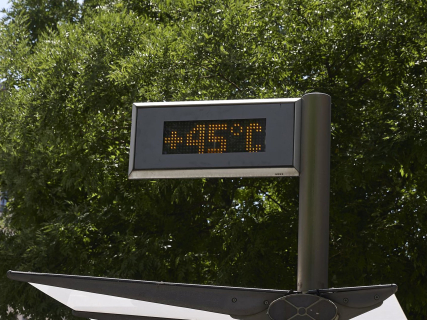

Spain ends August with the highest mortality balance attributable to high temperatures since the MoMo system series began in 2015. The Daily Mortality Monitoring System, managed by the Carlos III Health Institute, estimates 5,232 deaths statistically associated with excess temperature since May 15, the date when the heat surveillance period is activated.
The figure exceeds the accumulated records in other particularly harsh years, such as 2022, when 4,789 deaths attributable to high temperatures were estimated, and 2023, with 3,035. The comparison should be limited to the series available since 2015 and does not allow for the assertion that 2026 will be the year with the highest heat mortality in the entire history of Spain.
The older population concentrates practically all the impact. Of the 5,232 estimated deaths, 5,048 correspond to those over 65 years old and 3,256 to people over 85 years old. The latter represent around 62% of the total, while women account for approximately 60%.
August again records very high mortality due to high temperatures
August has once again ranked among the months with the greatest health impact from extreme temperatures. The latest available data from MoMo shows more than 2,100 deaths attributable to heat during the month, although the balance still needs to be considered provisional.
The estimates corresponding to the most recent days may change as new notifications from civil registries arrive and the system corrects the existing delay in the data. For this reason, the figures from the last days need approximately a week to consolidate.
July had already left 2,025 deaths attributable to high temperatures, compared to the 1,060 recorded in the same month of 2025. It was the second July with the highest estimated mortality in the series, only behind 2022.
More than 96% of the deaths correspond to those over 65 years old
The age distribution reveals where the main risk is concentrated. 5,048 of the 5,232 estimated deaths correspond to people over 65 years old, around 96.5% of the total counted during the surveillance period of 2026.
Within that group, the impact increases among those over 85 years old. MoMo attributes 3,256 deaths to people of that age, equivalent to approximately six out of ten of the estimated total.
There is also a difference by sex. Women represent around 60% of deaths attributable to high temperatures, according to data released from the surveillance system.
What does it really mean that MoMo attributes 5,232 deaths to heat
The figure needs important methodological precision: MoMo does not count 5,232 death certificates in which heat is listed as the direct cause of death. The system makes a statistical estimation of the impact that temperatures have on mortality.
To calculate it, it analyzes observed mortality, expected mortality, and the effect of temperatures. In this way, it estimates how many deaths can be statistically attributed to the excess or deficiency of temperature compared to what would be expected under normal conditions.
This method allows measuring consequences that go far beyond diagnosed heat strokes. Extreme temperatures can worsen cardiovascular, respiratory, and other pre-existing conditions, so the correct formulation is to talk about "deaths attributable to high temperatures".
2026 surpasses the records of 2022 and 2023
The accumulated balance since the beginning of the surveillance period makes 2026 the year with the highest number of deaths attributable to heat within the comparable MoMo series. The estimated 5,232 cases exceed the 4,789 of 2022 and the 3,035 of 2023.
This does not mean that it is necessarily the heat episode with the most victims in all of contemporary Spanish history. The series used to establish this record begins in 2015, and Spain previously suffered extraordinarily severe episodes, including the European summer of 2003.
The comparison with recent years does allow confirming that the health impact of 2026 has surpassed the maximums recorded by the current surveillance system during the last decade.
An exceptionally hot summer
The mortality record coincides with an extraordinarily warm meteorological summer. Provisional analyses place the average temperature of peninsular Spain around 26 ºC, about 2.5 degrees above the average of the reference period 1991-2020.
During June, July, and August, four heat waves have been identified, in addition to numerous days with exceptionally high temperatures and nights in which the heat barely subsided.
The balance of MoMo thus adds a different dimension to the records of the thermometers. The 5,232 deaths attributable to high temperatures since May 15 show the accumulated health impact of a particularly adverse period, with an overwhelmingly concentrated incidence among older people.