"This will be known soon": an Adif engineer explains why Urda will not be like Adamuz and questions the maintenance of the line

Antonio Martín Carrillo maintains that the logs from the control center will help clarify the collision between Renfe and Iryo and casts doubt on the maintenance of the Madrid-Sevilla line

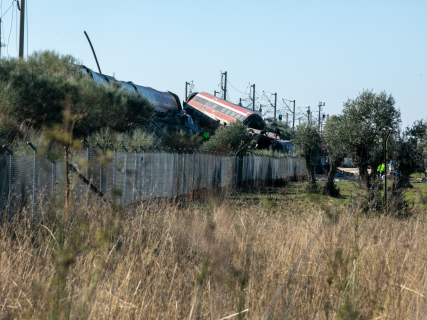
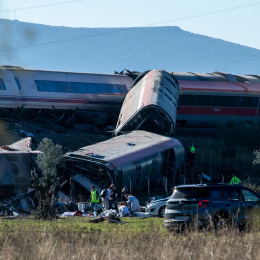
EuropaPress 7874500 trenes accidentados 28 octubre 2026 urda toledo castilla la mancha espana

EuropaPress 7874500 trenes accidentados 28 octubre 2026 urda toledo castilla la mancha espana

Add DEMÓCRATA to Google

Ask FREN

Published

Last updated

4 minutes

Most read

Elecciones 29N · Encuestas

La media de las encuestas

Media a 27 de octubre de 2026 · 15 institutos

  • PP31,0 %
  • PSOE27,3 %
  • Vox18,9 %
  • Sumar6,3 %
  • Podemos2,9 %
  • ERC2,3 %
010203040ene 2024jul 2024ene 2025jul 2025ene 2026jul 2026

Media del último estudio de cada instituto en 30 días y su evolución semanal desde el 23J. Partidos con al menos un 2 %.

Todas las encuestas

Elecciones generales del 29 de noviembre · Demócrata

The engineer and former Adif worker Antonio Martín Carrillo has assured this Wednesday on esRadio that the circumstances of the Urda (Toledo) railway accident may be known soon, because the necessary information to reconstruct what happened is recorded in the traffic control center. In his view, this circumstance differentiates the investigation of the collision between the Renfe and Iryo trains from that of the Adamuz accident.

"This will be known soon. It is recorded in the control center", Martín Carrillo has stated, who has explained that, in this case, the train records will make it possible to contrast the information preserved in the control room.

The engineer has focused his explanations on the railway protection system LZB, whose function is to maintain safety conditions in circulation and prevent trains from approaching improperly. He has also questioned the maintenance of the Madrid-Seville line and has demanded explanations about the European funds planned for certain actions.
"If the LZB works, the trains do not collide"

Martín Carrillo has explained that the LZB is a protection system that monitors circulation and keeps trains apart. Its operation makes it possible to control running conditions and act when situations are detected that require a safety intervention.

"If the system works, the trains do not collide. It is technically impossible", he has stated.

The engineer has expressed his surprise at the possibility that this mechanism was not operational on a high-speed line.

"I find it hard to believe that on a high-speed line this system that keeps trains apart is switched off", he has pointed out.

As he has explained, when the LZB stops working the corresponding protection measures must be activated. In his intervention he has mentioned the red signals and has assured that, if the system fails, the affected trains stop.

For this reason, he considers it necessary to clarify what happened to this device and under what conditions the convoys were traveling before the collision.

The control center records will make it possible to reconstruct what happened

One of the main points highlighted by Martín Carrillo is that the functioning of the railway systems is recorded in the control center.

The engineer has indicated that this information will make it possible to know the circumstances of the accident and compare them with the data stored in the trains themselves.

This is, according to his explanation, a relevant difference with respect to Adamuz. In Urda, he considers that the investigation will have registered information about the circulation of the convoys that will make it possible to reconstruct what happened.

Martín Carrillo has insisted that all that data must be made available to the judicial authority.

"Everything has to be at judicial disposal," he has stated.

"There was EU money for Madrid-Sevilla"

The engineer has also questioned the maintenance of the Madrid-Sevilla high-speed line.

"We know that the maintenance of the line was not done as it should have been. There was EU money for Madrid-Sevilla, and that was not done and we do not know what happened to the EU money", he has pointed out.

Martín Carrillo has related this concern to the actions that, according to him, should have been carried out on the infrastructure.

However, he has acknowledged that he does not know what happened in the accident and has not established a direct relationship between the maintenance deficiencies he denounces and the Urda collision.

"Something or several things at once had to have happened"

Although his suspicions point to the functioning of the LZB, Martín Carrillo has acknowledged that he still does not know what happened.

"I do not know what has happened now," he has stated.

The engineer considers that an anomaly or a combination of circumstances may have occurred.

"Something or several things at once had to have happened," he has stated.

For this reason, he has explained that it will be necessary to examine the turnouts, the infrastructure, the trains and the tracks, in addition to the functioning of the protection system.

Even so, he has pointed out that the known indications lead him to pay special attention to the LZB, without ruling out other possibilities.

"I trust my Adif colleagues one hundred percent"

Martín Carrillo has expressed his trust in the professionals at Adif and in the information he receives from former colleagues.

"I trust my Adif colleagues one hundred percent," he has stated.

The engineer has explained that he shares the information that reaches him from other professionals, although he has acknowledged his concern about the circumstances of the accident.

"What I see as a technician I do not like," he has stated.

Finally, he has recalled the impact that a railway tragedy has among those who have dedicated their professional lives to the sector, although he has emphasized that that pain is not comparable to the suffering of the victims and their families.

Martín Carrillo trusts that the control center records, contrasted with the trains’ data, will make it possible to soon know what happened in Urda. His explanation keeps open the different technical hypotheses, pending the investigation determining the causes of the collision.

More key points, information and questions with FREN

AI-GENERATED CONTENT

What is the status of the judicial investigation into the Urda railway accident and what procedures remain pending to clarify its causes?

The judicial investigation into the Urda railway accident is in the initial phase, as of October 28, 2026. The Court of First Instance and Instruction No. 1 of Orgaz has taken over the proceedings to clarify the collision between a Renfe AVE and an Iryo train and to determine possible liabilities. There is not yet an officially established cause nor publicly recorded specific criminal attribution.

What has been done so far

The initial actions include the exhumation and identification of the victims, inspections of the site, and collection of evidence regarding the position of the trains, derailments, braking marks, and damages. The Civil Guard has mobilized specialists in Judicial Police, on-site inspection, identification, and scene reconstruction using drones. These initial actions must be completed with the report and expert analyses, according to information from El Confidencial and Información.

The General Council of the Judiciary has offered reinforcements to the court if necessary. This offer, reported by Europa Press, does not mean that reinforcements have already been incorporated nor does it allow anticipating how long the investigation will last.

What hypothesis is being examined

Initial information points to a possible incident in the LZB, the system that continuously monitors speed and movement authorizations, followed by a resumption of circulation through alternative procedures. Government sources have indicated a possible error by an Adif operator during that phase.

However, this is a hypothesis, not a judicial conclusion. As explained by Demócrata, Adif had not yet confirmed the failure nor had the specific instructions transmitted to the trains been clarified. It also cannot be deduced that an LZB incident eliminated all available protections.

What remains pending to clarify the causes

The pending issues to be verified — without it being recorded that all have already been judicially ordered — are as follows:

  • Complete the inspection and secure the evidence. Document the scene, preserve relevant elements, and close the Civil Guard report.
  • Reconstruct the circulation. Specify where the Iryo was, whether it was stopped or moving slower, and determine the speed, distance, and movement authorization of the AVE before impact.
  • Analyze technical data. Contrast onboard equipment with signaling, track occupancy detection, and traffic control: which system was active, what restrictions the cab received, and whether there were alarms, communication losses, or automatic braking.
  • Examine communications and decisions. Review train-to-ground and control center conversations, identify who authorized the movements, and verify with what information and procedures they acted.
  • Conduct expert analyses and statements. Examine brakes, rolling stock, track, telecommunications, maintenance, and previous incidents; gather testimonies from drivers, traffic personnel, managers, and survivors.
  • Complete the independent technical investigation. The Railway Accident Investigation Commission must clarify the factors of the accident with a preventive purpose, distinct from the attribution of criminal responsibilities.

The technical analysis by Demócrata highlights that a communication loss alone does not explain the extent: it will be necessary to establish which protections acted and under what conditions circulation continued.

In short, it is necessary to cross physical evidence, technical data, communications, and testimonies. There is no publicly known fixed schedule, precautionary measures, or formally investigated persons. It will be the progress of these proceedings, and not the initial hypotheses, that will allow determining the causes and any responsibilities.

What are the main competencies and functions of Adif regarding the maintenance and safety of Spanish railway infrastructures?

Adif (Administrator of Railway Infrastructures) is the state public business entity responsible for most of the Spanish state-owned railway network. Regarding maintenance and safety of infrastructures, its competencies and functions can be grouped into several major blocks.

1. Ownership and management of the infrastructure

Adif is essentially the “owner and manager” of the railway infrastructure of the General Interest Railway Network (RFIF), which includes:

  • Tracks and platforms: layout, platform, ballast, rails, track devices (switches), level crossings, etc.
  • Electrification installations: catenary, electrical substations, and supply lines.
  • Signaling and control systems: signals, interlockings, ERTMS or other train management and protection systems.
  • Stations and terminals: passenger buildings, platforms, parking lots, accesses, and other facilities associated with railway operation.

Adif assumes responsibility for ensuring all these elements are available in adequate conditions so that railway companies (Renfe and other operators) can provide services safely and reliably.

2. Planning and execution of maintenance

Regarding maintenance, Adif performs key functions:

  • Definition of maintenance policies and plans: establishes technical criteria (internal standards, quality standards) and preventive, corrective, and predictive maintenance programs for tracks, stations, and systems.
  • Periodic infrastructure inspection: organizes visual and technical inspections (measurement of track geometry, rail condition, catenary, etc.) to detect wear, deformations, or anomalies.
  • Direct execution or contracting of works: carries out conservation, renewal, and repair tasks (rail replacement, ballast, sleepers, catenary renewal, signaling modernization, etc.) with own resources or through contracts with specialized companies.
  • Incident and failure management: in case of infrastructure failures (breaks, subsidence, signaling failures), coordinates emergency actions, traffic cuts or limitations, and necessary repairs.

3. Guarantee of infrastructure safety

In terms of safety, Adif’s functions focus on ensuring that the infrastructure is suitable for the intended use and complies with technical and railway safety regulations:

  • Evaluation and certification of infrastructure suitability: before commissioning new lines or after major renovations, safety tests and verifications (rail, ballast, catenary, signaling, communications) are performed to guarantee they can operate at authorized speeds and capacities.
  • Risk management: identifies hazards related to infrastructure (landslides, floods, road crossings, etc.), assesses risks, and adopts preventive measures (protections, drainage, perimeter closures, improvements at level crossings).
  • Technical regulations and safety procedures: develops and applies technical instructions and internal operational procedures for track work, power cuts, track occupation, compatibility between works and train circulation, etc.
  • Coordination with railway safety authorities: collaborates with the national safety authority and other regulatory bodies, providing information on infrastructure, incidents, and corrective measures.

4. Traffic management and coordination with operators

Although train circulation also has an operational dimension, from the infrastructure safety perspective Adif assumes:

  • Rail traffic management (within its scope): regulation of circulation, allocation of train paths (routes and schedules) to railway companies, and supervision to ensure compliance with safety conditions associated with the infrastructure.
  • Operational information and restrictions: communicates to operators temporary speed limits, track closures due to works or incidents, and special operating conditions derived from infrastructure status.
  • Emergency plans: development and activation of specific plans in case of accidents or serious incidents related to infrastructure (derailments, tunnel fires, damage from extreme weather), in coordination with operators and emergency services.

5. Continuous improvement and modernization

Finally, Adif plays a relevant role in the structural improvement of safety and maintenance:

  • Line renewal and modernization: planning and execution of projects to replace aging infrastructures, improve layouts, eliminate level crossings, and reinforce structures (bridges, tunnels).
  • Technological innovation: implementation of new signaling and control systems, remote monitoring technologies for track and catenary condition, and predictive maintenance tools based on data.
  • Training and safety culture: continuous training of own personnel and contractors in safe work procedures on tracks and railway facilities.

Overall, Adif acts as the comprehensive responsible entity ensuring that the state railway infrastructure is available, maintained in adequate conditions, and offers a safety level compatible with national and European standards, coordinated with railway companies and competent authorities.

Can you explain how Adif and railway companies coordinate when there is an incident affecting the infrastructure? What are the differences between the functions of Adif and those of Renfe regarding railway safety? How are the maintenance and renewal actions carried out by Adif on the railway network financed?

What legal requirements must be met for the use and control of European funds intended for the maintenance and improvement of railway infrastructures in Spain?

The use of European funds in railway infrastructures requires demonstrating that the action is fundable, executed legally, and that its results and payments can be verified. The specific obligations depend on the fund and the financing agreement: there is no general authorization to cover any maintenance simply because it is railway-related.

1. Fit within the program and eligible expenditure

First, the instrument must be identified and it must be verified that conservation, renewal, or improvement is expressly included among the approved actions:

  • ERDF: Regulations (EU) 2021/1060 and 2021/1058 apply, the corresponding program, and Order HFP/1414/2023 on eligible expenses for 2021-2027. Selection of operations, co-financing, indicators, and deadlines must be respected (common rules; eligible expenses).
  • RRF/NextGenerationEU: Regulation (EU) 2021/241 requires linkage to Recovery Plan investments and compliance with its milestones and objectives. European disbursements depend on results, not simply on submitting invoices (RRF framework).
  • Connecting Europe Facility: Regulation (EU) 2021/1153, the call, and the grant agreement determine projects, costs, percentages, and financing schedule.

Expenses must be necessary, identifiable, and justifiable according to the applicable regime. The same cost cannot be charged twice, although different sources may finance differentiated parts of the project.

2. Planning, safety, and environment

The Railway Sector Law 38/2015, amended by the Sustainable Mobility Law 9/2025, requires coherence with railway planning. Significant modifications require an informative study; certain conservation or replacement works without substantial layout modification are exempted, without being exempt from applicable environmental obligations.

Required permits must be obtained and compliance with Law 21/2013 on environmental assessment and Royal Decree 929/2020 on safety and interoperability must be ensured. In the RRF, the DNSH principle must also be demonstrated: no significant harm to the environment.

3. Contracting and budget coverage

Contracting must respect the regime applicable to the entity and the contract, including Law 9/2017 when applicable: publicity, competition, equality, objective criteria, and justified modifications. Necessity, budget, award, execution, certifications, and payments must be documented, avoiding undue splitting and conflicts of interest.

Budget coverage must also exist and compliance with the General Budget Law. When articulated through subsidies, specific European regulations and, in their scope, the General Subsidies Law and its justification obligations apply.

4. Traceability, anti-fraud, and audit

In the PRTR, Orders HFP/1030/2021 and HFP/1031/2021 require monitoring of results and accounting execution, identification of recipients, contractors, and subcontractors, publicity of financing, and supporting documentation. Anti-fraud plans and conflict of interest analyses are added according to Order HFP/55/2023.

A complete audit trail must be kept: contracts, invoices, work certifications, payments, modifications, and indicators. Managers must facilitate verifications and controls by the IGAE, Court of Auditors, European Commission, European Court of Auditors, OLAF, and, when applicable, European Public Prosecutor's Office.

Non-compliance may lead to exclusion of expenses, financial corrections, suspension of disbursements or reimbursement, as well as administrative, accounting, or criminal liabilities.

Play

Test your knowledge with FREN!

How much do you know about this topic? Answer the following 3 questions.

Which railway protection system is mentioned as key to preventing collisions on the Madrid-Seville line?

Question 1 of 3

What element will, according to Martín Carrillo, allow the reconstruction of what happened in the Urda accident?

Question 2 of 3

What has Martín Carrillo questioned regarding the Madrid-Seville line?

Question 3 of 3