

An energy zero occurs when an electrical system loses practically all its capacity to supply electricity. It is not a conventional power outage that affects a street, a neighborhood, or certain users, but rather a generalized interruption that can leave a city, a region, or even an entire territory without supply.
The blackout registered in Palma, amid maximum alert for rains, has once again brought to the fore the importance of understanding how these situations work and why they can have especially relevant consequences in insular territories. The interruption of supply affects not only households, but also public services, communications, transport, and economic activity.
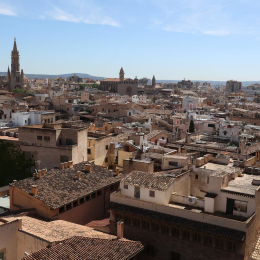
How does an energy zero occur?
Electricity must be generated and consumed practically at the same time. For the system to function normally, production must continuously adjust to demand and remain within certain technical stability parameters.
When a serious incident occurs in generation or in the infrastructure that transports electricity, the balance can be broken. If the system is unable to compensate for the failure, automatic disconnections of installations and new interruptions can be triggered that worsen the situation.
In the most extreme cases, the loss of stability can cause a very important part of the network to stop functioning. It is then that a generalized blackout or an energy zero occurs.
Not all supply interruptions, however, respond to this mechanism. To determine whether an incident technically constitutes an energy zero, it is necessary to know what has happened in the system and what the real scope of the interruption has been.
Why is an island more vulnerable to a general blackout?
Insular electrical systems present particularities compared with those of continental territories. Their size, the characteristics of electricity generation, and the possibilities of connection with other networks condition their capacity to respond to an incident.
In a continental system, interconnections allow, within the available technical limits, recourse to electricity from other areas when an imbalance occurs. On an island, the possibilities of external support can be more limited, especially when the system operates in an isolated manner.
On an island, the possibilities of external support may be more limited
This means that a major failure in a generation facility or in an essential element of the grid can have broader consequences if there are not enough alternatives to compensate for the loss of supply.
The size of the territory and the configuration of the grid also influence recovery. Restoring electricity after a widespread interruption requires coordinating the generation and transmission facilities, checking their stability, and progressively restoring supply.
How long does it take to restore electricity?
The recovery of an electrical system after a general blackout is not always immediate. First, those responsible for the operation must identify the origin and scope of the incident and check which facilities remain available.
In certain cases it is necessary to resort to autonomous start-up procedures, known as black start, which make it possible to bring generation facilities into operation without first relying on electricity from the grid itself. From there, the system is rebuilt progressively and new facilities and consumption areas are gradually incorporated.
The duration of the process depends on factors such as the nature of the failure, the state of the infrastructure, the availability of generation, and the possibility of restoring connections between the different elements of the system. For that reason, a general blackout may require more time than a localized interruption.
What consequences can a total blackout have?
The lack of electricity supply can affect numerous services whose activity depends on the grid. Among them are communications, traffic lights, transport systems, shops, and certain health services.
The interruption can also have economic consequences, especially if it lasts for several hours or affects a significant part of the territory. In the case of islands, the incident can take on an additional dimension because of the dependence on infrastructure and services that do not always have immediate alternatives.
If the blackout coincides, moreover, with an episode of adverse weather phenomena, the emergency can become more complicated. Intense rain can make travel and technical work more difficult, while the absence of electricity can limit some communication and assistance systems.
What role do the authorities and the electric companies play?
The management of a widespread outage requires coordination among the system operation managers, the electric companies and the administrations competent in emergency matters.
Once the incident has occurred, it is essential to determine which installations have failed, which protection mechanisms have operated and why it has not been possible to avoid a larger-scale outage. It is also necessary to establish what measures can be adopted to reduce the risk of it happening again.
In the case of Palma, the technical explanation of the blackout and the information on the restoration of supply will be decisive in knowing the scope of the incident and the causes that have provoked it.
The episode once again puts on the table an essential question for the island territories: the capacity of their electric systems to withstand serious failures and guarantee the continuity of a service on which a large part of daily activity depends.