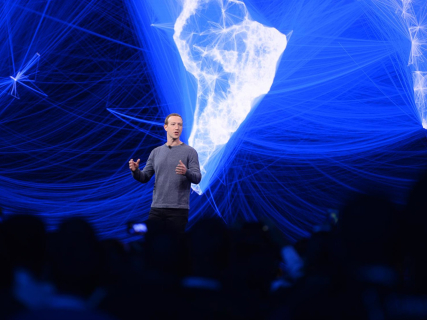

The debate about how far the race to develop artificial intelligence should go has opened up within the main technology companies. The CEO of Meta, Mark Zuckerberg, has rejected the need for a coordinated slowdown in the development of AI and has argued that the laboratories themselves have sufficient incentives to advance safely.
Zuckerberg's position comes after the CEO of Anthropic, Dario Amodei, called for a reduction in the pace at which the capabilities of artificial intelligence models are increasing. The proposal has received public support from the head of OpenAI, Sam Altman, and Elon Musk, of xAI, in a debate that has placed the safety of advanced systems at the center of the discussion.
In contrast to that position, Zuckerberg argues that each laboratory can decide for itself when it should slow down the training of a model to ensure its safety. The head of Meta also believes that competition among companies and legal responsibility constitute sufficient incentives to prevent developers from ignoring risks.
Meta defends advancing with its own controls
Zuckerberg has cited Meta's decision to delay the launch of its AI Muse agent to reinforce its security measures as an example. According to his approach, the company did not need the rest of the industry to previously adopt a similar decision, but acted on its own initiative.
The top executive of Meta has also pointed out that the company dedicates most of its computing capacity to products aimed at the current needs of users, rather than concentrating it on systems capable of enhancing their own capabilities. Its artificial intelligence division also uses independent evaluators in different areas, a practice that Zuckerberg believes should be extended to the rest of the industry.
For the executive, the ability of models to align with the goals of their users will become increasingly important. Zuckerberg argues that laboratories that do not pay attention to this issue may fall behind their competitors.
Amodei calls for a slowdown in the race
The position of Zuckerberg contrasts especially with that posed by Dario Amodei. The head of Anthropic has argued that the industry needs to slow down the development of the most advanced systems to allow security measures to evolve at the same pace as their capabilities.
Amodei has placed the main risk in the possibility that the systems reach autonomous improvement capabilities. His proposal includes greater external oversight of laboratories and common mechanisms to control certain risks associated with increasingly capable models.
Sam Altman has supported the need to align development with security measures, while Elon Musk has also joined the call. The debate, therefore, does not simply pit those who want to develop AI against those who want to stop it: the discussion revolves around the pace at which their capabilities should increase and who should set the limits.
Trump rejects a pause in the face of competition with China
The position of the U.S. Administration adds a geopolitical dimension to the debate. President Donald Trump has rejected calls to slow down the development of artificial intelligence and has downplayed the risks posed by some laboratory heads.
Trump argues that the United States already has protective mechanisms and has warned that imposing additional restrictions could harm the country's position against China. His argument aligns at this point with that of other tech executives who believe that a unilateral reduction in the U.S. pace could allow their competitors to advance more quickly.
The debate occurs as China develops its own models and tries to reduce the technological gap with the United States. Warnings about a potential U.S. slowdown have thus taken on a dimension that goes beyond the security of systems and also reaches the technological competition between the two powers.
A discussion that also affects the tech market
Calls to reduce the pace of development have already had repercussions in the markets. The stocks of companies linked to artificial intelligence and, especially, of chip manufacturers recorded declines after the public warnings from the heads of Anthropic, OpenAI, and xAI.
The reason is that a slowdown in the training of models could affect the demand for chips, data centers, and other services associated with the expansion of AI. At the same time, the growth in the use of existing models could maintain part of that demand even if the pace of creating new systems decreases.
The discussion also incorporates a regulatory issue. Amodei has raised the possibility that companies could coordinate certain security measures without exposing themselves to competition problems, while the chairman of the U.S. Federal Trade Commission, Andrew Ferguson, has expressed his reservations about granting antitrust exceptions to technology companies that intend to agree on a development pace.