
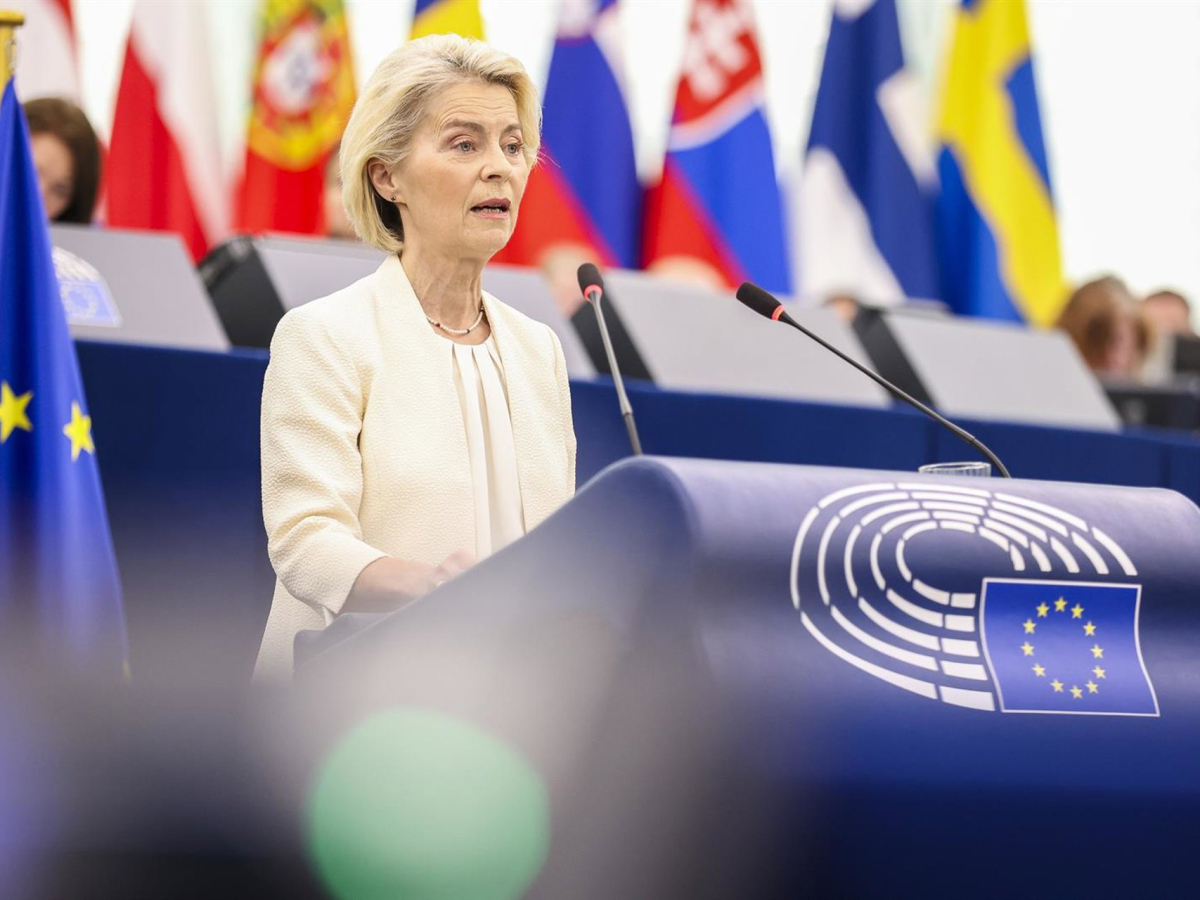
During her State of the Union address, the President of the European Commission, Ursula von der Leyen, has confirmed a revitalization of climate policies that the community executive will deploy. After a summer marked by fires across the European continent, Brussels perceives the expectations of citizens for these disasters not to become regular episodes during periods of extreme temperatures.
"The summer of truth," the German leader has defined it. During her speech, she announced the presentation in October of a new European framework to identify nearly a hundred of the most vulnerable territories. This measure will be accompanied by a Climate Insurance Alliance aimed at covering the existing gap in losses resulting from "uninsured disasters." "These have been the hottest summer months in history, but probably the coolest of the coming years," Von der Leyen expressed, in one of the main references of her speech to the climate emergency and the need to strengthen the European Union's capacity for adaptation.
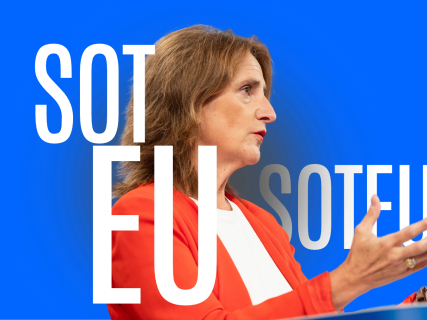
This is a battery of files and legislative initiatives that the Executive Vice President for a Clean Transition, Teresa Ribera, will take on, who has welcomed the proposals announced by the president. "It is about how to prepare daily life and business decisions to reduce that exposure to risk," she defended in the corridors of the European Parliament in Strasbourg.

Featured story
Von der Leyen asserts herself before the big tech of AI: "They will have to prove their safety"
5 minutes
In response to questions from DEMÓCRATA, the vice president explained that the goal of these measures is to provide the European response with "coherence, security, competitiveness, and the well-being of European citizens". Ribera has particularly focused on those economic sectors whose activity is more directly exposed to the effects of extreme weather phenomena. Among them, she pointed out the agricultural sector, one of the most affected by the fires that have ravaged various points of the continent this summer. "They cannot face the difficulty of harvesting being a constant due to extreme temperatures, excess water, or the inability to guarantee the quality of the soil where they plant," she noted.
Mitigating risk and preparing Europe
In the European Commission, they also focus on the existing gaps in European infrastructures, from the railway system to the capacity and effectiveness of electricity generation. The challenge, in this context, now lies in "coordinating our efforts" to facilitate a "much more effective response to the fires that unfortunately continue to plague us with increasing virulence."
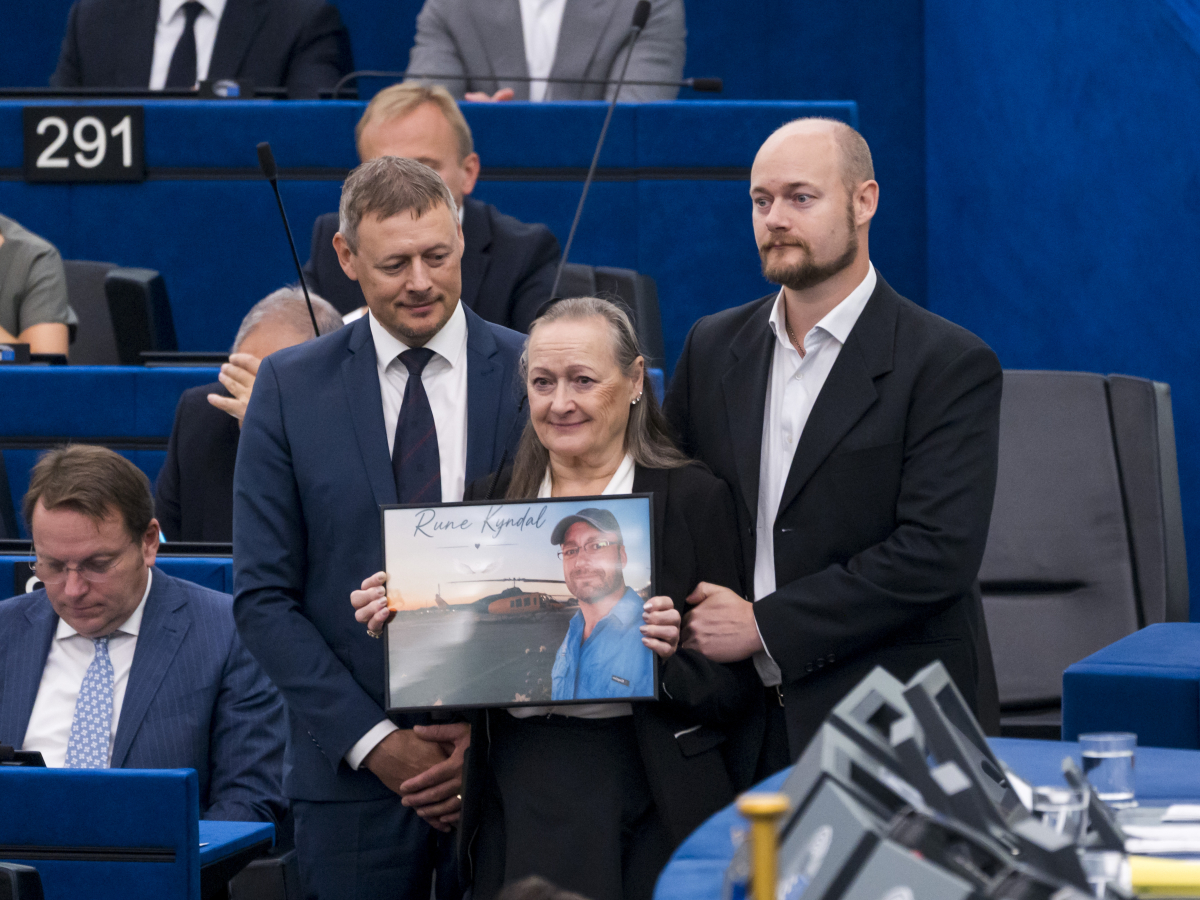
Ribera explains that this "collective learning," developed over the last few years as the impact of the climate crisis has become more evident, allows the European Union to strengthen its response in terms of civil protection and professionalization of emergency services. All of this also involves ensuring the provision of sufficient resources for the teams working on the ground. "It has been particularly emotional to remember a Danish pilot who died this summer in those campaigns to extinguish fires on European soil," the vice president has acknowledged.
The Commission's work will now focus on analyzing "how to build resilience." In Von der Leyen's team, work has been done in the days leading up to the speech around two axes: on one hand, the approach of mitigation, closer to the groups situated on the right of the European political spectrum; and, on the other, that of adaptation, defended by more progressive positions and which Ribera supports. "It is about how to work not only with scientists, academics, or historical databases, but also with the insurance sector," she has argued.
According to the person in charge of community competition, insurers have "a very certain and very precise knowledge of what has been happening in recent decades." From this area, she explained, they have been "years" pointing out the importance of understanding that "the only recipe is to reduce risk and prepare better for when it materializes."
The community executive thus insists on a dual course of action: reducing exposure to risk and improving response capacity when it materializes. "It is necessary to ensure that those activities that are susceptible to being insured are insured and how to prepare daily life and business decisions to reduce that exposure to risk," Ribera has pointed out.
Water, fires, and response capacity
Along with these measures, the European Commission will present a new European initiative on water. According to Von der Leyen, "water is precious for our industry and for our food security." The president has thus positioned the management of water resources as another area in which adaptation to climate change will have direct implications for the European economy. Currently, European pipes lose almost one in every four liters of water due to leaks, an inefficiency that adds pressure on a resource that is increasingly strategic for industry, agriculture, and the general public.
Similarly, Von der Leyen has sent a message to the co-legislators by asking them to formulate proposals, "including a future European Firefighting Fleet." The initiative includes a framework aimed at bringing together firefighters and European emergency services to formulate proposals on prevention, civil-military coordination, and operational capabilities in response to the intensification of wildfires.
The president has thus positioned the European response capacity to disasters as a matter that transcends national borders. The logic is to leverage the existing capabilities in the member states and improve coordination to respond to phenomena that, due to their scale, can exceed the resources available in a single territory.
Europe as a laboratory for adaptation
Brussels also seeks to position Europe as a leader in climate adaptation technologies, from the development of drought-resistant crops to flood prevention or low-energy cooling technologies. The approach connects climate policy with industrial and European competitiveness policy. Adaptation ceases to be solely a matter related to protection against the effects of climate change to also become an area of technological and economic development.
In parallel, the initiative of the European Plan against Heat Waves, also proposed by Von der Leyen, will be aimed at strengthening early warning systems, improving the preparedness of the healthcare system, and adapting urban environments to extreme temperatures. The plan also includes measures aimed at the most vulnerable groups, those who are more exposed to the effects of prolonged heat episodes.
The set of announcements thus outlines a second aspect of European climate policy. Alongside emission reductions, Brussels wants to strengthen the capacity of member states to anticipate, absorb, and manage the consequences of extreme phenomena.
After a summer marked by wildfires and record temperatures, the European Commission places resilience at the center of its agenda. The question is no longer just how much Europe can reduce its climate impact, but how it prepares its infrastructure, its productive sectors, its public services, and its citizens for a scenario of greater exposure to risk.