Draws for today Friday, October 9: schedules for Euromillions, Eurojackpot, Bonoloto, and Cuponazo

Euromillions offers a jackpot of 28 million euros and Eurojackpot reaches 120 million in a day that also includes Bonoloto and the Cuponazo of the ONCE

1 minute

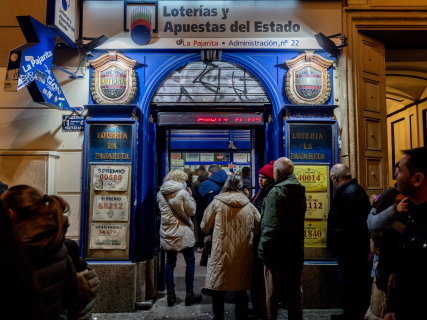
EuropaPress 7190192 gente comprando loteria sorteo extraordinario nino 29 diciembre 2029 madrid

EuropaPress 7190192 gente comprando loteria sorteo extraordinario nino 29 diciembre 2029 madrid

Add DEMÓCRATA to Google

Ask FREN

Published

Last updated

1 minute

Most read

The draws of today Friday, October 9 bring together four highlighted events: Euromillions, Eurojackpot, Bonoloto, and the Cuponazo of ONCE. The two European games concentrate the largest prizes of the day, with 28 million and 120 million euros, respectively.

The Eurojackpot reaches its maximum jackpot of 120 million euros, while Euromillions puts 28 million at stake. Bonoloto completes the offer of State Lotteries and Bets, and the Cuponazo offers a main prize of up to 6 million euros.

The results will be published after each draw. The winning combinations and the winning numbers will be available when the operators release the official data.

Schedules and prizes of today's draws

  • Eurojackpot: draw on Friday, with a jackpot of 120 million euros.
  • Euromillions: 20:30 hours, with a jackpot of 28 million euros.
  • Bonoloto: 21:00 hours.
  • Cuponazo of ONCE: draw on Friday, with a main prize of up to 6 million euros.

Where to check the results

The official results will be available on the pages of State Lotteries and Bets and JuegosONCE. In the individual pieces, the combinations and the winning numbers will be updated when they are published.

More key points, information and questions with FREN

AI-GENERATED CONTENT

What are the legal requirements to participate in Euromillions, Eurojackpot, Bonoloto, and Cuponazo draws in Spain?

The legal requirements to participate in Euromillions, Eurojackpot, Bonoloto, and Cuponazo in Spain are very similar because all these games are integrated within the general framework of the Law 13/2011, on the regulation of gambling and the specific regulations of State Lotteries and Bets (SELAE) and ONCE. Below, I group them into practical blocks.

1. Minimum age
  • The basic condition is to be over 18 years old.
  • The prohibition for minors applies in all channels: physical sales points, SELAE websites and apps (Euromillions, Bonoloto, Eurojackpot), and ONCE channels (Cuponazo and other products).
  • Operators are required to verify age, especially in online gambling and when paying out significant prizes.
2. Nationality and residence
  • State gambling regulations and game rules generally do not require Spanish nationality or residence to purchase a ticket or coupon in person. An adult tourist can participate if they buy at an authorized sales point in Spain.
  • In online gambling, additional conditions apply:
    • Registration as a user on the operator's official website or app.
    • Identification with verifiable personal data (official document, bank account, etc.).
    • Compliance with territorial and technical conditions (for example, service availability in the country from which the game is played).
3. Documentation and identification
  • For ordinary in-person purchase (a Bonoloto ticket or a Cuponazo coupon), normally showing an ID is not required at the time of playing.
  • However, to claim prizes:
    • For high prizes, it is common to require ID card, NIE, or passport and bank details.
    • ONCE and SELAE may verify age, identity, and that the winner is not subject to gambling access prohibitions.
  • In the online channel, identification is mandatory from registration, with electronic verification of the provided data.
4. Authorized gambling channels
  • Euromillions, Eurojackpot, and Bonoloto:
    • Can only be played through the official SELAE network: lottery administrations, mixed offices, and other authorized sales points.
    • On the internet, exclusively through the official SELAE portals and applications.
  • ONCE's Cuponazo:
    • Sold through ONCE sellers, collaborating establishments, and digital channels or other media officially enabled by ONCE.
  • Playing through unauthorized websites or intermediaries places one outside the legal framework of Law 13/2011.
5. Persons prohibited from playing

Besides minors, Law 13/2011 and SELAE and ONCE regulations provide additional subjective restrictions. Generally, the following cannot participate:

  • Persons included in the General Register of Gambling Access Prohibitions (RGIAJ), whether by administrative or judicial resolution or by self-requested prohibition (general self-exclusion).
  • Persons subject to a final judicial prohibition from gambling access.
  • Persons who have self-excluded specifically in SELAE or ONCE online gambling systems during the suspension period.
  • Certain persons with legally declared incapacity by judicial decision, under the terms set by civil and gambling legislation.
6. Employees and persons linked to operators

SELAE's contractual conditions and ONCE's regulations include incompatibilities to avoid conflicts of interest:

  • In SELAE, participation is prohibited, among others, for:
    • Shareholders, directors, and staff directly involved in the design, management, or operation of the games.
    • In certain cases, their spouses or cohabitants and their first-degree ascendants and descendants in games managed by the operator.
  • In ONCE, equivalent restrictions exist for:
    • Those involved in the organization of draws, scrutiny, control, or management of the game.
    • Certain relatives or cohabitants, as provided by their regulations.
  • These prohibitions do not automatically extend to all public administration staff or any employee of a sales point, but only to those with relevant links to the operation or control of the game.
7. Reference regulations
  • Law 13/2011, of May 27, on the regulation of gambling, which sets the basic framework, participation prohibitions, and the RGIAJ regime.
  • Specific rules for each SELAE game (Euromillions, Eurojackpot, Bonoloto) and their contracting conditions for the online channel.
  • Regulations and agreements governing ONCE lotteries, including Cuponazo and the sales and prize payment regime.

In practice, to legally play Euromillions, Eurojackpot, Bonoloto, or Cuponazo, it is enough to be over 18 years old, not be listed in prohibition registers or incompatible categories (linked employees, etc.), and to play only through official channels, accepting the particular rules of each product.

Could you explain in more detail how the General Register of Gambling Access Prohibitions works and how to request self-exclusion? What legal differences exist between playing these draws at a physical sales point and playing online from Spain? How are Euromillions, Eurojackpot, Bonoloto, and Cuponazo prizes taxed in Spain and what withholdings apply?

What laws regulate gambling and lotteries in Spain and which bodies supervise these draws?

In Spain, the regulation of gambling and lotteries is based on a set of state laws complemented by regional regulations and a network of regulatory and control bodies. Broadly speaking, the State regulates and supervises gambling of a state-wide scope (especially online gambling and major lotteries), while autonomous communities handle in-person gambling (casinos, bingo halls, gaming salons, bets in physical locations).

Key laws on gambling and lotteries

  • Law 13/2011, of May 27, on the regulation of gambling (BOE), amended by Law 23/2022 (BOE). It is the sector's core regulation:
    • Regulates state-wide gambling activities, with special attention to online gambling (electronic, computer, telematic, and interactive means).
    • Establishes the licensing regime (general licenses, specific licenses, and authorizations), gambling registers (licenses, prohibited persons, linked persons), and a system of infractions and sanctions.
    • Strengthens protection of participants and minors, "responsible gambling" policies, and prevention of fraud, money laundering, and manipulation of sports competitions.
    • Exclusively reserves state-wide lottery activities to the State Society of Lotteries and Bets (SELAE) and ONCE, subject to strict public control.
  • Royal Decree 1614/2011, of November 14 (BOE), development of Law 13/2011 regarding licenses, authorizations, and registers:
    • Details procedures to grant general and specific licenses to state-wide gambling operators.
    • Regulates the operation of the General Register of Gambling Licenses and the Register of Gambling Access Prohibitions.
  • Royal Decree 1613/2011, of November 14 (BOE), also developing Law 13/2011:
    • Sets the technical requirements that gambling systems must meet, including traceability and platform security.
  • Royal Decree 958/2020, of November 3, on commercial communications of gambling activities (BOE), partially amended by Royal Decree 176/2023:
    • Regulates advertising, sponsorship, and promotion of gambling activities, imposing strong restrictions (especially on schedules, content, and use of prominent characters) to protect minors and at-risk groups.
  • Royal Decree-law 16/1977, of February 25 (BOE), still partially in force:
    • Decriminalized and systematically regulated games of chance, betting, and wagers, including their criminal, administrative, and tax aspects.
    • Remains a fundamental reference, especially in tax matters, although many provisions have been modified or superseded by later laws (including Law 13/2011).
  • Historical sectoral laws and regulations, partially in force:
    • Law 34/1987, on the sanctioning power of the Administration in games of chance and betting (BOE), largely integrated today into Law 13/2011.
    • Royal Decree 2110/1998, on recreational and gambling machines (BOE), and specific regulations such as the Bingo game regulation (Order of January 9, 1979, and successive amendments).
    • Numerous ministerial orders from 2011 approving the basic regulation of specific types of games (sports betting, horse racing, bingo, etc.).
  • Specific regulations for ONCE lotteries:
    • Law 13/2011 itself and its additional provision on ONCE, along with Royal Decree 358/1991 and successive resolutions of the State Secretariat for Social Rights approving and modifying the regulations of ONCE's Coupon, Instant Lottery, and Active Game (for example, the resolutions of April 4, 2023, instant lottery and Coupon).

Who supervises and controls gambling and lotteries?

a) State-wide and online gambling
  • Directorate General for the Regulation of Gambling (DGOJ), currently part of the Ministry of Social Rights, Consumer Affairs, and 2030 Agenda:
    • It is the state gambling regulatory authority under Law 13/2011.
    • Grants licenses, maintains registers, approves technical systems, inspects, and sanctions state-wide operators.
    • Fights illegal gambling (including that offered from abroad targeting Spain) and coordinates safer gambling policies.
  • National Commission on Markets and Competition (CNMC):
    • According to Law 13/2011, exercises sanctioning powers when it comes to audiovisual communication service providers advertising gambling in violation of rules.
b) State-wide lotteries (SELAE and ONCE)
  • SELAE (State Society of Lotteries and Bets, S.M.E.):
    • It is the public operator designated for National Lottery, La Primitiva, Bonoloto, Euromillions, Quinielas, etc.
    • Its activity is governed by Law 13/2011 and its specific regulations; it is subject to public control by the State (Treasury and economic-financial control bodies).
  • ONCE:
    • A public law corporation with a specific reservation for certain lottery modalities (Coupon, Instant Lottery, Active Game).
    • Law 13/2011 assigns control over its games to the ONCE Protectorate Council and the State Secretariat for Social Rights, which approve and publish the regulations of its products.
c) In-person gambling of regional scope
  • Following Royal Decree-law 16/1977 and multiple royal decrees transferring functions (casinos, games, and bets) to autonomous communities, the general rule is:
    • Autonomous communities regulate and authorize casinos, bingo halls, gaming salons, and in-person bets in their territory, and exercise inspection and sanction functions over these establishments.
    • The State retains normative and supervisory competence over state-wide gambling and bets and major state lotteries.

In summary, Law 13/2011 and its regulatory developments constitute today the core of the regulation of state-wide gambling and lotteries, while autonomous communities complete the framework by regulating and supervising in-person gambling in their territories.

Can you explain in more detail what types of licenses and authorizations Law 13/2011 provides for online gambling operators? How do autonomous communities regulate casinos and gaming salons and how do their rules differ from state regulation? What specific limits does the regulation impose on advertising sports bets and online casinos on television and social media?

What is the difference between Euromillions and Eurojackpot draws regarding their operation and prizes?

Euromillions and Eurojackpot are two major popular transnational European lotteries, but they have clear differences in their operation, bet structure, and prize distribution. Below is a general comparison to better understand how each is played and what can be expected from their jackpots and prize categories.

First, the geographic scope and organization differ. Euromillions was launched in 2004 and is managed by lottery organizations from several European countries, including Spain, France, and the United Kingdom, among others. Eurojackpot started in 2012 and is also organized by various European countries, with participation growing over the years. Both are internationally coordinated games but do not share prize pools or common rules: each is an independent game with its own structure.

Regarding the basic bet structure, in Euromillions the player chooses a combination of main numbers and stars; in Eurojackpot, main numbers and additional numbers (sometimes called "extra numbers" or similar, depending on the country) are also selected. The general idea is similar: to match a combination of numbers from a main drum and a secondary drum. The difference lies in the specific ranges and quantities of numbers available in each drum, which affects the probability of winning the top prize. Although exact details may vary if rules are updated, broadly speaking, the number ranges in Euromillions and Eurojackpot are not identical, so the odds of matching the full combination and secondary prize odds differ.

As for the draw frequency, Euromillions is held several times a week (typically two weekly draws), while Eurojackpot is also drawn regularly multiple times a week, although each game's specific calendar may have changed over time. For a player, this translates into more or fewer opportunities to participate and a different dynamic in jackpot accumulation.

A very relevant difference is the jackpot structure and maximum limits. Both games operate with accumulated jackpots: if no one matches the winning combination for the first prize, the jackpot rolls over to the next draw. However, each game has its own maximum jackpot limit and rules on what happens when that limit is reached. In Euromillions, the maximum allowed jackpot is higher than in Eurojackpot; once that ceiling is reached, excess revenue is distributed to lower prize categories or a limited number of draws maintain that maximum before the fund is distributed if no winners appear. Eurojackpot also has a cap on the first prize amount, usually lower than Euromillions, and when that maximum is reached, additional money is allocated according to the game's rules to other lower prize categories.

Another differentiating aspect is the number of prize categories and the percentage of revenue allocated to each. Both Euromillions and Eurojackpot distribute the prize pool among multiple categories (from matching all main and additional numbers to matching only part of them). However, the total number of categories and the percentage of revenue assigned to each category are not exactly the same. Practically, this means the frequency of winning smaller prizes and the approximate amounts that can be won in those categories vary between the games. Generally, Eurojackpot is designed to offer a slightly different prize probability than Euromillions, with more emphasis on certain intermediate tiers, while Euromillions stands out for its higher maximum jackpots.

From the player's perspective, another practical difference may be the price per bet and the way of playing in each specific country (for example, whether single and multiple bets are allowed, if reduced systems exist, or if national add-ons are offered alongside the European draw). These elements not only differ between Euromillions and Eurojackpot but also among participating countries within the same game, as each national operator may add complementary draws linked to the base ticket of the European game.

In summary, Euromillions and Eurojackpot share the general idea of a large European lottery with accumulated jackpots and a combination of two groups of numbers, but they differ in the number ranges and exact draw mechanics, in the height of maximum jackpots, in the structure and number of prize categories, and in certain practical aspects such as bet price and national add-ons. These differences translate into different odds of winning each type of prize and distinct jackpot profiles.

Play

Test your knowledge with FREN!

How much do you know about this topic? Answer the following 3 questions.

How much money is at stake in the Eurojackpot maximum jackpot in the draw on Friday, October 9?

Question 1 of 3

At what time is the Euromillions draw held today, Friday, October 9?

Question 2 of 3

Where can the official results of today's draws be checked?

Question 3 of 3