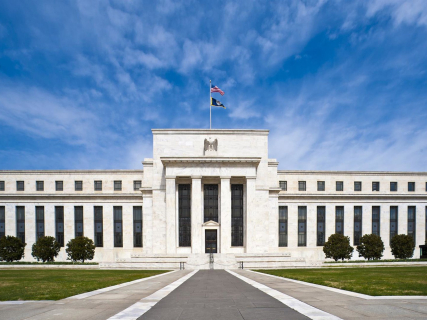

The Federal Reserve of the United States (Fed) notes in its latest edition of the "Beige Book" that the country's economy advanced "modestly" since the beginning of July, emphasizing that the push from demand linked to data centers has been one of the engines of this recent growth.
According to the report, in 10 of the 12 regions into which the central bank divides the U.S. territory, "modest" increases in activity were recorded, while in the remaining two, the level of activity remained stable, with no significant changes.
The Fed details that household consumption showed a "slight" improvement, although spending on high-end products became more sensitive to price variations despite remaining "robust." Meanwhile, industrial activity rebounded in most districts, largely driven by orders linked to defense and data centers.
The "Beige Book" also identifies several factors that are hindering vehicle sales, such as rising fuel costs, decreased consumer confidence, and higher refinancing costs. However, these pressures did not affect air transport, which continued to reflect the strength of tourism and a high volume of travelers.
In the financial services sector, activity in the United States increased "slightly to modestly," supported by the fact that the pace of lending remained "robust" in most of the country, according to the document.
Construction showed a "mixed" performance: residential building declined, while non-residential construction generally advanced. In several areas with a strong presence of 'data centers,' projects linked to these infrastructures concentrated a good part of the dynamism of the construction sector.
On the agricultural front, conditions showed a "slight improvement," although, overall, they continued to be "complicated." The report describes a scenario in which the situation of livestock is "solid," but that of farmers remains "difficult," generating tensions within the primary sector itself.
Employment, prices, and economic outlook
Regarding the labor market, employment advanced "very slightly" across the country during the analyzed period, while prices accelerated moderately in most districts, according to the Fed.
Looking at the coming months, the forecasts collected in the report are "positive," although confidence varies by sector. The business contacts consulted by the Federal Reserve draw attention to the high uncertainty generated by the evolution of the energy bill, government policy decisions, and international conflicts, factors that could condition the course of the U.S. economy in the short and medium term.