
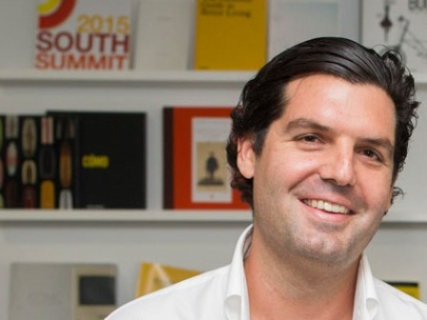
Alejandro Betancourt is back in the spotlight. The Venezuelan businessman, known in Spain for controlling the eyewear brand Hawkers, would have regained a relevant position in Caracas as an informal advisor to Delcy Rodríguez for the reactivation of the oil business, mining, and the restructuring of Venezuelan debt.
His role has not been officially announced by the Venezuelan Government. However, various reports place Betancourt as an intermediary between the Administration of Donald Trump and the new power led by Delcy Rodríguez, precisely while the Spanish National Court keeps an investigation against him open for alleged money laundering and tax crime.
The paradox explains the renewed interest in Alejandro Betancourt: the businessman under investigation in Spain and Switzerland is regaining influence in the same oil sector from which the money being analyzed by the judiciary would originate.
Who is Alejandro Betancourt
Leopoldo Alejandro Betancourt López was born in Caracas in 1980. He is an economist and businessman and became one of the most recognized faces of the so-called "bolichicos", the term used in Venezuela to refer to young entrepreneurs who amassed great fortunes through public contracts during the governments of Hugo Chávez and Nicolás Maduro.
Betancourt founded, along with Pedro Trebbau and other partners, Derwick Associates, a company that, despite its limited initial experience in the energy sector, obtained significant contracts to build thermoelectric plants during the declared electrical emergency in Venezuela.
According to various journalistic investigations, Derwick secured at least 11 public contracts without bidding. Estimates of their value range, depending on the included projects, between 2 billion and 5 billion dollars.
Transparencia Venezuela has reported that these contracts recorded million-dollar cost overruns and that several of the facilities did not reach the promised electrical capacity. Betancourt and his business environment have repeatedly denied the corruption allegations.
After becoming wealthy in Venezuela, the businessman moved a good part of his investments abroad. Reuters documented in 2021 that he had allocated more than 300 million dollars to companies and properties in different countries.
The owner of Hawkers and his businesses in Spain
In Spain, Alejandro Betancourt is mainly known for his relationship with Hawkers. In 2016, his investment group O’Hara Administration participated in a funding round of 50 million euros that allowed the Spanish sunglasses company to accelerate its international expansion.
Betancourt subsequently went on to chair Hawkers and to control a majority stake through his corporate structure.
His business presence in Spain is not limited to sunglasses. He has also been linked to Auro New Transport, one of the main owners of VTC licenses, and has maintained investments in energy, banking, technology companies, and real estate.
Among his most well-known properties is the El Alamín estate in Toledo, which has a castle and thousands of hectares. The acquisition of properties and Spanish companies is part of the money trail that seeks to reconstruct the judicial investigation.
What is Alejandro Betancourt's relationship with Delcy Rodríguez
The current relationship between Alejandro Betancourt and Delcy Rodríguez focuses on oil and the opening of Venezuela to new international investors.
According to information published in recent weeks, Betancourt would have returned to Caracas to informally advise Rodríguez on three strategic issues: the recovery of oil production, attracting U.S. investments, and the reactivation of mining projects and the restructuring of Venezuelan debt.
The Caracas Government has not confirmed that Betancourt holds an official position. Therefore, he cannot present himself as a formal advisor to Delcy Rodríguez. His influence would develop through business contacts, political intermediation, and participation in private oil companies.
Betancourt would have traveled to Venezuela several times during June and July 2026. El País has documented his arrival in Caracas on June 27 on a private plane from Palm Beach and other subsequent movements surrounded by discretion.
One of the flights on July 22 also presents contradictory records: an initial passenger list included Betancourt, family members, and Spanish businessmen, while another documentation of the same route removed their names. This change has fueled doubts about attempts to keep his movements hidden.
The bridge between Delcy Rodríguez and Donald Trump
The most novel element of Alejandro Betancourt's reappearance is his role as a possible link between Delcy Rodríguez and the U.S. Administration of Donald Trump.
Mauricio Claver-Carone, informal emissary for Venezuela of U.S. Secretary of State Marco Rubio, acknowledged that U.S. officials used Betancourt as an intermediary. The businessman knows the workings of the Venezuelan oil sector, but he also maintains important business and political contacts in the United States.
His role would consist of facilitating understanding between Washington and Caracas to recover oil production, attract U.S. capital, and ensure that certain operations can be carried out within the sanctions regime.
This intermediation would also explain the support that Betancourt would have found in Delcy Rodríguez's environment. The businessman would provide a dual connection: access to Venezuelan oil contracts and the ability to open doors in the United States.
His influence extends to NABEP, considered one of the largest private oil companies in Venezuela. Betancourt would already be its main shareholder, and a party close to the businessman would have acquired for about 300 million dollars the minority stake held by the American Harry Sargeant III.
He is also linked to projects of Petrocedeño, Petrocabimas, and Petrosur, in addition to operations in various oil fields in the state of Zulia.
What Judge Santiago Pedraz is Investigating
In Spain, Judge Santiago Pedraz, head of the Central Investigating Court number 5 of the National Court, is investigating Alejandro Betancourt and five other Venezuelan citizens for alleged money laundering and tax offenses.
The case originates from a request for cooperation sent in September 2024 by the Zurich Prosecutor's Office. Swiss authorities were investigating the so-called "Operation Bolívar," related to the alleged laundering of funds from PDVSA and the National Treasury Office of Venezuela.
Anti-corruption claims that the investigated individuals would have participated in the introduction into Europe of money from an operation carried out in 2012 between PDVSA and the company Administradora Atlantic.
The loan was granted in bolívares, but it had to be repaid in dollars using the official Venezuelan exchange rate. The enormous difference between the official exchange rate and the real value of the currency would have allowed for a multibillion-dollar profit.
The investigation estimates the volume of the allegedly fraudulent operation at up to 4.850 billion dollars. According to the investigators' thesis, around 42 million dollars were paid in bribes to three Venezuelan officials to facilitate it.
The National Court is now trying to determine whether part of the money ended up being invested in Spain through purchases of high-value real estate, acquisitions of shares and business stakes, creation of companies, transfers to European accounts, and investments in Spanish companies.
The existence of these operations does not, by itself, prove that the funds were illicit. That is precisely the issue that the instruction will need to clarify.
Why Pedraz shelved the case and had to reopen it
Pedraz provisionally shelved the investigation in March 2026. The magistrate considered that the Venezuelan justice system had already examined the loan between PDVSA and Administradora Atlantic and had concluded that the operation was legal.
His reasoning was that if Venezuela had ruled out the existence of the crime from which the money allegedly originated, a money laundering accusation in Spain could not be sustained.
The Anti-Corruption Prosecutor's Office appealed the shelving. It argued that the Venezuelan investigation had not examined the same facts and that essential proceedings remained, including statements from individuals convicted in the United States for related operations.
The Criminal Chamber of the National Court sided with the Prosecutor's Office and ordered the procedure to be reopened. According to the magistrates, the specific acts of corruption investigated in Spain had not been analyzed in the Venezuelan resolution used by Pedraz to close the case.
The investigation is therefore once again active. Alejandro Betancourt remains under investigation, but he has not been convicted in Spain for these facts.
Who accompanies Betancourt in the investigation
In addition to Alejandro Betancourt, the case includes his cousin and partner Pedro Trebbau, businessman Francisco Convit, and three other people from his family and business environment.
The Spanish investigations are related to previous investigations carried out in Switzerland and the United States. In this latter country, businessmen and former Venezuelan officials were convicted for participating in operations aimed at obtaining benefits through PDVSA's foreign exchange system.
Among the convicted are former officials or advisors of the Venezuelan oil company. Betancourt, however, was not convicted in those proceedings, and the accusations now being analyzed in Spain must be proven independently.
The return to power of the investigated businessman
The return of Alejandro Betancourt to Caracas shows to what extent oil, diplomacy, and large capital intersect in the new Venezuelan stage.
Delcy Rodríguez needs to increase production, attract investments, and normalize the economic relationship with the United States. Washington seeks to access Venezuelan energy and mineral resources without completely handing over political control of the process to Caracas.
Betancourt appears amid both interests: he has oil businesses in Venezuela, relationships with American investors, and experience moving capital between different jurisdictions.
His new closeness to power does not eliminate the open investigations. On the contrary, it raises the main question of the case: how a businessman whose wealth and operations with PDVSA are still under judicial scrutiny has managed to become a useful piece again for both Delcy Rodríguez and representatives of the Trump Administration.