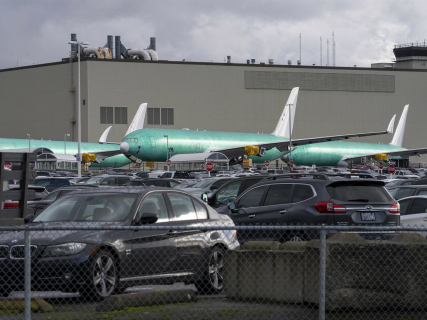

A technical committee of the Federal Aviation Administration (FAA) has concluded that a software failure detected in the Boeing 737 Max does not pose a danger to operational safety. This ruling clears a key obstacle in the certification process for the larger version of this family of single-aisle aircraft, the 737 Max 10.
As the agency explained in an official note, "pilots maintain full control of the aircraft and the indications for the flight crew are clear and unequivocal." With this assessment, the aviation authority supports that the incident can be adequately managed through procedures and training.
The FAA review board met specifically to analyze the behavior of the system when this software problem occurs. The failure can appear in maneuvers where the pilot decides to abort a landing that has already begun, causing the autopilot to switch to a more basic automation mode for pitch control. This change implies an increase in the workload for the crew compared to the standard operation of the system.
In addition, a FAA official indicated to 'Bloomberg' that Boeing plans to publish a bulletin directed at airlines with precise instructions on how to proceed in case this failure occurs. At the same time, the agency will issue a special airworthiness information bulletin for U.S. companies and international regulators, so that everyone has the same information and knows the content of the document prepared by Boeing.
The 737 Max 10 is the highest capacity version of the range, with up to 230 seats, and its main rival in the market is the Airbus A321neo. The model has faced several years of delays in its certification. Compared to the aircraft it is set to replace, it offers approximately 30% lower fuel consumption, while its greater number of seats allows for a reduction in unit costs of around 20%.
The U.S. authority had already granted certification to the Max 7 in August, the smallest variant of the family, which also incorporates the software affected by this failure, thus reinforcing the FAA's criteria on the safety of the fleet.