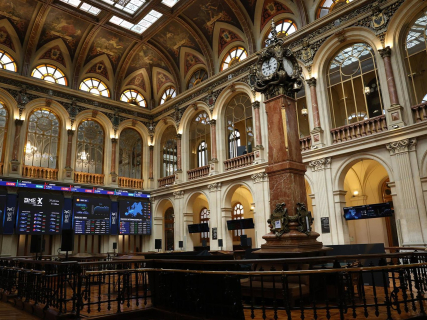
The Ibex loses the 20,000 points with oil above 90 dollars

The selective falls by 0.23%, down to 19,974 points, on a day marked by the new escalation between the United States and Iran. Repsol leads the increases, while Solaria, IAG, and Indra head the losses.

4 minutes

fotonoticia 20260831180237 1920

fotonoticia 20260831180237 1920

Add DEMÓCRATA to Google

Ask FREN

Published

Last updated

4 minutes

Most read

The Ibex 35 has started the week with a drop of 0.23%, down to 19,974 points, and is again positioned below the barrier of 20,000 units. The military escalation between the United States and Iran has once again raised geopolitical risk and pushed oil above 90 dollars.

The Spanish index has performed better than some of the main stock exchanges on the continent, but it has not been able to maintain the 20,000 points. Repsol has stood out as the most bullish stock of the day, while the largest declines have been concentrated in Solaria, IAG, and Indra.

Repsol leads the Ibex with Brent above 90 dollars

Repsol has advanced by 2.44%, the largest increase of the entire index, coinciding with a new rise in crude prices.

The barrel of Brent, the benchmark in Europe, rose 2.5%, up to 90.35 dollars, at the close of European stock exchanges. The West Texas Intermediate in the United States advanced by 2.18%, up to 85.25 dollars.

The movement comes after new clashes between Washington and Tehran over the weekend. The United States has reported an operation against two rocket launchers of the Iranian Revolutionary Guard located on Larek Island that, according to the U.S. version, were being prepared to deploy mines in the Strait of Hormuz.

The U.S. Central Command later confirmed a "limited and precise action" against Iranian units that, it claims, posed a threat to navigation.

Iran responded with attacks against the Rey Huseín and Al Azraq air bases in Jordan, where it claims to have hit positions related to U.S. fighter jets.

For the small shareholder of Repsol, more expensive oil can improve the prospects of certain businesses linked to hydrocarbon production. The risk arises if the increase in energy prices persists for months and ends up fueling inflation and interest rates again.

Telefónica and Cellnex resist the declines

Alongside Repsol, Cellnex has risen by 0.91%, Enagás by 0.78%, Telefónica by 0.72%, and Logista by 0.61%.

Telefónica thus manages to advance in a negative session for the overall market. For its shareholders, the references with greater potential remain in cash generation, debt, and the evolution of shareholder remuneration, especially in a scenario of high yields in the bond market.

The behavior of Enagás coincides, moreover, with a day in which energy again occupies the center of attention of investors due to the evolution of the conflict in the Middle East.

Solaria, IAG, and Indra lead the declines

On the opposite side, Solaria has been the worst stock of the Ibex, with a drop of 2.53%, followed by IAG (-2.11%), Indra (-2.08%), Sacyr (-1.4%), and ACS (-1.26%).

The decline of IAG occurs precisely on a day of strong oil price increase. Fuel represents one of the relevant costs for airlines, so a sustained rise in crude oil is a particularly sensitive reference for the sector.

Indra also corrects after the significant revaluations accumulated during the year. The market continues to follow the company's ability to execute its large order book and translate it into revenues and profits.

Jackson Hole reinforces doubts about rates

The other major reference for investors remains U.S. monetary policy after the intervention of the Federal Reserve Chairman, Kevin Warsh, in Jackson Hole.

His speech has reinforced the possibility that the Fed may have to raise rates again if inflation does not continue to approach the 2% target.

The scenario is particularly relevant after the new increase in oil prices. If the energy spike is again passed on to prices, the Federal Reserve could have less room to relax financial conditions.

For the stock market, higher rates for a longer time imply higher financing costs for companies and families and increase the relative attractiveness of fixed income compared to equities.

The Euribor approaches 3% again

In Spain, the twelve-month Euribor closed August at 2.952%, according to preliminary data, pending official confirmation from the Bank of Spain.

This is its highest level since August 2024, when it stood at 3.169%.

The evolution of this indicator directly affects households with variable mortgages when it comes time to review their payments, but it also provides a signal about the general financing conditions in the eurozone.

The United States strengthens its oil bet in Venezuela

During the weekend, an agreement from the United States to obtain majority control of one-fifth of Venezuela's oil reserves has also been made known.

The strategy aims to increase the available reserves for the United States and contribute to reducing the cost of fuels, although the recovery of Venezuelan production requires significant investments in facilities and new infrastructures.

The analyst from XTB, Javier Cabrera, has warned that this process needs time, precisely when Donald Trump faces the midterm elections in November.

Europe mostly closes in red

The drop of the Ibex has been lower than that recorded by some of the main European markets.

The German DAX has lost 1.17% and the French CAC 40 has lost 0.79%, while Milan has given up 0.01%. London has been the exception, with an increase of 0.29%.

In fixed income, the yield of the Spanish ten-year bond has advanced to 3.776%, placing the risk premium against the German bond at 44.93 basis points.

The euro has appreciated by 0.3% against the dollar, up to 1.162 dollars per euro.

Gold remained practically flat around 4,450 dollars per ounce, while bitcoin retreated to the area of 78,500 dollars.

More key points, information and questions with FREN

AI-GENERATED CONTENT

What is the status of the Spanish regulation on hydrocarbon investments following the rise in oil prices?

Spanish regulation of investments in hydrocarbons (oil and gas) has not been reopened to new explorations following the recent rise in crude prices; on the contrary, the structural framework remains restrictive for new fossil investments, while the novelties after the energy crisis focus on fiscal and market measures to manage prices and supply security, and on adapting the system to renewable gas and hydrogen.

1. Basic framework: hydrocarbon law and climate shift

The general regime remains anchored in Law 34/1998, of October 7, on the hydrocarbon sector and its reforms, especially Law 8/2015, which introduces tax and non-tax measures linked to exploration, research, and exploitation of hydrocarbons, and enables the organized gas market developed by Royal Decree 984/2015 on the organized market and access to gas facilities.

Over this framework overlays Law 7/2021, on climate change and energy transition, which prevents the granting of new exploration, research, and exploitation titles for hydrocarbons and conditions the continuity of existing ones. This law is being actively applied:

  • Order TED/593/2025 declares expired by lapse the research permits "Ebro-B", "Ebro-C", "Ebro-D" and "Ebro-E", explicitly citing Law 7/2021 alongside Law 34/1998 and the hydrocarbon regulation.
  • In the Basque Country, an order from July 2026 extinguishes the research permits "Lore", "Landare" and "Sustraia", indicating that Law 7/2021 has substantially altered the legal framework by preventing new hydrocarbon titles and limiting the viability of moving to exploitation phases.

At the same time, the safety of marine operations remains regulated by Royal Decree-Law 16/2017 and its development through Royal Decree 1339/2018, which strengthen technical, economic, and environmental liability requirements for exploration and exploitation in the marine environment.

2. Recent measures due to the Middle East crisis and oil price rise

The rise in oil linked to the war in Iran and the Middle East crisis has mainly generated temporary price and tax regulations, not a shift towards pro-fossil investment:

  • The Government has approved a Comprehensive Response Plan to the Middle East Crisis, articulated in a royal decree-law mobilizing about 5 billion euros and containing 80 measures, as the president explained in March 2026. The decree is being processed as a bill for the Comprehensive Response Plan to the Middle East Crisis (121/000091), with an extended amendment deadline until 9-2-2026.
  • Another royal decree-law 4/2024 extending fiscal, energy, and social measures (121/000032) is also being processed as a bill, likewise with amendments open until 9-2-2026. These texts include extensions and adjustments in energy tax measures but do not reopen hydrocarbon permits.
  • Royal Decree-Law 9/2024, with economic and tax measures affecting the special hydrocarbon tax (for example, to improve fraud control in diesel), was validated but ultimately rejected in Congress, concluding its processing.
  • In parallel, the Government has adopted temporary reductions of the VAT on gasoline and diesel and the special hydrocarbon tax to cushion the impact of the oil price rise, as official notes and the press report. These measures are clearly emergency responses, without changing the upstream investment framework.
  • The Directorate General for Energy Policy and Mines has set reference prices to calculate the value of gas, oil, and condensate extraction for 2026 (Resolution of July 28, 2026), which adjusts the base of certain levies but does not alter restrictions on new investments.

3. Gas, storage, and transition to renewable gases

In the gas field, economic regulation of networks and infrastructures continues to deepen:

  • Royal Decree 1184/2020 and successive orders (TED/1072/2023, TED/1013/2024, TED/1062/2025, etc.) establish methodologies and fees for basic underground storage and gas system charges, with public hearings and periodic reviews.
  • The CNMC has been setting and reviewing the regulated remuneration for gas transport, regasification, and distribution, applying Law 18/2014 and Law 34/1998 itself, seeking stability for infrastructure investments but with a decarbonization horizon.

However, the political and regulatory emphasis shifts towards renewable gases and hydrogen:

  • The Ministry has opened a prior consultation to transpose the new EU Directive on gas, renewable gases, and hydrogen markets, with the explicit goal of updating a 1998 hydrocarbon law and adapting regulations to the integration of decarbonized gases.
  • In January 2026, the Vice President for Ecological Transition announced a hydrogen draft bill to create a national hydrogen system, a new regulated market, and a stable investment framework in renewable gases, accompanied by royal decrees of aid (at least 465 million euros) for renewable hydrogen production and industrial decarbonization.

4. Political-regulatory balance

In summary, after the oil price rise, the core of Spanish regulation:

  • Does not reopen the door to new investments in exploration and production of fossil hydrocarbons, due to the validity of Law 7/2021 and the progressive extinction of permits.
  • Focuses on temporary fiscal measures, release of strategic reserves, and adjustments of tolls and fees to cushion the price shock and guarantee supply.
  • Orients the substantive regulatory processing towards the adaptation of the gas sector to renewable gases and hydrogen, seeking to send clear regulatory signals to redirect energy investment towards decarbonized technologies.

The result is a framework in which additional fossil investment in Spain is increasingly limited and with an exit horizon, while the response to the oil crisis is fundamentally price management and acceleration of the energy transition.

What are the functions and powers of the Federal Reserve Chair according to U.S. legislation?

In the U.S. legal system, the functions and powers of the Federal Reserve Chair (commonly called the “Chair of the Board of Governors of the Federal Reserve System”) derive mainly from the Federal Reserve Act of 1913, as consolidated in Title 12 of the U.S. Code, especially sections 241 and following. Legally, the Chair is not a separate body but the highest official of the Board of Governors, the collegiate body that directs the Federal Reserve System.

Appointment and institutional position

According to federal law:

  • Members of the Board of Governors are appointed by the President of the United States, with the advice and consent of the Senate, for long terms (up to 14 years).
  • From among these members, the U.S. President designates the Chair and the Vice Chair for four-year renewable terms, also with Senate confirmation.
  • The Chair remains, legally, just another governor, but the law grants them leadership and representation functions over the rest of the Board.

The regulation does not make the Chair a “political chief” dependent on the Executive: the legal design seeks to ensure a certain independence from the federal government, although the Federal Reserve remains a public law entity subject to Congress.

Internal leadership functions of the Board

The Federal Reserve Act establishes that the Chair:

  • Presides over meetings of the Board of Governors, directing debate and organizing the agenda.
  • Acts as the Board’s chief executive officer, supervising administrative functioning, internal organization, and execution of collegiate decisions.
  • Has powers to assign responsibilities to other governors and senior officials, propose hiring key personnel, and supervise technical and legal staff.
  • Signs, on behalf of the Board, a broad set of regulations, orders, and resolutions that develop federal banking and financial law.

Monetary policy powers

Although monetary policy is formally decided by the Federal Open Market Committee (FOMC), whose framework also comes from the Federal Reserve Act, the Federal Reserve Chair has a central role:

  • By legal mandate, the Chair is a permanent member of the FOMC and acts as its president.
  • Coordinates the preparation of proposals for interest rate targets and asset purchase/sale programs, which the FOMC then votes on collegially.
  • Supervises, together with the rest of the Board, the practical implementation of monetary policy through the Federal Reserve Bank of New York, which executes open market operations.

Legally, the Chair has one vote on the FOMC, equal to other members. Their specific weight comes from their coordination role, agenda-setting capacity, and spokesperson role, not from unilateral decision-making power recognized by law.

Financial supervision and emergency powers

The Board of Governors exercises, by mandate of the Federal Reserve Act and other banking laws, broad regulation and supervision powers over banks and bank holding companies. Within this framework:

  • The Chair guides the regulatory agenda (prudential rules, capital and liquidity requirements, stress tests, etc.).
  • Leads preparation of decisions on discount facilities, discount rates, and general conditions, which the Board adopts collegially.
  • In crisis situations, intervenes in the activation, by the Board, of extraordinary powers (e.g., those authorized by section 13(3) of the Federal Reserve Act) allowing lending to non-bank entities under “emergency and unusual circumstances.”

External representation and accountability

U.S. legislation assigns the Chair a very prominent role in institutional representation:

  • Regularly appears before Congress (especially banking committees of the House and Senate) to report on monetary policy, financial stability, and economic conditions, fulfilling legal transparency obligations.
  • Acts as the main interlocutor of the Federal Reserve with the Executive Branch, other central banks, and international organizations (e.g., the Bank for International Settlements).
  • Is the authorized spokesperson for FOMC and Board decisions, channeling official communication to the market and public, a key aspect for monetary policy effectiveness according to Federal Reserve disclosure rules.

Legal limits and controls

The Federal Reserve Chair is legally subject to several limits:

  • Must act within the legal objectives of the Federal Reserve set by Congress: maximum employment, price stability, and moderate long-term interest rates.
  • Key decisions are made in collegial bodies (Board and FOMC); the Chair cannot alone set interest rates or issue general regulations.
  • Although enjoying operational independence, Congress retains ultimate supervisory power and can reform the Federal Reserve Act at any time to modify its powers.

Overall, U.S. legislation configures the Federal Reserve Chair as an executive director and spokesperson of an independent collegiate body, with enormous practical influence but subject to clear legal limits, collegiality, and Congressional oversight.

What legal requirements must a company meet to be listed on the Ibex 35?

For a company to be part of the Ibex 35, it is not enough to be a listed company in Spain: it must first meet the general requirements to be listed on a regulated market and, additionally, comply with the technical criteria set by Bolsas y Mercados Españoles (BME) in the Technical Rules for the Composition and Calculation of the Ibex Indices. Below is a systematic summary of the main legal and technical requirements.

1. Preliminary requirements: being a listed company on a regulated market

Before entering the Ibex 35, the company must be admitted to trading on the Continuous Market (SIBE), which is the universe from which the index values are selected. This implies, legally:

  • Being a public limited company and complying with the Securities Market Law and Investment Services Law and its implementing regulations (prospectuses, corporate governance, periodic financial information, etc.).
  • Having a prospectus approved by the CNMV, except in cases where European and Spanish prospectus regulations allow exemption or abbreviated prospectus (as the CNMV notes in its “questions and answers” documents and in notes on the “Listing Act”).
  • Meeting the minimum shareholding spread (free float) requirements to list. The general rule in Spain is that at least 25 % of the capital is held by investors other than controlling shareholders; the CNMV can grant temporary exemptions, as seen in recent IPOs where starting with a lower free float is allowed in exchange for a commitment to increase it later.
  • Complying with transparency, market abuse, and corporate governance regulations (inside information, significant holdings, related-party transactions, etc.).

Modalities like BME Easy Access — approved by the CNMV in 2025 — relax how the required free float to list is achieved but do not change the subsequent criteria for index inclusion.

2. Specific criteria to join the Ibex 35

Once the company is listed on the Continuous Market, its inclusion or permanence in the Ibex 35 is decided by the Ibex Technical Advisory Committee following the mentioned Technical Rules. The key elements are:

a) Size: minimum relative capitalization
  • Only values whose average market capitalization in the control period (usually the last six months) exceeds 0.30 % of the average capitalization of the index itself can be part of the Ibex 35.
  • Capitalization is calculated adjusted by free float, i.e., captive capital (stable controlling holdings or hardly negotiable shares) is discounted.
b) Shareholding spread: free float and coefficients
  • The rules assign each value a captive capital coefficient, based on the percentage of capital actually floating. The lower the free float, the greater the adjustment penalizing its weight in the index.
  • The Committee can review these coefficients when it detects relevant changes in shareholding structure (e.g., increases or reductions of captive capital in companies like Indra, Naturgy, or Solaria, according to the latest revisions communicated by BME).
  • In practice, a company excessively concentrated in the hands of few shareholders may see its weighting limited or, if lack of free float entails low liquidity, be excluded from the selective index.
c) Liquidity: traded volume and trading frequency
  • The Committee evaluates the trading volume in euros in the order market during the six months prior (control period).
  • A high one-time volume is not enough: liquidity quality is analyzed, considering the number of trades, regularity of trading, and exceptional circumstances (takeover bids, suspensions, etc.).
  • Although the specific Technical Rules establish thresholds, qualitatively it is required that the stock be highly liquid and continuously traded, which distinguishes the Ibex 35 from other Spanish indices.
d) Periodic review and discretionary decisions
  • The Ibex 35 is generally reviewed twice a year, and the Committee can hold extraordinary meetings when relevant events occur (mergers, exclusionary takeover bids, etc.).
  • Although size and liquidity criteria are objective, the Committee has some discretion to consider “special circumstances,” as seen in some financial entities subject to corporate operations.
  • Exit from the index occurs when a company ceases to meet these capitalization and liquidity parameters sustainably or when it is subject to an exclusionary takeover bid and its shares stop trading.

3. Other relevant obligations for Ibex 35 companies

Besides these requirements, Ibex 35 companies are under special scrutiny regarding corporate governance and, more recently, gender parity on boards, following the so-called parity law whose implementation schedule the Government has adjusted for large listed companies. This is not strictly a technical inclusion criterion for the index but a regulatory requirement that fully affects this group of companies due to their size.

In summary, to be listed on the Ibex 35 a company must first be a fully admitted company on a Spanish regulated market, with sufficient free float and transparency, and then pass the size and liquidity filters set by the Ibex Technical Rules, under the continuous supervision of the Technical Advisory Committee and the CNMV.

Play

Test your knowledge with FREN!

How much do you know about this topic? Answer the following 3 questions.

What was the variation of the Ibex 35 at the beginning of the week mentioned in the news?

Question 1 of 3

Which Ibex 35 stock recorded the highest rise on the mentioned day?

Question 2 of 3

What level did the twelve-month Euribor reach in August according to preliminary data?

Question 3 of 3

Hola, soy Fren. ¿Cómo te ayudo?