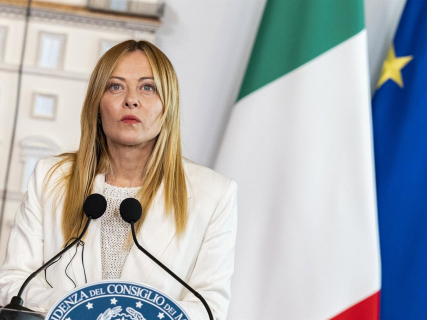
Italy extends for another 15 days the controls on travelers coming from Spain due to the Ceuta crisis

Rome maintains for the second time the restrictions in ports and airports and claims that "high levels of risk for internal security" and the danger of possible terrorist infiltrations persist.

2 minutes

fotonoticia 20260801143314 1920

fotonoticia 20260801143314 1920

Add DEMÓCRATA to Google

Ask FREN

Published

Last updated

2 minutes

Most read

Italy has decided to extend the border controls for another 15 days for travelers coming from Spain implemented due to the Ceuta crisis. This is the second extension of an exceptional measure within the Schengen area that Rome justifies for security reasons and that the Spanish Government has unsuccessfully requested to be lifted.

The decision has been adopted by the Italian Minister of the Interior, Matteo Piantedosi, after a meeting of the Immigration and Border Security Analysis Committee. Giorgia Meloni's Executive has communicated the new extension to both the European Commission and the rest of the community countries.

Italy thus maintains the controls that it initially introduced since August 1, immediately after the mass entries recorded in Ceuta on July 30 and 31, and which it later decided to prolong.

Italy cites risks to its internal security

The Italian Ministry of the Interior argues that the checks carried out by the specialized committee justify temporarily maintaining the controls.

"The measure was deemed necessary after the checks carried out by the Immigration and Border Security Analysis Committee," the Piantedosi department has stated.

Rome assures that "high levels of risk for internal security still exist" and adds that there is a "possible danger related to potential terrorist infiltrations."

The controls affect travelers arriving from Spain through ports and airports and are conducted randomly. They represent a temporary reintroduction of controls at the internal borders of the Schengen area.

More than 180,000 travelers controlled

Italy has already assessed the measure as it reached its first month of implementation. According to data released by the Italian authorities on August 31, more than 180,000 travelers from Spain had been subjected to controls.

As a result of those checks, the Italian authorities had denied entry to 31 people, including eight Moroccan citizens, and detained another six.

Meloni's Government has linked the decision from the beginning to a matter of "national security" arising from the Ceuta migration crisis.

Spain unsuccessfully requested to lift the controls

The Italian decision has caused friction with Pedro Sánchez's Government. Spain demanded that Rome lift the restrictions, but the Italian authorities maintained the measures.

Madrid initially responded with an equivalent measure and temporarily reinstated controls for travelers coming from Italy, a decision that was maintained until September 7.

The new Italian extension now prolongs an exceptional situation that began more than a month ago and keeps the consequences of the Ceuta crisis within the European free movement area.

More key points, information and questions with FREN

AI-GENERATED CONTENT

What is the process that Italy must follow to extend border controls within the Schengen area and what legal requirements exist?

Italy, like any State in the Schengen area, can only extend controls at its internal borders when it demonstrates that a serious threat to public order or internal security persists and that the measure remains necessary, proportionate, and temporary. The procedure and limits are set by the Schengen Borders Code (Regulation (EU) 2016/399), which requires motivated decisions, prior notification to the EU, and a maximum duration control, with intervention by the European Commission when controls are prolonged over time.

1. Material basis: when Italy can extend controls

The Schengen Borders Code allows the reintroduction—and then extension—of controls at internal borders only in exceptional cases. Italy must prove that:

  • There is a serious threat to public order or internal security, for example linked to terrorism, migration crises, or major events requiring enhanced security.
  • The extension of controls is a necessary and proportionate measure against that threat, taking into account its impact on free movement.
  • Less restrictive alternative measures (enhanced police cooperation, mobile controls, information exchange, etc.) have been considered and are insufficient to address the risk.

The European Commission emphasizes that controls at internal borders are an exception and that States must work to gradually lift them, resorting to these alternative instruments whenever possible, as reflected in its communication on temporary controls in several States, including Italy (Commission press release, 06/02/2026).

2. Formal steps Italy must follow to extend controls

When Italy decides to prolong already reintroduced controls, the basic procedure is:

  • Motivated internal decision: the Italian Government adopts a new decision (usually at the proposal of the Ministry of the Interior) that:
    • Describes the serious threat that persists.
    • Explains why the extension is necessary and proportionate.
    • Specifies which borders will be affected (e.g., air and sea connections with certain countries) and the specific period of the extension.
  • Notification to the EU: pursuant to Articles 25 and following of Regulation (EU) 2016/399, Italy must communicate the extension to:
    • The European Commission.
    • Other Member States and Schengen-associated States.
    • The European Parliament, through the established mechanisms.

    This notification details the threat, justification, territorial scope, duration, and proportionality assessment. If the situation is foreseeable, the communication must be made with sufficient advance notice before the extension takes effect.

  • Ongoing evaluation: the Government must commit to reviewing the situation before the expiry of each period and make clear that any new extension will require a “new motivated decision” based on an updated assessment of necessity and proportionality, in line with what is also applied in other States when extending temporary controls.

3. Duration limits and role of the European Commission

The Schengen Borders Code establishes strict limits on the total duration of internal controls:

  • Generally, for serious threats linked to foreseeable situations, controls are authorized for limited periods, which can be extended, but with an ordinary maximum of two years of continuous control.
  • When controls are prolonged for more than 12 months for the same reason, the Commission must issue an opinion assessing whether the extension is necessary and proportionate and what alternative measures have been used to minimize the impact on free movement (opinions on temporary controls, 06/02/2026).
  • In exceptional and persistent situations of serious threat, the Code foresees the possibility of an additional extension beyond the ordinary limit, but always under very strict scrutiny and maintaining the logic of a temporary last-resort measure.

In practice, this means that Italy cannot chain indefinite extensions: each extension must be justified anew, respect temporal ceilings, and be subject to political and legal control by the Commission and other Member States.

4. Safeguards and political control

The Commission and other States monitor that Italian extensions:

  • Do not become a “tolerated structural barrier”, but remain exceptionally temporary.
  • Are coordinated with neighboring countries to avoid distortions in the functioning of Schengen.
  • Respect fundamental rights and do not lead to undue discrimination, especially in migration crisis contexts.

In summary, to extend internal controls Italy must combine a motivated national decision with European notification and supervision, keep the measure within well-defined temporal limits, and demonstrate at all times that the restriction on free movement is justified by a serious threat, is proportionate, and will be maintained only as long as that threat persists.

Can you detail the different types of situations foreseen in the Schengen Borders Code for reintroducing internal controls (foreseeable, urgent, deficiencies in external borders) and how the deadlines change? What role do the European Parliament and the Council play when several States, including Italy, maintain internal controls for long periods? How has Italy applied this legal framework in practice in recent crises, for example regarding terrorism or migration?

What are the competencies of the Italian Interior Minister Matteo Piantedosi and which political party does he belong to?

Matteo Piantedosi is the Interior Minister of Italy in Giorgia Meloni's Government. From this position, he leads the Italian Ministry of the Interior (Ministero dell’Interno), responsible for the State's internal security, public order, and much of the management of migration and border control. In the consulted sources, he is simply presented as Interior Minister, without explicitly specifying his formal membership in a particular political party, beyond his belonging to the Executive headed by Meloni.

Piantedosi's competencies can be quite clearly deduced from the actions recorded in the sources. Firstly, he exercises political leadership over the Italian security forces and bodies. In a parliamentary debate about the presence of agents from the United States Immigration and Customs Enforcement (ICE) at the Milan Winter Olympics, Piantedosi himself emphasized that “security and public order are guaranteed exclusively by our police forces,” making clear that maintaining internal order and protecting citizen security within the national territory fall under his ministry and its dependent bodies (Demócrata).

Secondly, the Interior Minister assumes a central role in migration policy and border control. During the migration crisis linked to the massive arrival of people in Ceuta and the subsequent Italian response, it was Piantedosi who chaired the Committee on Immigration and Border Security Analysis at the Ministry of the Interior and ordered the suspension of the Schengen area with Spain and the closure of maritime and air borders with our country, as well as the coordinated reinforcement of controls with France at the land border (Demócrata). This same capacity is reflected in subsequent decisions to extend or adjust those controls depending on the evolution of the migration crisis, which he himself communicated to his Spanish counterpart Fernando Grande-Marlaska and to European institutions.

Thirdly, Piantedosi promotes and executes internal security policy in legislative and technological terms. A notable example is the approval, by the Council of Ministers, of two legislative decrees to regulate the use of artificial intelligence by security forces. As he explained in a press conference, the objective of these regulations is to frame the use of AI in areas such as biometric controls and video surveillance systems, providing the police with advanced tools without reaching a model of “mass surveillance” or a generalized “Big Brother,” always maintaining human supervision and the requirement of judicial coverage for its use (Demócrata).

From these actions, it follows that among his functions are included:

  • The general direction of public order and internal security policy.
  • The coordination of national police forces and the definition of their operational framework.
  • The adoption of exceptional measures regarding borders, migration controls, and temporary suspension or reintroduction of Schengen, in coordination with other ministries and EU partners.
  • The promotion of regulations and decrees governing security tools and technologies, such as artificial intelligence applied to police work.
  • The chairing of committees and analysis bodies on immigration and border security, which serve as a technical basis for government decisions.
  • The supervision of international cooperation in internal security matters, both with other EU Member States and third countries, including operational police and migration control agreements.

On a strictly personal or partisan level, the chronicles covering Matteo Piantedosi's activity focus on his institutional role as Interior Minister within Giorgia Meloni's Executive and on the decisions he makes regarding security, immigration, and public order. However, the consulted texts do not explicitly specify an organic affiliation to a particular party; he is portrayed as the holder of the Interior portfolio of the current Italian Government, without further detail on his formal party membership.

In summary, Piantedosi concentrates the classic attributions of an Interior Minister in a European parliamentary system: guarantor of public order, coordinator of police forces, political responsible for decisions on borders and migration, and promoter of regulation framing the State's security tools. His relevance has been especially evident in episodes such as the migration crisis linked to Ceuta, the controversy over the presence of foreign agents during the Winter Games, or the regulation of police use of artificial intelligence, where his portfolio has played a decisive role.

Could you detail how Matteo Piantedosi managed the migration crisis linked to Ceuta and what criticisms he has received? What legal and political implications do the Italian decrees on the use of artificial intelligence in police work promoted by Piantedosi have? How does the Italian Ministry of the Interior coordinate with other EU Member States regarding Schengen and border control?

What results did the parties obtain in the last general elections in Italy and what is the current composition of Giorgia Meloni's Government?

The consulted sources do not provide a detailed numerical breakdown of votes and seats from the 2022 Italian general elections, nor an exhaustive and updated list of all ministers in Giorgia Meloni's Government with their portfolios. However, they do allow a fairly clear picture of the resulting political map and the political composition of the Executive, which is probably the most relevant to understand the current Italian situation.

Political results of the 2022 general elections

The last general elections in Italy were held on September 25, 2022, and led to the Government headed by Giorgia Meloni. Although the located documentation does not show concrete figures of vote percentages or seats per party, it confirms a central fact: these elections consolidated the rise of Fratelli d’Italia (FdI), Meloni's party, making it the leading force of the Italian right.

In several subsequent analyses on the European panorama, FdI is described as the party that, from a marginal position years ago, now leads the Italian Government and plays a prominent role in the European conservative space. Other cited journalistic pieces highlight that:

  • Fratelli d’Italia is at the center of a right-wing bloc that includes Lega (League) and Forza Italia.
  • The electoral victory of this bloc allows a stable radical-conservative right-wing Government, which will subsequently translate into a relevant presence of Meloni's environment in European institutions.
  • The contrast is often established with the situation of the right in other countries, using the “Meloni example” as a success case for like-minded forces in Europe.

In parallel, traditional center-left and anti-system parties – the Democratic Party (PD) and the Five Star Movement – move to the opposition. The available information does not detail their exact numbers but makes clear that they fall behind the right-wing bloc led by Meloni, and that this balance of forces explains the parliamentary majority of the new governing coalition.

Political composition of Giorgia Meloni's Government

Regarding the Executive's composition, the news and analyses consulted agree that Meloni's Government is a right-wing coalition Government structured around three parties:

  • Fratelli d’Italia (FdI), led by Giorgia Meloni, who holds the presidency of the Council of Ministers and controls the main political positions in the cabinet.
  • Lega, headed by Matteo Salvini. In information about Italian domestic politics, Salvini is referred to as Deputy Prime Minister, confirming the League's weight as a central coalition partner.
  • Forza Italia, the party heir to Silvio Berlusconi's space. In a European People's Party analysis, it is made explicit that “the populars govern with Meloni through Forza Italia,” clearly indicating Forza Italia as the third pillar of the governmental majority.

Beyond these three main actors, journalistic pieces also highlight the role of certain figures linked to Meloni in the European sphere, such as Raffaele Fitto, identified as one of her strong men and later appointed to a vice-presidency in the European Commission. This underscores how Meloni's Government has projected its influence beyond Italy, inserting itself into the dynamics of the European right.

In summary, Meloni's Government is characterized by:

  • Being presided over by Giorgia Meloni, leader of Fratelli d’Italia.
  • Relying on a right-wing parliamentary majority arising from the 2022 general elections.
  • Formally integrating as coalition partners Fratelli d’Italia, Lega, and Forza Italia, with leaders of these parties in key ministries and deputy prime ministerships.
  • Positioning itself, at the European level, within the space of conservatives and radical right, with direct connections to political families such as the European Conservatives and Reformists (ECR) and the European People's Party through Forza Italia's role.

Therefore, although a complete numerical table of votes and seats is not available here, it can be stated with certainty that the 2022 Italian general elections resulted in a clear victory for the right-wing bloc led by Fratelli d’Italia, and that the current Government of Giorgia Meloni is a coalition of three parties – FdI, Lega, and Forza Italia – around the figure of the Prime Minister, with their leaders occupying the main positions of power in the cabinet.

Can you detail, with official figures, the distribution of seats and vote percentages of each party in the 2022 Italian elections? What main programmatic lines and political priorities has Meloni's Government promoted since coming to power? How do the parties forming Giorgia Meloni's Government position themselves in the European Parliament and what weight do they have in each political group?

Play

Test your knowledge with FREN!

How much do you know about this topic? Answer the following 3 questions.

For how long has Italy extended border controls on travelers coming from Spain?

Question 1 of 3

What reason does Italy give for maintaining border controls on travelers coming from Spain?

Question 2 of 3

How many people have been turned away at the border as a result of the controls carried out by Italy on travelers coming from Spain?

Question 3 of 3

Hola, soy Fren. ¿Cómo te ayudo?